
Visiting Herculaneum: Pompeii’s Overlooked Neighbor
· Updated · BootsnAll
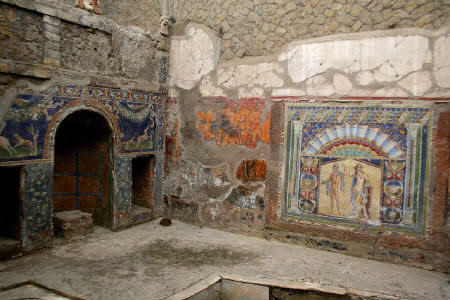 Herculaneum (Ercolano in Italian) is decidedly less famous than nearby Pompeii, although it makes for an equally interesting (some would say even more interesting) visit from the tourist’s perspective. This Roman town, significantly smaller than Pompeii, was once a seaside resort and trading port town with quite wealthy inhabitants.
>> For a more complete historic picture, be sure to read this Herculaneum history
What makes it arguably more interesting to visit today is its smaller size (easier to see the whole thing in a few hours), and its incredibly well-preserved ruins (the town’s destruction was caused by different volcanic debris than Pompeii, and Herculaneum was better preserved). In fact, Herculaneum remains less fully excavated than Pompeii. Pompeii was an easier site to work on for archaeologists when the sites were discovered in the early 1700s, so much of Herculaneum is still being uncovered today.
One of the treasures of Herculaneum is its library at the Villa of the Papyri, which, because of the way the ash and mud from Mount Vesuvius hit the town, is the only library of the time to survive. The scrolls which once filled the library’s shelves are now stored in the National Library in Naples. The vast majority of them are, sadly, quite damaged - but some have been unrolled and scanned.
What to See at Herculaneum
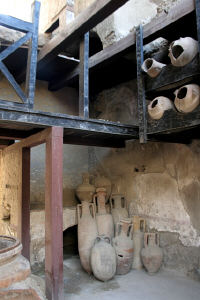 At Herculaneum, follow the path towards the Audio Guide Kiosk and turn left into a long tunnel that takes you to what was once the town beach, keeping in mind that Herculaneum was buried under nearly 60 feet of boiling mud. From this vantage point you can clearly appreciate the extent to which the town was annihilated.
In the 1980s hundreds of bodies were uncovered between the arches tucked into the town walls (boat storage areas) and the wall of volcanic stone the entrance tunnel buries through. It is believed that people fleeing the city huddled here in the hopes the arches would provide protection from the volcano.
Don’t miss the Roman baths. Under the steps you took to descend into the baths notice original wood charred during the disaster.
The House of Deer (Casa dei Cervi) is named for the statues of deer being attacked by dogs in the courtyard. The original statues are now housed in the Archaeological Museum in Naples.
Additional Herculaneum Tips
Walking shoes, or those with low heels, are highly recommended. In addition, in warmer weather you may want to bring your own bottle of water. For those with much younger children I advise a backpack style carrier if your stroller is not heavy duty and up to the ancient Roman roads. Allow 2-3 hours to tour the site.
Herculaneum Visitor Information
Hours
The site opens at 8:30am, and closing time changes with the season. Check the Herculaneum archaeological park’s website for the current hours and closing days before you go.
Tickets
The park’s own site lists a full ticket at about 20 euros in 2026, with a 4-euro reduced ticket for EU citizens aged 18 to 25 (check before you go, because some guides still quote lower prices). Herculaneum is run separately from Pompeii now, so a Pompeii ticket won’t get you in.
>> The Campania Artecard includes free or discounted entry to sites around Naples along with public transport; check which sites the current card covers.
How to Get to Herculaneum
By Train:
Circumvesuviana (run by EAV) from Napoli Porta Nolana or Napoli Garibaldi, on the Sorrento or Poggiomarino lines (stop Ercolano Scavi). From the station it’s a 10-minute walk downhill to the site.
By Car:
Autostrada A3 Napoli-Salerno (exit Ercolano)
>> For more information, see the official website of the Herculaneum Archaeological Park.

The author of this post and photographer responsible for these pictures, Karen Landes, spent two years exploring Sicily and wrote about her island discoveries in her book, “In Etna’s Shadow: Culinary Adventures from Eastern Sicily.” She was living outside Naples with her family when she wrote this post.