Lazio
Updated · BootsnAll
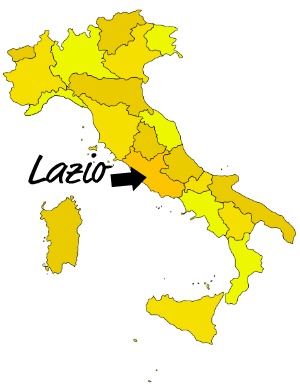
Most travelers couldn't place the region of Lazio on a map, but they know its capital very well. Lazio is the region around Rome.
Lazio is the kneecap of Italy's boot: a long stretch of Tyrrhenian coast, hills and volcanic lakes in the middle, and real mountains inland along the Apennines. It borders Tuscany, Umbria, Le Marche, Abruzzo, Molise and Campania. Rome is the obvious draw, and plenty of people never leave it. That's a shame, because an hour from the city you'll find Roman ruins without the crowds, Renaissance gardens, Etruscan tombs, papal towns and beaches where Romans go on summer weekends.
This page covers the basics of traveling in Lazio, with links to our more detailed articles.
Quick links to Lazio travel resources:
- Getting around Lazio
- Where to stay in Lazio
- Where to go in Lazio, beyond Rome
- Rome travel guide
- Cheap flights to Rome
- Public transportation in Rome
- The Rome cruise terminal at Civitavecchia
Lazio: Fast Facts
- The Latin name is Latium, and you'll sometimes see it used in English. Most English sources just use the Italian, Lazio (LAHT|zee|oh).
- The regional capital is also the national capital, Rome.
- The world's smallest state, Vatican City, sits entirely inside Rome, and so inside Lazio.
- Lazio has six UNESCO World Heritage Sites: the historic center of Rome (shared with the Vatican), the Etruscan necropolises of Tarquinia and Cerveteri, Hadrian's Villa at Tivoli, the Villa d'Este at Tivoli, part of the ancient beech forests of the Apennines (listed in 2017), and the Via Appia (listed in 2024).
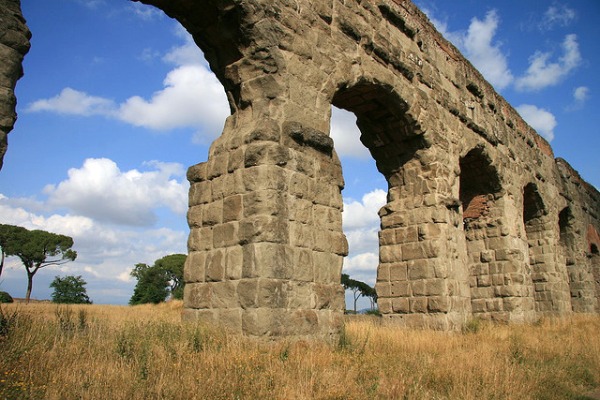
- Not all roads lead to Rome anymore, but the Appian Way once did, and long stretches of it are still walkable.
- People from Lazio are laziali (singular laziale). It's also what fans of the Lazio football club are called.
Getting Around Lazio
Rome is the hub for everything. Italy's biggest airport, Fiumicino, is on the Lazio coast, and Ciampino handles many low-cost flights. See cheap flights to Rome.
For day trips you rarely need a car. Trenitalia's regional lines fan out from Rome to Civitavecchia, Tarquinia, the Castelli Romani, Tivoli, Viterbo and the coast toward Naples. Regional trains have fixed fares that don't change with demand, and a paper ticket must be validated in the station machine before you board. Cotral buses cover the towns the trains don't reach. A car makes sense for the Etruscan countryside, the northern lakes or the southern coast, but not for Rome itself, where much of the center is a camera-enforced ZTL zone.
Where to Stay in Lazio
Most visitors base themselves in Rome and do the rest of the region as day trips, which is what I'd do on a first visit. Rome has every kind of place to stay, from hostels to palaces, plus B&Bs, apartments and even convents that take guests.
Outside Rome the choice is smaller but more interesting: agriturismi (farm stays) in the Tuscia area around Viterbo and in the Sabine hills, seaside hotels in Sperlonga and Gaeta, and small hotels in the hill towns. If you're driving, a few nights in the countryside north of Rome is a good way to see the Etruscan sites and the lakes.
Places to stay in Rome, on this site:
- Cheap Rome hotels
- Rome hostels guide
- Romantic hotels in Rome
- Cheap hotels near the Colosseum
- Cheap hotels near the Vatican
>> Visiting Rome with the family? Here are some family-friendly Rome hotels and tips on visiting Rome with kids.
Rome First
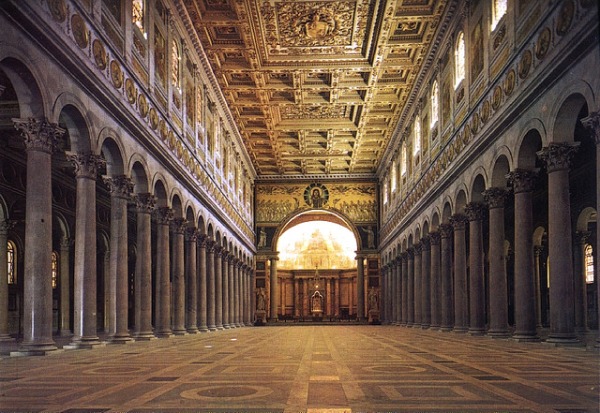
You could spend weeks in Rome and not see everything, so for most first-time visitors the region starts and ends there. The big three are the Colosseum, the Roman Forum and Vatican City. The Colosseum and Forum share one timed ticket, and the Vatican Museums sell timed entries too, so book both before you go. For help planning, see:
- Top 10 things to do in Rome
- Itinerary for 5 days in Rome
- Visiting Italy for the first time
- Day trips from Rome
Where to Go in Lazio, Beyond Rome
Once you're past the city limits, Lazio gets much quieter. Tivoli and the Etruscan tombs draw steady visitors and the beaches fill on summer weekends, but the smaller towns see a fraction of the tourists that similar towns in Tuscany get. These are the trips I'd pick, roughly in order:
- Ostia Antica. If you only make one trip out of Rome, make it this one. It's the ancient port of Rome: whole streets of shops, apartment blocks, baths, a theater and mosaics, with a fraction of Pompeii's crowds. The Roma-Lido train leaves from Porta San Paolo station, next to Piramide metro, and runs on a standard Rome transit ticket.
- Tivoli. Two World Heritage Sites in one town: the Villa d'Este, a Renaissance garden built around hundreds of fountains, and Hadrian's Villa (Villa Adriana), the emperor's sprawling country palace just below the town. Both are run by Villae. Take a regional train from Roma Tiburtina or a Cotral bus from Ponte Mammolo metro. Do both in one day and you'll be tired, but it's worth it.
- The Castelli Romani. The volcanic hill towns southeast of Rome, where Romans go to eat. Frascati is a short regional train ride from Termini and known for its white wine; Castel Gandolfo, above Lake Albano, is the pope's summer residence; Ariccia is famous for porchetta.
- Cerveteri and Tarquinia. The Etruscans were here before the Romans, and their cities of the dead are extraordinary. Cerveteri has streets of round, grass-topped tombs. Tarquinia's underground tombs are painted with banquets, dancers and hunting scenes. Tarquinia is on the train line north toward Grosseto.
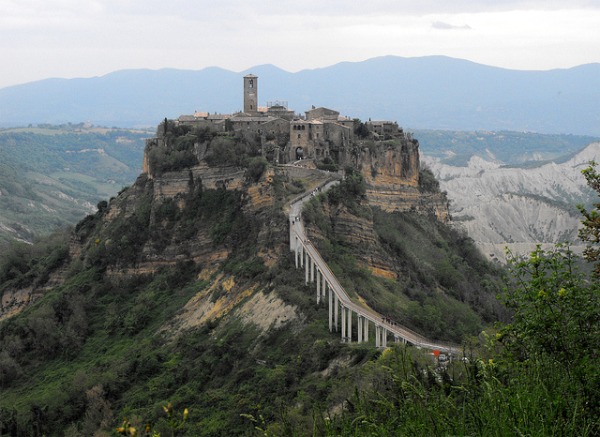
- Viterbo and the Tuscia. Viterbo was a papal seat in the 13th century and still has its Papal Palace and a medieval quarter, San Pellegrino, that's among the best preserved in Italy. Nearby are the Renaissance gardens of Bagnaia and Bomarzo's "Park of the Monsters", and Civita di Bagnoregio, the hilltop village reached only by a footbridge, which charges visitors a small entry fee.
- Subiaco. In the mountains east of Rome, with the monasteries of St. Benedict and St. Scholastica built into the cliffs.
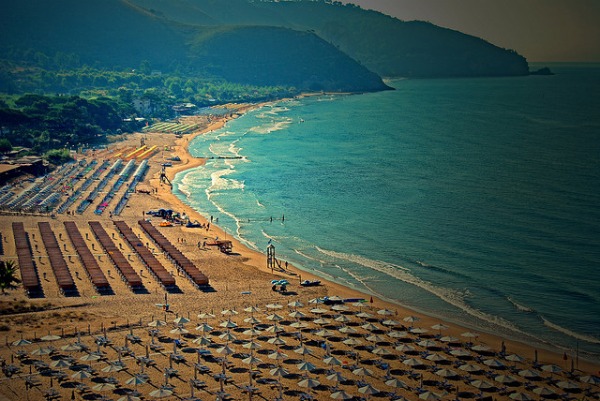
- Sperlonga and Gaeta. Lazio's prettiest seaside towns, on the southern coast toward Naples. Sperlonga is a whitewashed town above long sandy beaches, with the grotto and museum of Emperor Tiberius's villa at the edge of town. Gaeta has a medieval old town and good beaches of its own.
- The Pontine Islands. Ponza and Ventotene are where Romans escape in summer. Ferries run from Anzio, Terracina and Formia, mostly in the warmer months.
>> Heading south? The Campania guide covers Naples, Pompeii and the Amalfi Coast.
photos, top to bottom, by: RaSeLaSeD, Il Pinguino, Otourly, grogri87, lyng883, .alec.
