
Staying in Convents and Monasteries in Italy
· Updated · BootsnAll
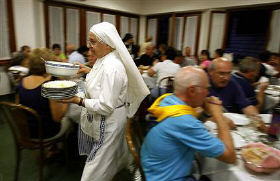 Italy is home to the headquarters of the Catholic Church, so it's no surprise the country is dotted with convents, monasteries and religious guesthouses. Many of them have taken in travelers for centuries, pilgrims first, and plenty still rent rooms to anyone who asks. A night in one is usually cheaper than a hotel in the same neighborhood, often quieter than a hostel, and sometimes it puts you inside a historic building you'd never see otherwise.
It isn't a hotel, though, and the people who have a bad time are the ones who book it as if it were.
You don't have to be Catholic
Religious houses that take paying guests welcome travelers of any faith or none. Nobody will check whether you went to Mass. Some houses invite guests to join prayers or shared meals, and a few of the stricter ones expect it, so read the house rules before you book rather than after you arrive.
The rules you'll actually run into
- Curfew. This is the big one. Most convents lock the door at night, often around 11pm, and some earlier than that. If you want a late dinner in Trastevere followed by a nightcap, a convent will cramp your style. If you're asleep by 11 after a day of museums anyway, you'll never notice it.
- Couples. Some houses only put couples in a shared room if they're married, and a few separate men and women entirely. Plenty of others don't care. Check before you book, especially if you're traveling with a partner or a mixed group of friends.
- Simple rooms. Expect single beds, a crucifix on the wall, a desk and not much else. Many rooms now have private bathrooms, but not all, so read the listing.
- Quiet. These are homes for people living a religious life. Loud phone calls in the hallway at 11pm won't go over well.
What you get in return is a warm welcome, a real sense of security (a good fit for women traveling alone), breakfast at many houses, and often a garden or cloister you get to yourself once the day-trippers have gone.
Where to find them
This used to be the hard part. Religious houses are communities first and guesthouses second, and many still don't have a website or answer email quickly. The printed guides that once filled the gap, like Bed and Blessings, whose last edition came out in 1999, are too old to rely on now.
The easiest route today is Monastery Stays, a booking site that has been running since 2006. It lists monastery and convent rooms in Rome, Florence, Venice, Assisi, Tuscany, Sicily, the Amalfi Coast and the Cinque Terre (plus a few in Austria and Slovenia). It handles the back-and-forth with the house for you, so you don't need Italian, and you pay online by card or PayPal. I wrote about it when a reader first pointed it out, in this post on booking monasteries online.
You can also book direct. Search for "casa per ferie" (holiday house) or "casa religiosa di ospitalità" plus the town name, and you'll turn up the houses run by religious orders. Booking direct can be cheaper, but it takes more patience: write in simple English or Italian, give your exact dates, and don't be surprised if the reply takes a week.
Where it works best
Rome has the most options by far, with dozens of religious houses in the center and around the Vatican, and they can be real bargains in a city where hotel prices keep climbing. Assisi is the classic choice, since pilgrims have stayed with the Franciscans there for centuries and the town empties out after the tour buses leave. Florence and Venice have a handful each, and they book up early for spring and fall.
My advice: book a convent in the cities where you'll be out sightseeing all day and want a cheap, safe, quiet bed. Skip it where nightlife is part of the point.
If it's not for you
If the curfew or the house rules sound like too much, you've got other budget options that still get you away from chain hotels. An agriturismo (a farm stay) appeals to a lot of the same travelers, especially if you have a car. And Italy's hostels have improved a lot, with private rooms as well as dorms.