
Study Abroad in Italy
· Updated · BootsnAll
 A semester or a year studying in Italy can be one of the defining experiences of your life. Studying art and history in the country that produced so much of both makes the material come alive, and the Italian friends you make become a lifetime of local hosts every time you go back. Italy has been one of the most popular study abroad countries for American students for years, and there are more ways to do it than most people realize.
They fall into four routes, from the most hand-held to the most independent. Here's how each one works and who it suits.
1. Go through your own college's program
Start at your study abroad office. Many US colleges run their own Italy programs, most often in Florence or Rome, or have exchange agreements with Italian universities. This is the easiest route: credits transfer automatically, financial aid usually applies, and you're dealing with staff you can walk in and see. The trade-off is that you'll often live and study with other Americans, so your Italian may not get the workout you hoped for.
2. Use a study abroad provider
If your school has no Italy program, or not in the city you want, independent providers fill the gap. They arrange housing, classes (usually taught in English, plus Italian language courses), excursions and on-the-ground support, and work with your college on credit transfer. Established providers with Italy programs include SAI Programs (Florence, Rome, Siena, Sorrento and Milan), CEA CAPA (Florence and Rome), IES Abroad, CIEE and many more. You can compare programs by city and subject at StudyAbroad.com.
Before you sign, ask your study abroad office whether it approves the program, how the credits will show up on your transcript, and whether your scholarships follow you. Providers are convenient, and the convenience is priced in.
3. Enroll at an American university in Italy
A handful of US-style universities have campuses in Rome, where you can take a semester as a visiting student or do a whole degree, taught in English, with a US-style credit system. John Cabot University and The American University of Rome are independent institutions in Rome, and Temple University Rome and Loyola University Chicago's John Felice Rome Center are campuses of American universities that also accept students from other schools. It's the middle ground between a provider program and going fully Italian.
4. Do it yourself: enroll directly at an Italian university
This is the adventurous, and by far the cheapest, route. Italian public universities charge fees set on a sliding scale that are a small fraction of US tuition, and many now offer whole degree programs taught in English, especially at the master's level. Bologna, Padua, Milan's Politecnico and Rome's Sapienza are among the big names, but there are dozens.
- Apply through Universitaly. Students from outside the EU pre-enroll on this national portal after being accepted by the university, and the pre-enrollment is what the consulate uses for your visa.
- Get a study visa. Any stay of more than 90 days needs a national (type D) study visa from the Italian consulate for your home area. Within 8 days of arriving in Italy you apply for a permesso di soggiorno (residence permit).
- Expect Italian-style academics. Many exams are oral, you sit them in scheduled sessions, and nobody chases you to attend. It suits independent students and frustrates people who need structure.
- Get your paperwork in order early. You'll need a codice fiscale (tax code), and your high school or college credentials may need an official declaration of value from the consulate. Start months ahead.
Just want to learn Italian?
If language is the point, go to a language school instead of a university. Italy has two public universities specifically for foreigners: the Università per Stranieri di Perugia and the Università per Stranieri di Siena. Both run Italian courses at every level year-round, and both issue the recognized proficiency certificates (CELI in Perugia, CILS in Siena) that universities and employers ask for. Private language schools exist in every city that tourists love, and courses from two weeks to a whole semester are easy to find. For a course longer than 90 days, check the consulate's rules for a study visa before you book, because not every school or schedule qualifies. And if cooking is the real draw, see our guide to cooking schools in Italy.
A few practical things
- Pick the city, not just the program. Florence and Rome are wonderful and full of other Americans. Bologna, Padua, Perugia and Siena are true university towns where students set the rhythm, and you'll use more Italian. A year in a tiny town with poor train service can be a dream or a nightmare, depending on you.
- Get a student card. The ISIC international student identity card gets you student discounts in Italy and around the world. Many Italian museum discounts, though, apply only to EU citizens or to specific age groups, so don't count on it everywhere.
- Health insurance is required for the visa. Your program may include it; check before you buy your own.
- Budget for the city. Rent in Milan, Florence and Rome has climbed sharply in recent years, and student rooms go fast before each semester.
And once you're there, get out of town on weekends. Italy's high-speed trains put Florence, Rome, Bologna, Venice, Milan and Naples within a few hours of each other, and advance tickets are cheap.
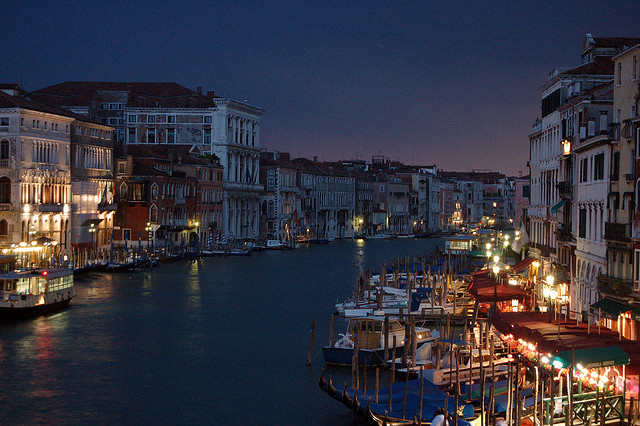
photo by nerissa's ring