
How to Visit a Balsamic Vinegar Maker in Italy
· Updated · BootsnAll
 Of all the food visits you can make in Italy, a visit to a balsamic vinegar maker in Modena or Reggio Emilia is one of the easiest to arrange and one of the most memorable. You walk through attics full of small wooden barrels, some of them older than anyone in the building, and finish by tasting vinegar that has been aging for 12, 25 or more years from a tiny spoon.
Calling these places "factories" is misleading. There are no conveyor belts. In Italian a place where balsamic is made and aged is an acetaia (ah-cheh-TAH-yah; plural acetaie), and many are family attics or farmhouses rather than commercial buildings. Most don't keep regular opening hours, so you book a visit ahead. That part is easy.
Know what you're tasting first
Three different products carry "balsamic" and "Modena" on the label, and the gap between them is huge:
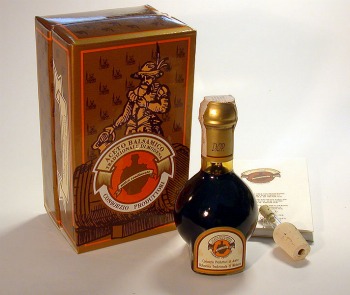
- Aceto Balsamico Tradizionale di Modena DOP and Aceto Balsamico Tradizionale di Reggio Emilia DOP are the real traditional product. Both are protected designations of origin, made only from cooked grape must and aged for at least 12 years in a series of barrels of different woods. Modena's comes in a standard 100 ml bulb-shaped bottle; "extravecchio" means at least 25 years. Reggio Emilia grades its own by label color, with gold for the oldest (25 years and up). These are expensive, and they're meant to be used by the drop.
- Aceto Balsamico di Modena IGP is the everyday balsamic you find in supermarkets worldwide. It's wine vinegar blended with grape must and aged far less. Some IGP balsamic is very good, but it isn't the same thing.
- "Condimento" or "glaze" products are neither, and have no protected status.
Modena and Reggio Emilia both make traditional balsamic. Modena has the famous name, but Reggio's producers are just as serious, and their consortium is the more useful one for planning a do-it-yourself visit.
Where it is and how to get there
Modena is a small city in the Emilia-Romagna region on the main line between Parma and Bologna, about 23 miles northwest of Bologna. Reggio Emilia is about 15 miles further west along the same line, between Modena and Parma. Regional trains from Bologna reach Modena in about half an hour, and high-speed trains link Florence and Bologna in under 40 minutes, so an acetaia visit works as a day trip from a base in Bologna, Parma or even Florence.
The catch is the last few miles. Many acetaie are in the countryside outside the city centers, so plan on a taxi or a rental car, or on a tour that handles the driving. Casa Giusti and Acetaia Malpighi (below) are both on the edge of Modena, a short taxi ride from the station.
Acetaie that welcome visitors
These all had current 2025 to 2026 visitor programs when we checked in September 2026. Book ahead in every case; walk-ins are rarely possible.
- Acetaia Malpighi, Via Emilia Est 1525, Modena. A family producer that runs free guided tours and tastings by appointment; book through its contacts page. Malpighi also has a showroom in Piazza Roma in central Modena.
- Casa Giusti, Strada Quattro Ville 155, Modena. Giusti dates its balsamic business to 1605, and Casa Giusti is the most polished visit in town: a guided tour of the aging rooms and the family's small museum, followed by a tasting. You book a slot online, and it's the easiest option if you don't speak Italian.
- Museo del Balsamico Tradizionale, Villa Comunale Fabriani, Via F. Roncati 28, Spilamberto. Not a producer but a museum, about 10 miles southeast of Modena. It explains the whole process in one place and offers guided visits, which makes it a good first stop before an acetaia. Check the museum's site for current hours before you drive out.
To find a smaller producer, use the consortium lists:
- The Reggio Emilia consortium lists its 61 certified producers and marks the ones whose acetaie can be visited by appointment with a "V". Many list an email address or website, so you can compare them and write directly.
- The Modena consortium has a "Visit an acetaia" section and a route guide called Le Vie del Balsamico. It also runs Acetaie Aperte, when producers around Modena open their doors to the public. In 2025 it ran from 25 September to 4 October; if your trip falls in early autumn, check the consortium's site for this year's dates.
What a visit is like
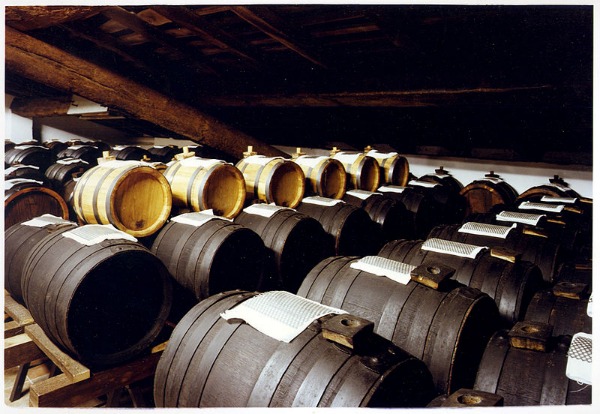
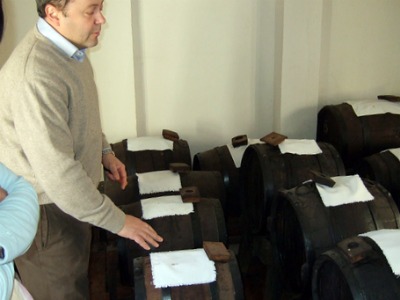 When I visited an acetaia in 2004, I emailed Acetaia Malpighi directly and set up a date and time for a tour. It was just me and the husband, walking through room after room of barrels blackened by years of use.
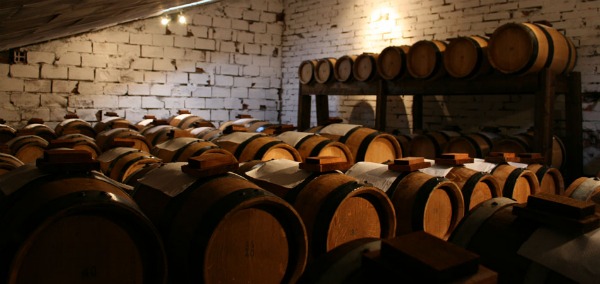
The tour ended in the attic room where the last aging happens. The door to the attic was as thick as a bank vault's, and the air inside was thick with the smell of balsamic. Our feet stuck to the floor and we could smell balsamic in our nostrils for hours afterwards. As the vinegar evaporates and concentrates, it hangs in the air and coats every surface in the room. It was stunningly strong and, if you like balsamic, delicious.
Our tour also included tastings of Malpighi's other products, including a white balsamic and a sort of balsamic jelly, as well as balsamic aged 20+ years. Naturally, we bought some goodies to bring home.
The attics are the point. Traditional balsamic is aged under the roof precisely because it gets hot in summer and cold in winter, and the barrels are topped up from the next-oldest barrel in the set each year. Ask your guide to show you a "batteria," the row of five or more barrels that one family's vinegar moves through, and ask how old the oldest barrel is. The answers are often startling.
Or join a food tour
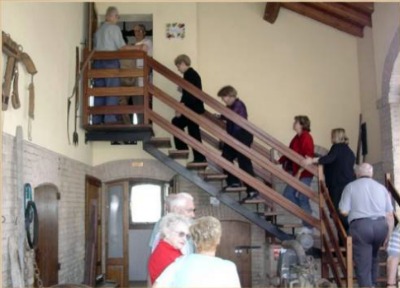 Emilia-Romagna is so famous for its food that a whole industry of day tours has grown up around it. Most leave from Bologna, Modena or Parma, and the common format is a morning at a Parmigiano Reggiano dairy (you need to be there early to see the cheese being made), a prosciutto maker, and an acetaia with a tasting, often with lunch. Private tours with a driver cost several hundred euros per person; small-group tours cost much less.
A tour is the better choice if you don't want to drive, since the producers can be a long way apart, and if you want to fit three food stops into one day with no logistics. Doing it yourself is better if you want a small family acetaia and an unhurried conversation. When you compare tours, read reviews from the last year: the operators in this business change often, and several of the companies that ran balsamic tours a decade ago no longer exist.
Buying and bringing it home
Buying at the acetaia is the best way to get the real thing and to taste before you pay. The standard 100 ml bottle of traditional balsamic has one small advantage for travelers: it fits the airport liquids limit, so it can go in your carry-on bag. Larger bottles of IGP balsamic go in checked luggage, wrapped well. Most bigger producers also ship abroad.
If you've already come home and want the real thing, look for the DOP seal and the word "Tradizionale" on the bottle. For example, traditional Modena DOP balsamic on Amazon.
You might also be interested in…
- Emilia-Romagna Travel Guide
- Bologna Travel Guide
- Ferrari Museum (near Modena)
- Lamborghini Museum (near Bologna)
- Prosciutto Festival
photos, top to bottom, by: Balsamico1, Gilgilbo, sebrenner, Acetaia del Casato Bertoni, Acetaia Medici site

