St. Peter's Basilica
· Updated · BootsnAll
St. Peter's Basilica is the focal point of a trip to Vatican City, mainly because it's the image most of us already have of this city-state. It's impressive on a scale few buildings anywhere can match, it's free to enter, and it can easily be the highlight of a visit to Italy.
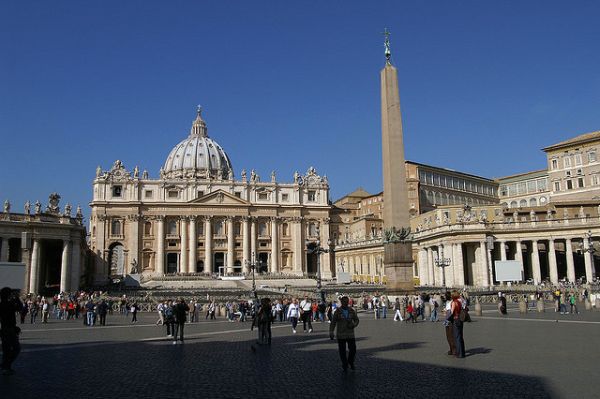
The site on which St. Peter's Basilica (Basilica di San Pietro in Italian) stands has been holy to Christians since Saint Peter himself was martyred nearby, traditionally in 64 A.D. His remains are said to have been buried close to where he was executed, and that grave is the centerpiece of the basilica. A simple shrine went up over it, and in the 4th century Constantine built the church now called Old St. Peter's.
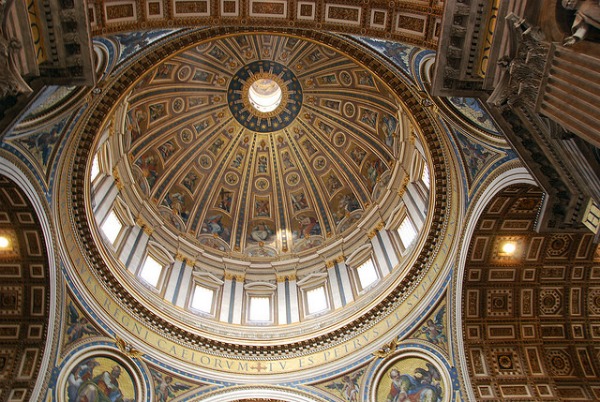
By the 15th century the old basilica was falling apart, and rather than repair it, the Pope decided to knock it down and start again. It took a series of popes more than 120 years to settle on a plan, each one changing his predecessor's design, until Michelangelo took charge in the mid-1500s and designed the dome. What you see today isn't entirely what Michelangelo wanted: the nave was lengthened and the façade added in the early 1600s. The new basilica was consecrated on 18 November 1626, so 2026 is its 400th anniversary, and the basilica is marking it with a cycle of talks and events.
It's one of the essential stops on any trip through Rome, whatever your religious persuasion.
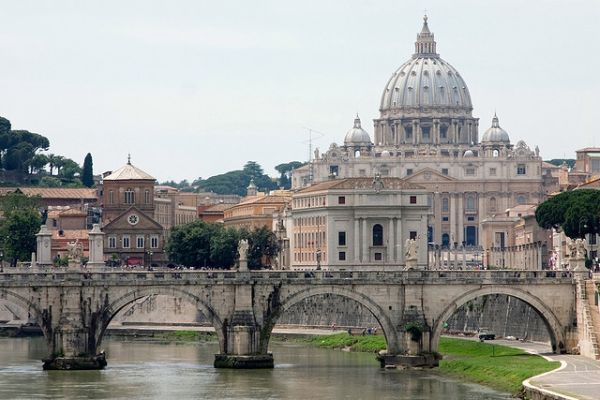
Most people who cross the Tiber to see St. Peter's spend the better part of a day in Vatican City, including the vast Vatican Museums, so read this guide alongside my guide to the Vatican Museums.
Quick links to St. Peter's Basilica resources:
- St. Peter's Basilica Visitor Information
- What to See Inside
- Guided Tours of St. Peter's Basilica
- St. Peter's Basilica Visitor Tips
St. Peter's Basilica Visitor Information
- Open hours: Since 1 June 2026 the basilica is open every day from 7:00 to 20:00, with last entry by 19:15. It closes to visitors during some papal ceremonies, including the Wednesday morning general audience when the Pope is in Rome, and parts of the church are roped off during Mass. Check the official opening hours page before you go.
- Admission: Free. You don't need a ticket to walk in. If you want a set entry time with the basilica's digital audio guide, you can book one on the official basilica website, which is also the place to book the official guided tours.
- Security: Everyone goes through an Italian State Police security check. The checkpoints are under the colonnade on the right-hand side of St. Peter's Square as you face the church.
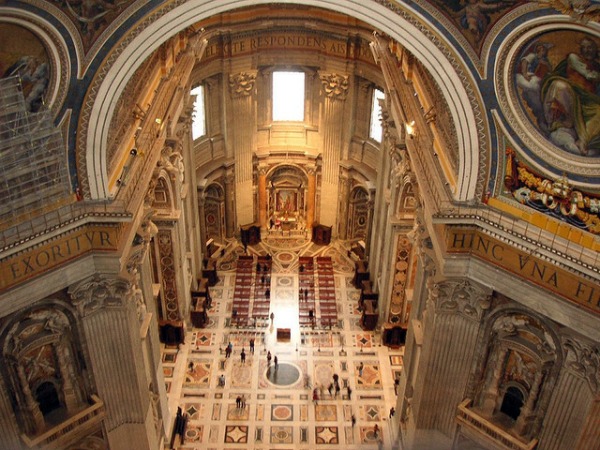
- Climbing the dome (cupola): It's 551 steps on foot, or you can take the lift to the terrace level and climb the last 320. In 2026 it costs about €10 by stairs or €15 with the lift at the desk on site. Booking a time slot online costs more (about €17 and €22) and includes a timed visit to the basilica with the audio guide. The dome keeps shorter hours than the church: 7:00 to 18:00 in summer (late March to late October) and 7:30 to 17:00 in winter.
- The necropolis (Scavi): The excavations under the basilica, where Peter's tomb is believed to be, can only be seen on a small guided tour that you request in advance through the basilica website. Places are limited, so ask weeks ahead.
- How to get there: Metro line A to Ottaviano, then about a 10-minute walk down Via Ottaviano to the square. Plenty of city buses stop near the Vatican walls too; see our guide to getting to Vatican City.
What to See Inside St. Peter's
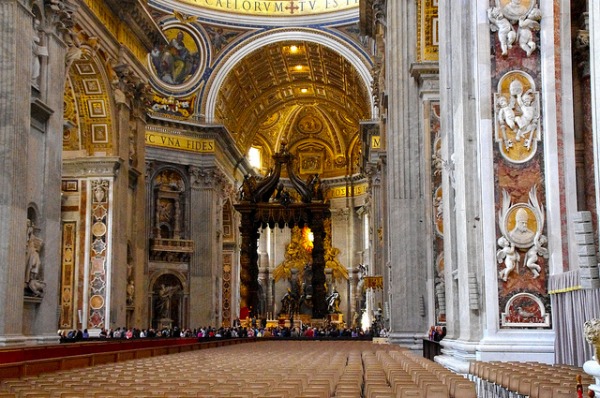
The church at the center of Vatican City has had superlatives thrown at it for centuries, and one of them is simply true: it has the largest interior of any Christian church. Brass markers set into the floor of the nave show where other great cathedrals would end, so as you walk toward the altar you get a feel for how much bigger this one is. The Statue of Liberty, pedestal and all, would fit under the dome.
Don't try to see everything. These are the pieces worth planning around:
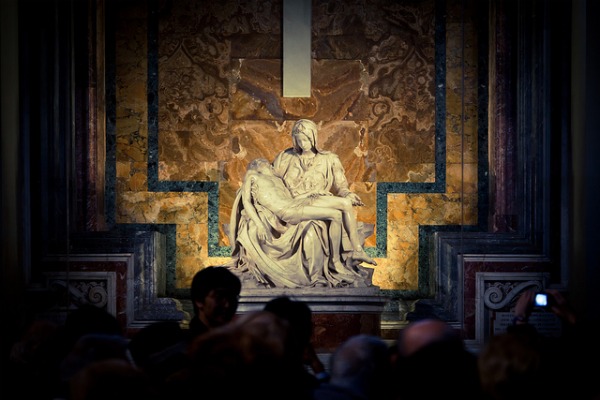
- Michelangelo's Pietà, in the first chapel on the right. He carved it in his early twenties, and it's the only work he ever signed. It has been behind glass since it was attacked with a hammer in 1972, so you see it from a few meters away.
- Bernini's baldacchino, the huge twisted bronze canopy over the papal altar, directly above Peter's grave.
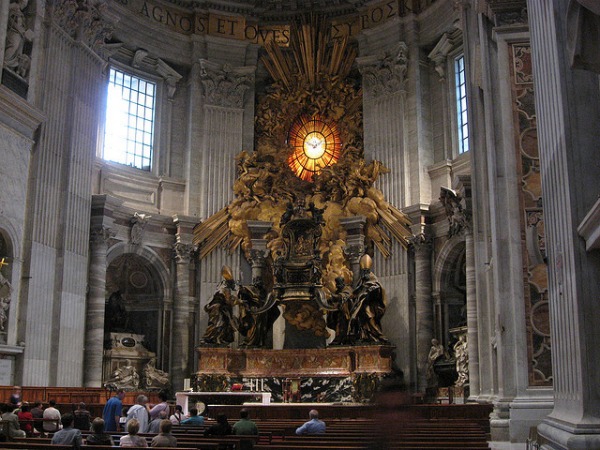
- The Chair of St. Peter, Bernini's gilded bronze throne in the apse at the far end, lit by a window with the dove of the Holy Spirit.
- The bronze statue of St. Peter, a 13th-century figure whose right foot has been worn smooth by centuries of pilgrims touching and kissing it.
- The "paintings" that aren't. Almost all the altarpieces are mosaic copies of paintings, made from tiny pieces of glass, because paint doesn't survive well in a building this size.
- The papal tombs. The basilica holds more than 100 tombs, 91 of them popes', many of them in the grottoes under the floor.
Taking a Guided Tour of St. Peter's Basilica
Trust me, you don't always know what to be awed by until someone points it out. Most guided tours of Vatican City combine St. Peter's with the Vatican Museums, which is the easiest way to see both in one well-organized day. I like the walking tours Context Travel runs in Vatican City and elsewhere in Rome, and the basilica itself now sells official guided tours in English and Italian through its website.
The basilica is also easy to do on your own, since it's free and there's far less ground to cover than in the museums. Book the official digital audio guide, or download a self-guided walking tour to your phone before you arrive.
Visitor Tips for St. Peter's Basilica
St. Peter's may be free, but there are a few things you need to know before you walk in.
- Dress for a church, because they will check. No sleeveless tops, nothing very short and no hats; in practice that means cover your shoulders and knees, men and women alike. The rule is enforced at the door. Carry a light scarf or wear long pants or a skirt on the day you visit, even in August.
- Go early or late. The security line under the colonnade is worst from mid-morning to mid-afternoon, especially when the Vatican Museums tours let out. Walk in at 7:00, before the tour groups, or come back in the early evening now that the church stays open until 20:00. Wednesday mornings are a bad bet because of the papal audience.
- Leave the big bag at the hotel. The basilica asks visitors not to bring bulky luggage such as suitcases and trolleys, and a large backpack slows you down at security. If you're doing the Vatican Museums first, remember that anything you leave in the museum cloakroom has to be collected there, not at the basilica.
- Put the camera away. The basilica's 2026 visitor rules ask people not to take photographs inside, even for personal use, so they don't disturb services and other visitors. Keep your phone on silent and save the pictures for the square and the dome.
- Climb the dome for the view. The iconic shot over St. Peter's Square comes from the top of the dome. Even with the lift you climb 320 steps, and the last stretch is a narrow, tilted staircase between the inner and outer shells, so skip it if you're claustrophobic or not steady on stairs. The walkway around the inside of the dome, looking straight down on the baldacchino, is worth the effort on its own.
>> Here are some fun facts about St. Peter's, too.
photos, top to bottom, by: Dave Hamster, jimmyharris, dearbarbie, stevekc, bensonkua, Michael Gwyther-Jones, stringbot