Top 10 Things to Do in Sardinia
· Updated · BootsnAll
 Most people know the Italian island of Sicily, but fewer know there's another big island off the coast of Italy. Sardinia (Sardegna in Italian) lies in the Mediterranean about 200 km (125 miles) west of the Italian mainland, just south of the French island of Corsica.
Only Sicily is bigger, but Sardinia gets far fewer visitors outside the August beach rush, so for my "top 10 things to do in Italy" series I asked someone who lives there. Here are the best things to do in Sardinia according to Sardinia resident Paolo Rossi. Take it away, Paolo!
The Sardinian tourism office once came up with a slogan for the island: "Almost a continent." I couldn't think of a better one.
Sardinia is one of the oldest landmasses in Europe, and people have been fighting over it for thousands of years. Phoenicians, Carthaginians, Romans, Byzantines, Pisans, Genoese, Catalans and Piedmontese have all ruled parts of the island, and most of them left something behind on or near its beaches. That hasn't divided Sardinia. It has given it a culture, a language and a kitchen quite unlike the rest of Italy, and here are ten ways to taste it.
Top 10 Things to Do in Sardinia (According to Paolo)
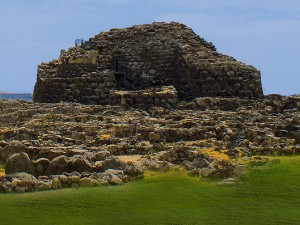 Climb into a Nuraghe
Nuraghi are cone-shaped stone towers built by Sardinia's Bronze Age Nuragic people, and the island has thousands of them; estimates run to 7,000 or more, and you'll spot them from the road all over the interior. Nobody knows exactly what they were for. Fortresses, temples and chieftains' houses are the usual guesses, and some were probably all three over the centuries. The one to see is Su Nuraxi at Barumini, about 60 km north of Cagliari: a 17th-century-BC fortress of five towers with the ruins of a village around it. It has been a UNESCO World Heritage Site since 1997, and visits are guided; book through the Fondazione Barumini.
Even older are the domus de janas ("fairy houses"), tombs carved into the rock between about 3400 and 2700 BC. They became Sardinia's second UNESCO site in 2025. The necropolis of Anghelu Ruju, near Alghero, has 38 of them and is an easy stop if you fly into Alghero.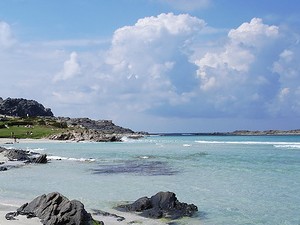 See Your Feet in Clear Blue Water
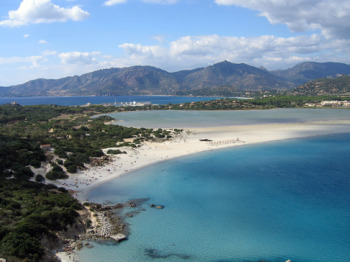
Sardinia has some of the best beaches in the Mediterranean. The coves around Cala Gonone on the east coast, which you reach by boat or on foot, and the Costa Smeralda in the northeast turn up on every "best beaches" list. The most famous single beach is La Pelosa, near Stintino in the northwest, about 50 km north of Alghero airport, a strip of white sand facing a Spanish watchtower and shallow water the color of a swimming pool. Stintino has about 1,600 residents most of the year, and in summer the crowds grew so big that the town now limits numbers.
In 2026 you have to book La Pelosa online from 15 May to 15 October. There are 1,500 places a day at 3.50 euros per person, and children under 12 don't need a booking. Some 500 places can be booked any time for the season, and the other 1,000 are released at 9:00 two days before each date, so set an alarm. You show the QR code at the entrance between 8:00 and 18:00. Book on the town's official site, spiaggialapelosa.it, and check its rules before you pack: the beach is protected, and the dunes and sand are fenced off in places.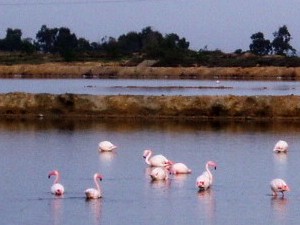 Take Photos of Sardinian Wildlife
Like many islands, Sardinia has wildlife you won't see on the mainland, the product of a long isolation. Sardinian red deer and wild boar live in the mountains and cork forests, and on the Giara plateau north of Barumini you can see the small wild horses of the Giara grazing around seasonal ponds. Greater flamingos are the easiest wildlife to find: they feed by the thousand in the lagoons and salt pans right on the edge of Cagliari, and in the wetlands around Oristano. Dolphins are common offshore, and fin whales pass through the waters to the north. And the island has no venomous snakes, so you can hike without watching every step.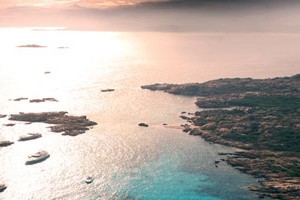 Island-Hop Around La Maddalena
The Arcipelago di La Maddalena National Park covers the scatter of granite islands off the northeast tip of Sardinia. On a clear day you can see Corsica from Razzoli, the northernmost island. Ferries run to La Maddalena town from Palau all day, and from there (or from Palau and Santa Teresa Gallura) day boats tour the smaller islands, stopping to swim in coves you can't reach any other way. The famous pink beach on Budelli, colored by fragments of tiny marine organisms, is protected: the park has banned walking on it and swimming off it since the 1990s, and you see it from the water or a path behind it. It's still one of the loveliest days out in Sardinia. Go in June or September, when the boats are less crowded.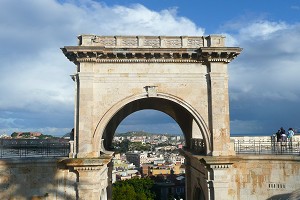 Enjoy the View from the Bastione di Saint Remy
The capital, Cagliari, is built on a series of hills. The oldest quarter, Castello, sits on top of one of them, walled and looking out over the Gulf of Cagliari, the "Gulf of Angels." The best view is from the terrace of the Bastione di Saint Remy, a grand white limestone staircase and promenade built around 1900 on the old Spanish walls. From the top you can see most of the city, the salt pans where the flamingos feed, and the sea. The cathedral of Santa Maria is a short walk further up, so the climb pays off twice. Cagliari is also the easiest base in the south, with the airport a few kilometers from the center, and the long Poetto beach is a short bus ride away.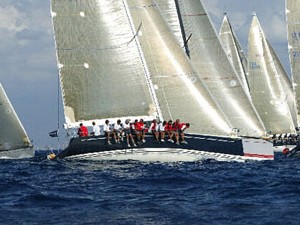 Ooh and Aah at Porto Cervo Marina
The Costa Smeralda (Emerald Coast), in the northeast, is the holiday playground of some of the richest people in the world. Prince Karim Aga Khan and a group of investors developed it from the early 1960s, and celebrities have summered here ever since. That makes an affordable hotel in July and August hard to find, but it also means there's plenty to see when you stroll the waterfront.
In July and August, many millions of euros float in the harbor of Porto Cervo, the place to be for superyacht spotting. You don't have to stay there: base yourself somewhere cheaper, like Olbia or San Pantaleo, and drive over for an evening walk and an eye-wateringly expensive drink.
 Walk Through the Ruins at Nora or Tharros
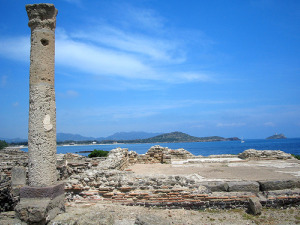
If you'd rather see archaeology than yachts, head for Tharros, on the Sinis peninsula near Oristano in the west, or Nora, near Pula southwest of Cagliari. Both were founded by the Phoenicians and later became Roman towns, and both are open-air sites where you walk down ancient streets past columns, mosaics and bath houses. Both sit right on the sea, so you can combine a morning among the ruins with an afternoon swim. At Tharros, walk up to the Spanish tower for the view over the whole site.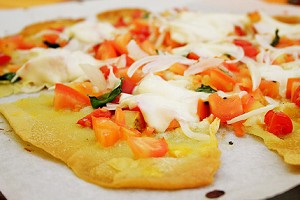 Taste the Local Food and Wine
One of the absolute must-dos in Sardinia, as on any trip, is to eat and drink what the locals do. Sardinian food is shepherd's food at heart, with strong flavors. Look for pane carasau (a paper-thin, crisp flatbread that keeps for months), porceddu (suckling pig slow-roasted over myrtle wood), culurgiones (ravioli filled with potato, pecorino and mint, pinched shut like an ear of wheat), malloreddus (small ridged gnocchi, often with sausage and tomato) and, for dessert, seadas, fried pastries filled with cheese and drizzled with honey. The local red is Cannonau, the island's version of Grenache, and the best-known white is Vermentino di Gallura. End the meal with a glass of mirto, the myrtle-berry liqueur.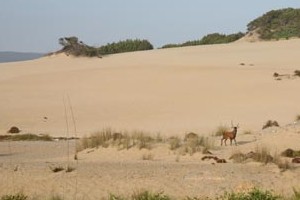 Explore Sardinia's Old Mines
Sardinia has been mined for thousands of years, for lead, silver, zinc and coal, and mining shaped the southwest right up until the last century. When the mines closed, the region was turned into Sardinia's Geomining Historical and Environmental Park rather than left to decay. The villages of Ingurtosu and Montevecchio, once among the island's most important mining towns, now have restored mine buildings you can visit, and the abandoned works make a strange, beautiful backdrop to the wild Costa Verde beaches nearby. Farther south on the Iglesiente coast, Porto Flavia is the showpiece: a 1920s loading port built as two tunnels through a cliff, so that ore could drop straight into ships' holds opposite the Pan di Zucchero sea stack. It's visited on guided tours; check dates locally before you drive out. It's a good corner of the island for travelers who want to avoid the crowds.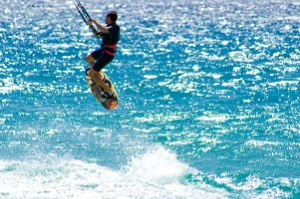 Watch the Kitesurfers at Porto Pollo
I found it very hard to choose the 10th item on this list, as it meant leaving out lots of other great things. Hiking in the mountains, walking the rocky coastline and visiting the island's many museums were all contenders, but so is Porto Pollo, near Palau in the north, where a sandy spit joins the mainland to the little Isola dei Gabbiani. The wind funnels through the Strait of Bonifacio, so it's one of the best spots in the Mediterranean for windsurfing and kitesurfing, with flat water on one side of the spit and waves on the other. It's amazing to watch the experts fly over the water, and trying it yourself is even better: surf schools and rental shops line the beach in season.
It's impossible to capture an island that's "almost a continent" in just ten highlights. To really experience Sardinia, you have to come and see it.
Getting to Sardinia
Flying is fastest. Sardinia has three main airports, Cagliari in the south, Olbia in the northeast and Alghero in the northwest, with flights from mainland Italy and much of Europe; pick the one closest to the part of the island you want to see, because distances inside Sardinia are bigger than they look. If you want your own car, and you will, the ferries are worth considering: they sail from Civitavecchia (near Rome) to Olbia, Cagliari, Arbatax and Porto Torres, from Livorno to Olbia, from Genoa to Porto Torres and from Naples to Cagliari. The night boats save you a hotel night. Our guide to getting from Italy to Sardinia has the operators, and if you'd rather see the island by bike, read cycling in Sardinia.
>> Looking for a place to stay in the capital? Here are some cheap hotels in Cagliari and Cagliari hostels.

Paolo Rossi wrote this list while working for the travel agency Charming Sardinia, where he could do the two things he loves most: helping people find the perfect vacation, and talking about his beloved Sardinia all day long.
photo at top by robad0b, photo of #2 above by Dirk Hartung, photo of #3 above by cristianocani, photo of #7 above by Effervescing Elephant, photo of #8 above by roboppy, photo of #10 above by Fab:o Fo:s; all other photos via Charming Sardinia.