What to Do in Lucca
· Updated · BootsnAll
 There’s much of Italy I have yet to explore, so in an effort to get more information to you more quickly - at least more quickly than I can cover every spot on the map - I sometimes have other Italy bloggers on to talk about places they know and love. This time I’m introducing you to Adriana Lucchesi, an Italian-Brazilian who has been living in Italy since 2003. Her family’s roots stretch back to the walled Tuscan town of Lucca, so I asked Adriana to write a post about the things she would recommend to do in Lucca. Here’s Adriana’s advice for a short visit to Lucca.
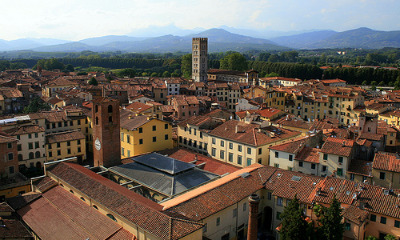
A charming city and very popular destination in Italy, Lucca is an art and history jewel for all to discover. Lucca Dentro (inside the city walls) and Lucca Fuori (outside the walls) are like two faces of the same coin separated by the imposing fortified walls that stand tall from the late Renaissance to these days.
Adriana’s Suggestions for a Short Stay in Lucca
The walls hide and protect so many attractions dating back from the Ancient Roman times to now that even for locals a lifetime is not enough to know them all. But, for those who have the chance to visit for a short period of time, below I have prepared a (non-exhaustive) list of things to do in Lucca.
Ride a Bike on Top of the City Walls
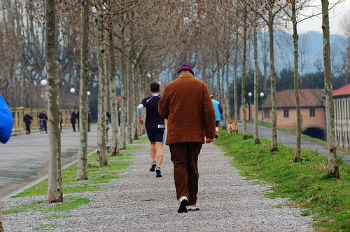
Rent a bike and go for a ride around the 4km of public walk on the top of the fortified walls. In fact, from the moment that the walls were no longer useful for military functions on the 19th century, it has been completely restructured to become one of the world’s largest hanging gardens and public parks. If you prefer, instead of a bike ride, just go for a walk or a picnic up there.
Enjoy the Sights Along the Via Fillungo
A walk along Via Fillungo: Enter Porta Santa Maria and walk along Via Fillungo, the main street, then turn right to reach the Basilica di San Frediano, which has an impressive facade of Gothic mosaics. Back to Via Fillungo, on the opposite side, enter a small alley under the buildings to discover Piazza dell’Anfiteatro, an elliptical square where the Roman amphitheater was originally set, renovated on the year 1830. Keep walking, while looking at the shop windows till you reach the corner with Via dell’Arancio - here is another curious point: Torre delle Ore, the clock tower, is the most tall among all 130 towers of medieval Lucca.
Look Inside Caffè di Simo
Caffè di Simo is a historic cafe on Via Fillungo in the heart of Lucca, close to the Piazza dell’Anfiteatro, and it was Puccini’s favorite. After a long closure, the city reopened it in April 2026 for visits, concerts and book talks on weekends, so check what’s on before you plan a coffee break around it.
Sample Local Wines at an Enoteca
Visit an Enoteca and taste the local wines - Chianti Colline Lucchesi, Montecarlo, and others - in one of the many wine bars located in the city. For example there is the Cantine Bernardini (Via del Suffragio, 7), which offers a delicious tasting of typical products matched with all good wines of the surroundings.
Discover Lucca’s Art Nouveau Villas
The Art Nouveau art and architecture style (in Italy called the Liberty style) has been seen throughout Lucca since 1870, when a huge urban growth movement started in the city. That’s why the itineraries of Lucchese villas are so famous. There are three main areas right outside the walls you can visit.
- Exit Porta S. Anna (from Viale Vittorio Emanuele) and go ahead along Via Alfredo Catalani and than Viale Giacomo Puccini
- Exit Porta San Pietro, cross the avenue to reach Viale San Concordio
- Exit Porta Santa Maria, on the roundabout take the Viale Matteo Civitali, on your right
Ask for a map in the tourist information office located at Piazza Santa Maria, 35 (Porta Santa Maria) or at the train station (Viale Giusti - Piazza Curtatone).
Adriana’s Suggestions for a Longer Visit in Lucca
For those who have more time to stay in this charming city, here are some options of museums and monuments to visit.
Duomo di San Martino (Lucca’s Cathedral) and the “Volto Santo” or “Santa Croce” (the holy face of Christ or the holy cross)
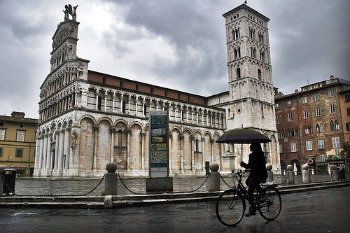 The current version of the cathedral is the 3rd rebuilt of this church, started in the 6th century by will of San Frediano, bishop of Lucca at that time. The whole work has been concluded only in 1637, one thousand years later! The cathedral holds a very important Catholic relic: the “Volto Santo” or “Santa Croce,” the Holy Cross which - according to the legend - was miraculously found to be sculpted by Nicodemus, the same man who helped Joseph of Arimathea deposit Christ’s body in his tomb. Every year, on Sep 13th there is a procession in honor of the Holy Cross.
Cathedral Museum Complex: Church of Saint John (San Giovanni), Museum and Sacristy of the Cathedral (San Martino)
This is the location where Lucca’s cathedral was built at the moment of the foundation of the town hall. It was built over 5 layers of archaeological sites from Roman times. The Romanesque aspect it has now derives from further rebuildings during the early Middle Ages. The whole complex - including the Church and the Baptistery of Saint John, the Sacristy and the Museum of the Cathedral - make together an important heritage of Lucca’s history and art. It’s possible to visit all of these sights with a combined ticket. Hours and prices change with the season, so ask at the tourist office.
National Museum of Villa Guinigi and National Museum of Palazzo Mansi
Villa Guinigi is one of the most important buildings of Lucca - it dates from 1413 and holds a collection of artworks connected to the whole history of the city, from the Etruscans and Romans till the 19th century, including many examples of Tuscan painting from the 15th to the 19th centuries. Palazzo Mansi is one of the most luxurious and best-preserved Renaissance buildings in the city and holds the Picture Gallery, composed of numerous paintings of the Tuscan and Venetian schools plus a section dedicated to the Lucchese artists. Check current hours and prices before you go.
Torre Guinigi
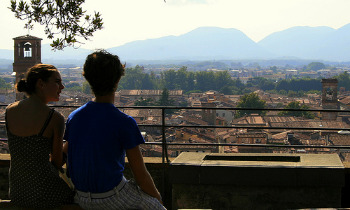 One of the symbols of Lucca, the Torre Guinigi tower with the oak trees on the top, was also built by will of the rich and powerful family Guinigi, rulers of the city. It’s possible to climb it - but pay attention, there is no elevator, only 230 steps! Closing times change with the season. If you decide to climb the Torre delle Ore as well, which will cost a huge effort because it’s 207 steps more to reach the top, but really worthy, check its hours first.
Even More About Lucca
These are just a few examples of the many museums and monuments that can be visited at Lucca. There is so much to do in this art city that it probably would take you a year to visit each of the attractions at least once, but it’s a good base to choose some aspects of the city you would like to see. To climb one of the towers can certainly give you a wide overview. But if you can’t make the effort, it could be enough to stroll on the top of the city walls.
I haven’t mentioned Puccini yet. He was born right here in Lucca, and his birthplace in Corte San Lorenzo, in the city center, is open as a museum. For those who are Puccini passionates, you should also include in your itinerary a visit to Torre del Lago, where he later lived and worked, and reserve a seat at the Puccini Opera Festival that takes place every year in the huge new theater built in his honor at Torre del Lago.
By the way, Lucca is very famous for its excellent quality extra virgin olive oil. This is a typical product to be tasted and maybe purchased, at least a small bottle. The same for local wine: Chianti Colli Lucchesi and Montecarlo DOC are two local wines to look for. If you don’t feel comfortable bringing bottles home, there are many other typical Tuscan products that you can purchase in Lucca. The most impressive is the handmade and hand-painted ceramics. Many shops in town can ship their articles for you. Other typical articles that you find for sale include leather products, antiques, design jewels, eyeglasses of any kind, clothes and shoes. Shops of famous Italian brands can be found along Via Fillungo and around the streets of the historic center.
Hope you enjoy these tips, which are certainly just a taste of what you can do and see in Lucca, but can be a satisfactory tour to learn a little bit of the essence of this charming city in a 360° overview: history, wine, food, architecture and shopping!
Thanks to Jessica for inviting me to write this guest post to your wonderful Blog! Cheers from Tuscany!

About the Author
Adriana is Italian-Brazilian, born in Brazil in a family of Italian origins, part of them from Lucca. She graduated in Tourism at the University of Sao Paulo (Brazil) and moved to Italy on 2003. She has lived in Tuscany for 5 years, where she earned a Master’s degree in Environmental Management and has been working in the travel and tourism industry. She moved to Bologna in 2008, where she ran a blog called Around Tuscany and worked as a freelance photographer.
photos, top to bottom, by: bongo vongo, urbaninvestigations, pasotraspaso, bongo vongo; author portrait courtesy of the author