Train from Milan to Venice
Updated · BootsnAll
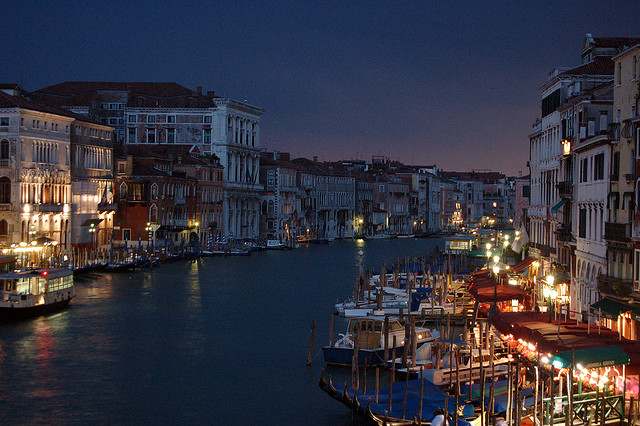
 Milan's Malpensa airport is one of the biggest entry points for visitors to Italy, and plenty of people land there and head straight for Venice. The train makes that easy. It runs direct between the two city centers, and you step out of Venezia Santa Lucia station onto the Grand Canal.
Driving makes no sense here: Milan traffic is miserable and you can't take a car into Venice at all, so you'd be paying to park it on the edge of the lagoon. FlixBus and Itabus coaches do run between the two cities and can be cheap, but they're slower than the train and drop you at Piazzale Roma or Mestre. The train is the one to take.
Milan to Venice by train at a glance
| Fastest trip | about 2 hours 15 minutes |
|---|---|
| Trains | high-speed trains 1 to 2 an hour through the day (Italo runs 7 of them) |
| Stations | Milano Centrale to Venezia Mestre, then Venezia Santa Lucia |
| Fares | from about 15 euros booked ahead in 2026; much more on the day |
Figures are from Italo's route page, checked in September 2026.
Which train to take
The fastest trains are Trenitalia's Frecciarossa ("red arrow") and trains run by Italo, a private company that has competed with Trenitalia since 2012. Both take about 2 hours 15 minutes, with stops that typically include Verona, Vicenza and Padua (some also call at Brescia or Peschiera del Garda). Trenitalia runs more of them, so check trenitalia.com for the most choice of times and italotreno.com for a possibly cheaper fare.
Slower regional trains take three and a half to four hours, and many need a change in Verona. They only make sense if you're stopping in Verona or Lake Garda anyway, in which case break the trip there.
How much the train costs
High-speed fares change with demand, like airfares. Italo's cheapest advance fares on this route were about 15 euros in 2026, and Trenitalia's Economy and Super Economy fares are in the same range. On the day, expect to pay several times that. Book once your dates are firm, since the cheapest fares limit changes and refunds. Every high-speed ticket includes a reserved seat.
Regional trains have fixed fares and no reservations; check Trenitalia for the current price. Pass holders can use the Interrail Italy Pass or the Trenitalia Pass on Trenitalia trains, with a seat reservation on the Frecce. The Trenitalia Pass isn't valid on Italo.
Mestre or Santa Lucia?
There are two stations with "Venezia" in the name, and this trips people up. Venezia Mestre is the first stop, on the mainland. Get off there only if your hotel is in Mestre. Venezia Santa Lucia is the end of the line, across the causeway on the islands, and it's the one you want for the historic city. If you're booking a mainland hotel to save money, the regional trains between Mestre and Santa Lucia are frequent and take about 10 minutes.
Arriving in Venice
- Outside Santa Lucia is the Grand Canal and the vaporetto (water bus) stop. A single vaporetto ticket was about 9.50 euros in 2026, valid 75 minutes, so if you'll ride more than a couple of times, a 24-hour to 7-day pass pays off. See Venice transportation 101.
- Pack light if you can. Venice is all bridges and steps, and there are no taxis on land. Our tips on getting help with luggage in Venice have more.
- Going for the day? On set peak days between April and July, day-trippers pay an access fee to enter the historic center; overnight guests are exempt but register. Check the calendar at cda.ve.it before you go.
>> More information about how to get from Milan to Venice, and our guide to train travel in Italy
photo by gribbly