Accommodation in Italy
 Accommodation in Italy can take many forms – some of them have names you will be familiar with, others will be different. Sleeping in Italy is often expensive, so budget a bit more for this portion of your travel allowance or plan to try cheaper options like hostels or agriturismo to save money. If you do not make reservations in advance, it is always okay to ask to see a room before you decide to stay there.
>> When you’re planning a trip to Italy, reading through a first time visitor guide to Italy is a good idea – whether you’ve been there before or not – to make sure you’re not forgetting anything.
Here is a description of the types of accommodation you can expect in Italy.
Hotels
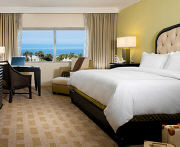
Hotels in Italy, like hotels elsewhere, will vary depending on the number of stars. In the larger and more touristy cities you will find the whole range from 5-star to 1-star, and the price will go up or down accordingly.
Just because a hotel says it is a 1- or 2-star property, however, do not assume it will be sub-standard. Often, these are smaller, family-run inns with lots of character, central locations and friendly owners eager to be your host. What they will lack could be anything from a big American-style breakfast, a big hotel chain’s name, an elevator to the upper floors, or air conditioning. They can also be a great bargain. If one of these properties looks promising, do not be afraid to check it out.
The word “hotel” is often used for hotels in Italy, but it is pronounced with a silent “h” – like OH-tell. There is an Italian word for hotel, too, which is “albergo” (pronounced al-BEAR-go).
>>Be sure to check out our Italy hotels search tool to help you find the best deals on hotels in Italy!
Hostels
Hostels are a great way to save money when you travel, especially in an expensive country like Italy. In Italian, the word for hostel is “ostello” (pronounced aw-STELL-oh), but it is actually not as commonly used as “hotel.” If you find a hotel with exceptionally low prices, it might actually be a hostel, just calling itself a hotel, or budget hotel, or sometimes even guesthouse. Just because you see the word “hotel,” do not assume it is 5-star fancy – check to see if they have dorm-style shared rooms or simply ask about the cheapest rooms. You might just find a hostel in Italy being disguised as a hotel.
Agriturismo
This is called different things depending on what you are reading, but you might see “farm holiday,” “agricultural tourism,” “agritourism” or the Italian “agriturismo” (pronounced ah-gree-tour-EEZ-mo). Whatever it is called, it generally means that you rent a room (sometimes shared, sometimes private, sometimes with en suite bathrooms, sometimes with shared bathrooms) in either a present-day or a one-time working farm. This does not mean that you are going to be working on the farm, it just means you have an opportunity to be out in nature as opposed to a city center. An agriturismo might offer cooking classes, wine or olive oil tastings, guided excursions into the surrounding countryside, horseback riding and any number of other outdoor activities, and they usually come with at least one meal per day.
Because of the nature of the experience, agriturismi are not likely to be in the center of a city, so if you are using public transportation make sure it is easily reachable (you might find that the owners provide a “taxi” service from the local train or bus station).
A stay in an agriturismo can be surprisingly cheap – so much so that they are often listed under “hostels” in booking engines – so do not rule them out if you are traveling on a budget. They are a fantastic way to see something other than big cities and to meet some interesting Italians.
Villas and Other Vacation Rentals
Anyone staying in one place for more than a week, traveling as part of a large group or family with small kids, or just wanting to have their own space will want to consider renting a villa or another kind of vacation rental in Italy. There is something for every price range and in every environment – from a palace in the Tuscan hills to a one-bedroom apartment in central Rome. Making a vacation rental your home base and making day-trips is a great way to minimize your travel time (not to mention your packing and unpacking time!), too.
>> Going to Tuscany with kids? Read about WhyGo Italy’s 10 favorite family-friendly accommodations in Tuscany!
Convents/Monasteries
As a good largely Catholic country, Italy is full of convents and monasteries. Many of them have a history of opening their doors to weary travelers, and for some that has taken a modern twist. Some convents and monasteries now play host to not only pilgrims, but travelers of any sort. They can be in cities or in the countryside, and they often are incredibly cheap. They are also notoriously safe places to stay, which can be very appealing (especially for solo female travelers). The catches can include having a curfew, participating in prayer times, or separate sleeping quarters for men and women. If none of those things are unsavory to you, staying in a convent or monastery is an excellent and unique way to travel through Italy.
Guesthouses/B&Bs
The words “guesthouse” and “bed and breakfast” are sometimes used in Italy when they might not be used elsewhere. While “B&B” in a country like England, for instance, conjures up very specific images of cozy cottage rooms, overstuffed furniture, and big English breakfasts, B&Bs in Italy don’t traditionally have the same reputation. Many small budget hotels call themselves “guest houses” or “B&Bs,” the latter especially if they include some kind of breakfast in the price of the room – but if you’re really looking for the more traditional version of a B&B, you’ll want to find out exactly what “breakfast” consists of. Some Italian B&Bs serve nothing more than what is a very typical Italian breakfast (coffee and a pastry), but which leaves non-Italians wanting. In more recent years, some B&Bs in Italy are opening up which do offer a bigger breakfast, so be sure to ask about the amenities on offer at a guesthouse or B&B; properties like this can be a cheaper alternative to hotels, but only if they offer something the hotel does not.
>> For more, check out my post about accommodation terms in Italy and what they mean!