
Shroud of Turin: Visiting the Shroud Museum
· Updated · BootsnAll
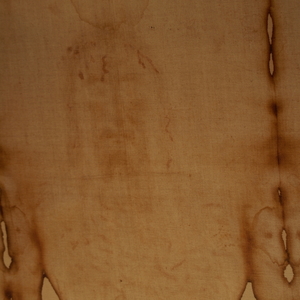 Even if you couldn’t find Turin on a map and aren’t religious, you’ve probably heard of the most famous thing in the city: the Shroud of Turin. It’s a long linen cloth carrying the faint image of a man’s body, front and back, and many believe it is the cloth Jesus was buried in. Look at a photograph of it and you’ll understand why the argument has lasted six centuries.
Here’s the catch for visitors: you almost certainly won’t see the real thing. The Shroud is kept sealed in Turin Cathedral and shown to the public only on rare occasions. What you can see any day is the Museo della Sindone, the Shroud Museum, which tells the whole story and has a full-size copy you’re free to look at as long as you like.
>> Looking for a place to stay? See our guides to hotels in Turin and hostels in Turin.
What the Shroud is
In Italian it’s La Sindone (lah SEEN-doh-neh). The cloth measures about 4.4 by 1.1 meters and is woven in a herringbone twill. The image is a pale straw color, and it shows a bearded man with his hands folded, with reddish-brown stains that line up with the wounds of crucifixion described in the Gospels.
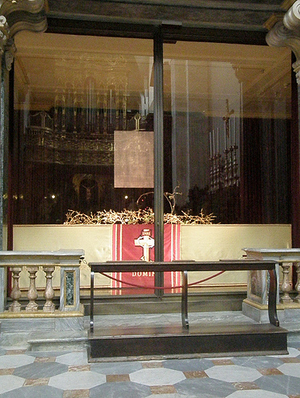
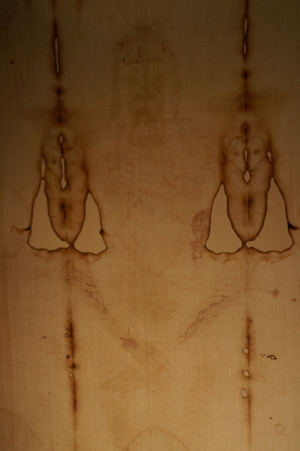
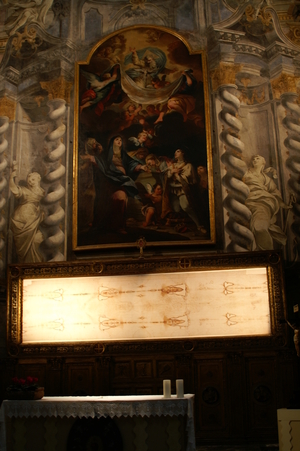
Above, the case that holds the real Shroud; below, the copy in the museum’s chapel
Six centuries in brief
- 1354: the first secure record, when the cloth was being displayed in a church at Lirey in northern France. In 1389 the local bishop called it a forgery.
- 1453: the House of Savoy acquired it and later kept it in a chapel at Chambéry.
- 1532: fire in that chapel melted part of the silver casket. The burn holes and scorch lines you see down both sides of the cloth date from then, as do the patches Poor Clare nuns sewed on to repair it.
- 1578: the Savoys moved it to their new capital, Turin, where it has stayed ever since.
- 1694: it went into the Chapel of the Holy Shroud, Guarino Guarini’s astonishing domed chapel between the royal palace and the cathedral.
- 1898: Secondo Pia took the first photographs and discovered that the negative plate showed the face far more clearly than the cloth itself. That image started the modern devotion to the Holy Face.
- 1983: ownership passed from the Savoys to the Catholic Church on the death of the last king, Umberto II.
- 1988: three laboratories carbon-dated samples of the cloth to between 1260 and 1390.
- 1993: the Shroud was moved from Guarini’s chapel into the cathedral, where it is kept today.
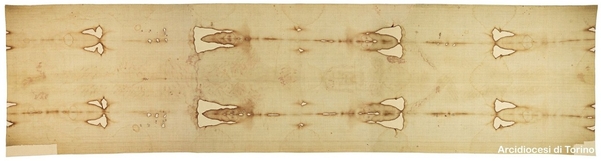
So is it real?
Most scientists accept the 1988 radiocarbon result, which dates the linen to the Middle Ages, right around when it first appears in the records. Defenders argue the samples were contaminated or cut from a medieval repair, and those theories have been rejected by most experts, but nobody has shown exactly how the image was made, either. The Catholic Church itself neither endorses nor rejects the Shroud as the burial cloth of Jesus; it treats it as an image that invites devotion.
That unresolved mix is exactly why the museum is worth an hour. It walks you through the history above, Pia’s photographs, the fire damage and the science, and you leave better equipped to make up your own mind, or simply satisfied about a famous piece of cloth.
Seeing the real Shroud
Public exhibitions, called ostensions, happen only a few times a generation and are announced well in advance by the Archdiocese of Turin, with free timed reservations that fill fast. The two most recent full public ostensions were in 2010 and 2015. If one is announced while you’re planning a trip, it’s worth rearranging your dates for.
The rest of the time, you can go into Turin Cathedral (the Duomo di San Giovanni Battista) and see where the Shroud is kept, though not the cloth itself. Then see Guarini’s Chapel of the Holy Shroud: badly damaged by fire in 1997, it reopened in 2018 after a long restoration and is visited as part of the Musei Reali (Royal Museums), the old Savoy palace next door. Standing under that dome of stacked stone arches is one of the great architectural experiences in Italy, and most visitors to Turin miss it.
Visiting the Museum of the Shroud
Where: Museo della Sindone, Via San Domenico 28, 10122 Turin, in the crypt of the Church of the Holy Shroud (Chiesa del Santo Sudario), a ten-minute walk from the cathedral.
Hours: In 2026 the museum lists its hours as 3pm to 6pm every day, so this is an afternoon visit. Hours and prices change, so check the museum’s official site (in Italian) or email info@sindone.it before you go.
How long: about an hour, including the video.
Because the chapel copy isn’t the real thing, photography of it was allowed when I visited, flash and video included.
>> The volunteers who ran the museum were unfailingly nice, from the women who sold me my ticket, to the woman who led me through to the chapel to see (and film) the copy of the Shroud, to the man running the explanatory video. We talked about our favorite Italian soccer teams, and I left with a tip on where to go for dessert. Chat with the locals: it pays off.
photos by Jessica Spiegel except for the container holding the actual Shroud, by DennisSylvesterHurd, and the image of the whole Shroud, by the Turin Archdiocese