Italy Ports of Call: Where Cruise Ships Stop in Italy
· Updated · BootsnAll
 A Mediterranean cruise lets you sample several countries without packing and unpacking every other day. You won't get to know any one place well, but you'll get a taste of a lot of them, and Italy usually takes up several days of the itinerary.
The catch with Italian ports is that the name on the itinerary often isn't where you're going. "Rome" means Civitavecchia, 80 km from the Colosseum. "Florence" means Livorno, and "Venice" now usually means a mainland dock or a different city entirely. Below are the main Italian ports, what's actually near each one, and how realistic a day ashore is. Where we have a detailed port guide, it's linked.
The big three: Rome, Florence and Naples
- Civitavecchia (for Rome): Civitavecchia is Rome's cruise port, about an hour away by train. A free port shuttle drops you near the station, and regional trains run to Rome two or three times an hour for a flat fare of about 4.60 euros in 2026, around 50 to 60 minutes to Roma San Pietro (by the Vatican) and 75 to 85 minutes to Termini. That's far cheaper than the ship's excursion, and just as quick. Leave a big margin for the ride back. Details are in Rome Cruise Terminal: Where it Is and How to Get There.
- Livorno (for Florence and Pisa): Livorno is the port for Tuscany. Florence is about an hour and a half away by train or coach, Pisa much closer, so a Pisa-plus-Lucca day is more relaxed than cramming Florence into a few hours. Livorno itself is a working port city with a 16th-century canal ring (the Venezia Nuova quarter) and a seafront promenade, and it's a fine place to spend the day if you've already seen Florence. The ships dock in an industrial port, so you'll need the shuttle bus to reach the town or the station.
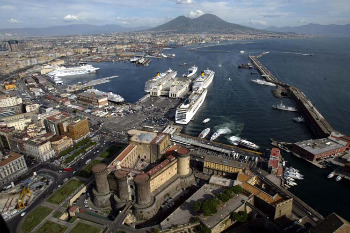
- Naples: The one big Italian port where you step off the ship right into the city. The Stazione Marittima sits by Molo Beverello, a few minutes' walk from the Municipio metro station (Lines 1 and 6) and the fast ferries to Capri. From here you can do Pompeii or Herculaneum on the Circumvesuviana train, catch a boat to Capri or Sorrento, or just eat your way around the historic center. Full details in Naples Cruise Terminal: Where it Is and How to Get There. Staying before or after? See hotels in the Naples historic center.
Venice and the northern Adriatic
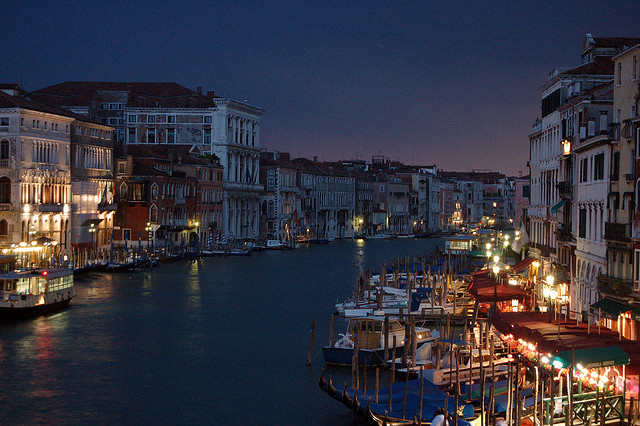
- Venice: Since August 2021, ships over 25,000 gross tonnes (or longer than 180 meters, or taller than 35 meters) may not sail through St. Mark's basin and the Giudecca Canal, so the big cruise ships no longer dock in the historic city. Large ships use mainland docks such as Marghera or Fusina, or skip Venice for other Adriatic ports, and only small ships still reach the city's own terminals. If your ship says Venice, check exactly where it ties up before you plan the day. Day-trippers also pay Venice's access fee on set peak days between spring and midsummer (in 2026, 60 days between 3 April and 26 July). Read more in Venice Cruise Terminal: Where it Is and How to Get There. Staying a night before or after? See Venice hostels.
- Trieste: Trieste has become a much bigger cruise port since Venice closed to large ships, and some cruises now start or end here. It's close enough to the border that you could fit Slovenia into a day. The city itself has one of Italy's grandest seafront squares, Piazza Unità d'Italia, a hilltop castle and cathedral, and a proper coffeehouse culture; illy is based here. Venice is about two hours by train if you want to go. Search for Trieste hotels and Trieste hostels if you need to stay the night.
- Ravenna: Another Adriatic port that picked up ships after the Venice restrictions. The draw is Ravenna's 5th and 6th-century mosaics, eight UNESCO-listed monuments packed into a small, walkable town. Some itineraries use it as a gateway to Venice (about three hours by coach) or Bologna.
- Ancona: A ferry and cruise port on the Adriatic in the Marche region, less common on big Mediterranean itineraries. The old town climbs a hill to the Romanesque cathedral of San Ciriaco, which looks out over the harbor, and there's evidence of the city's Greek and Roman past near the port, including Trajan's Arch.
- Bari: Puglia's capital, in the heel of the boot. The old town, Bari Vecchia, is a knot of alleys where women still make orecchiette pasta in the street, with the Basilica of San Nicola and a Norman-Swabian castle close by. Excursions head to the trulli of Alberobello or to Matera, both a long day. Search for Bari hostels if you need to stay the night.
The Italian Riviera and the Cinque Terre
- Genoa: One of Italy's busiest ports and a major cruise port, often the start or end of an Italian or western Mediterranean cruise. If so, give the city a day before or after: the medieval center is one of Europe's largest, the Strada Nuova palaces are UNESCO-listed, the aquarium is one of Europe's biggest, and this is the home of pesto and focaccia. Search for Genoa hotels and Genoa hostels.
- Savona: West of Genoa, and a common embarkation port for Costa Cruises. The town is pleasant enough; most people are just passing through.
- La Spezia: The cruise port for the Cinque Terre. The regional train from La Spezia Centrale reaches the first village, Riomaggiore, in under 10 minutes, and runs up the coast all day, so you can do the villages on your own without an excursion. Book trains or boats with a buffer: the villages are packed on cruise days. Our two-day Cinque Terre itinerary will help you pick the best villages for a short visit.
- Portofino: A small, expensive resort harbor east of Genoa. Big ships can't get in, so you'll anchor offshore and ride a tender (a small boat) to the quay. Walk up to the lighthouse, or take the ferry to Santa Margherita Ligure or the abbey at San Fruttuoso.
- Portovenere: Another tender port, at the southern tip of the Cinque Terre coast. Portovenere is part of the same UNESCO World Heritage Site as the Cinque Terre, with a clifftop church and castle, and in season boats run from here to the villages.
Sicily, Sardinia and the south
- Messina: The Sicilian port closest to the mainland, busy with ferries across the Strait. Cruises use it for excursions to Taormina and Mount Etna; Taormina is under an hour away by train or bus.
- Palermo: Messina is the port for eastern Sicily; Palermo covers the west. It's one of Italy's most intense cities, with street markets, Arab-Norman churches (the cathedral, the Palatine Chapel, and Monreale just outside town are UNESCO-listed) and some of the best street food in the country. It's easily worth a day on its own. Search for Palermo hotels and Palermo hostels, and see our top 10 things to do in Palermo.
- Other stops: Depending on the line, you'll also see Catania (for Etna), Cagliari and Olbia in Sardinia, Salerno and Sorrento (for the Amalfi Coast; Sorrento is a tender port), and Brindisi and Taranto in Puglia.
Making the most of a port day
- Do the math on distance. When the port is an hour or more from the sight (Civitavecchia, Livorno, Ravenna), a ship's excursion costs more but the ship waits for it. If you go independently, plan to be back at least an hour before all-aboard.
- Trains beat taxis. Civitavecchia, Livorno, La Spezia and Naples all have direct train links, and the fares are a fraction of a taxi or a tour.
- Know about strikes. Rail and transport strikes are announced in advance. Check before you rely on a train: train strikes in Italy.
- Watch your pockets in crowded stations and tourist sights, which are exactly where cruise groups end up. See our anti-pickpocketing tips.
photo from the Naples cruise terminal website