
Roma Pass: What it Covers & Whether it's Worth the Cost
· Updated · BootsnAll
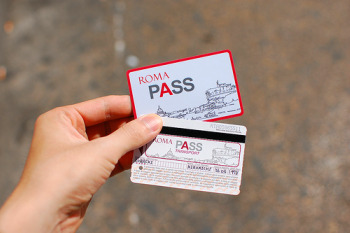 Pretty much every big city in the world that plays host to tourists sells some kind of “city pass.” These tend to include some combination of that city’s museums and attractions as well as use of public transportation. As you’d expect, Rome has one - and it’s called the Roma Pass.
In 2026 a Roma Pass costs about €38 for 48 hours or about €62.90 for 72 hours. Some travelers might not think twice about buying one, but if you’re on a really tight budget you might wince a little at that pricetag. So in this article I’m going to go over a few things - what the Roma Pass covers, how to use the Roma Pass, whether a Roma Pass is worth the cost, and how to get a Roma Pass.
What the Roma Pass Covers
There are two versions of the Roma Pass: the 48-hour pass includes free entry to the first museum or archaeological site you visit, and the 72-hour pass includes free entry to the first two. With either one, you get the following things:
- Free entry to the first site (48-hour pass) or first two sites (72-hour pass) you visit
- Discounted entry to all other included museums and/or archaeological sites after that
- Discounted entry to some exhibits & events
- Free public transportation in Rome (bus, metro, trams) for the life of the pass
Note that the Roma Pass does not cover transport Trenitalia (Italy’s national train system) or the Leonardo Express (train to/from Fiumicino Airport in Rome), and not everything in Rome is on the list of included attractions. Still, there are some interesting perks that come with a Roma Pass in addition to the obvious ones.
One thing the Roma Pass will not do is let you skip booking at the Colosseum. Colosseum tickets are timed and carry your name, and Roma Pass holders need to reserve a time slot too, so book yours through the official Colosseum ticket site as soon as you know your dates.
Keep in mind that the clock on the Roma Pass starts ticking when you first use the card to either get into one of the included museums/attractions or the first time you ride public transport. If you’ll be in Rome for longer than your pass lasts and don’t want to start it until your second day in the city, you’ll just need to make sure you’re buying bus/metro tickets to get around until then.
A few of the things you get along with the Roma Pass itself are:
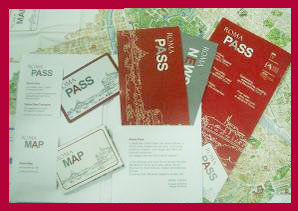
- A map of Rome that includes pointers for Tourist Information offices and metro stations (included attractions are also marked on the map, along with each attraction’s address, open hours, and nearby bus/metro stops)
- A guide to all participating museums and sites included in the Roma Pass
- More information on how to use the Roma Pass and how to take advantage of its other perks (medical help, online help)
Some of the more than 100 museums, sites and experiences included on the Roma Pass are:
- Colosseum
- Roman Forum
- Palatine Hill
- Capitoline Museums
- Baths of Caracalla
- Borghese Gallery
- Castel Sant’Angelo
- Ara Pacis Museum
- National Museum in Rome
- Trajan’s Market & Forum
- Ostia Antica Excavation Site
How to Use the Roma Pass
 As mentioned, the Roma Pass is good for 48 or 72 hours from the first time you use it, which may or may not be the first day of your stay in Rome. If you’ll be in the city for longer than that and you’re not planning to use it immediately upon arrival, wait to start it until the day you want the clock to begin. And, as I said earlier, if you’re riding public transportation in Rome before you start your Roma Pass, make sure you buy tickets for your trips.
The first site you visit (or the first two, on the 72-hour pass) counts as your free entry, so you definitely want to look at the ticket prices for all the museums and other attractions you’re planning to visit during your stay in Rome to make sure you’re using the pass on the most expensive ones. Places that require a reservation, like the Colosseum and the Borghese Gallery, still need one when your entry is free.
At any other attractions you visit after your free ones, the Roma Pass will entitle you to a discounted ticket rate. You will have to wait in the ticket line to purchase tickets like everyone else, but when you show the ticket agent your Roma Pass you won’t have to pay full price. You may be asked to verify that the pass is yours, so make sure you’ve got your ID with you when you’re going to use the Roma Pass.
Is the Roma Pass worth the cost?
 Strictly financially speaking, it’s fairly easy to figure out whether you’d be getting your money’s worth if you bought a Roma Pass. All you need to do is add up the ticket prices of the various museums and attractions you planned on visiting while in Rome - the ones that are part of the Roma Pass, that is - and then compare that to the cost of the pass itself, plus the discounted entry fees for any sites you visit past the first two free ones. Assuming you were planning on riding buses, trams, or the metro now and again, you’ll want to factor in the savings of several transportation tickets as well.
This sounded very simple until I went looking for what, exactly, the discounted prices on all of those museums and attractions would be. Sure, discounts are always good things, but if you don’t know how much the discounted ticket price is then you can’t really figure out the true cost of the Roma Pass. This article on EuroCheapo attempted to lay out a mathematical comparison of buying a Roma Pass or buying individual tickets instead, but the author only talks about the two free attractions and doesn’t include anything about the discounted tickets.
The official Roma Pass website lists the included sites, so check it for each one’s full price and Roma Pass price before you do your math.
Since it’s only the first site or two that are completely free, you want to plan it so the most expensive ones come first. The Colosseum ticket costs about €18 in 2026, so that’s one of the sites you’ll want to visit first!
There’s an additional perk to visiting the Colosseum as one of your first two attractions on your Roma Pass, too. Because the Colosseum is on what’s called a “combined ticket” with the Roman Forum and the Palatine Hill, your free entry to the Colosseum also gets you free entry into those two sites - whether you’ve already used your other free entry or not. Of course, you can visit any of these three sites on the Colosseo/Palatino/Foro Romano “combined ticket” in any order you like, but you’ll save the most money if you at least make one of them your first two stops on your Roma Pass.
Also note that the Galleria Borghese requires everyone to reserve a specific time to visit in advance, whether you have a Roma Pass or not. There’s a €2 fee for making the reservation.
So, the bottom line is that to be completely certain the Roma Pass is a good deal for you, you’ll need to have a rough idea of the museums and other attractions from the Roma Pass list that you’d like to see - and you’ll need to do a little math. But at least now you have the tools you need to do all the figuring necessary!
Where to Buy a Roma Pass
You can buy a digital Roma Pass in the official Roma Pass app, or a physical card at Rome’s Tourist InfoPoints, including the ones at Fiumicino and Ciampino airports and at the Fori Imperiali visitor center.
You’ll find everything you need to buy a Roma Pass, including the full list of included sites, on the official Roma Pass website and on Rome’s tourism site.
photo at top by cobacco