Florence
Updated · BootsnAll
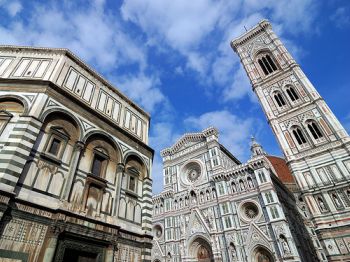 Florence is a must for anyone who cares about art, but it rewards people who don’t, too. The whole historic center is a UNESCO World Heritage Site, and you can walk across it in half an hour. Have you heard of Stendhal syndrome, the supposed illness that makes people faint at the sight of great beauty? It also goes by “Florence syndrome,” because it was named for 19th-century visitors who were overcome here.
These days you’re as likely to see tourists wobbling home from a pub crawl as swooning in front of a Botticelli. Either way, Florence is one of the big three stops on a first trip to Italy, with Rome and Venice, and it’s the obvious base for exploring Tuscany.
This page covers the basics: how long to stay, where to sleep, what to book ahead and how to get in and out. The articles linked throughout go deeper.
Quick links to Florence travel resources:
- Where to Stay in Florence
- What to Book Before You Go
- What to Do in Florence
- Getting to Florence and Getting Around
- Things You Should Know About Florence
- Top 10 Things to Do in Florence
- Itinerary for 4 Days in Florence
- Day Trips from Florence
- How to Find Cheap Airfare to Florence or to Pisa
Where to Stay in Florence
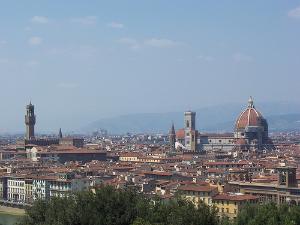 Florence is busy all year with foreign and Italian visitors, so it’s packed with places to stay. Stay in the historic center if you can. Everything that matters is walkable from there, and you’ll want to drop back to your room in the afternoon. The streets between the station, the Duomo and Santa Croce are the most convenient. The Oltrarno, across the river around Santo Spirito and the Pitti Palace, is a little quieter and has better neighborhood restaurants.
- Florence Hostels Guide
- Cheap Hotels in Florence
- Florence Hotels Near the Duomo
- Florence Hotels with a View of the River
Two things will change your bill. First, Florence charges a city tax on top of the room, per person per night, for up to seven nights in a row, with children under 12 exempt. Since February 2025 it has run from €3.50 at a 1-star hotel to €8 at a 5-star, with hostels at €4 and B&Bs and holiday flats at €6. It’s usually paid at the hotel and often isn’t in the booking price. More in our article on the Florence hotel tax, and the rates are on the city’s own page.
Second, if you’re looking at apartments: the city stopped licensing new short-term rentals in the historic center from May 2025 and extended the freeze to nine more neighborhoods in June 2026. Existing licensed flats can still be booked. Any legal listing shows a national ID code, the CIN, so skip the ones that don’t.
What to Book Before You Go
Florence’s headline sights all run on timed tickets now, and the lines for walk-ups in summer can eat half a morning. Book these in advance, on the official sites only, since look-alike resellers charge more:
- Uffizi Gallery: about €29 booked ahead in 2026, about €25 on the day. Closed Mondays. Free on the first Sunday of the month (expect a crush). Book at uffizi.it. Read our guide to the Uffizi.
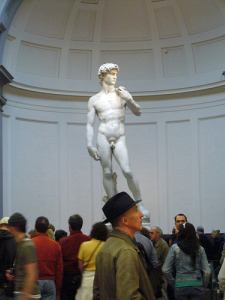
- Accademia (Michelangelo’s David): about €20. Closed Mondays. Timed booking through the museum’s official site. More on the Accademia.
- The Duomo complex: the cathedral itself is free (closed Sundays). Everything else, the dome climb, Giotto’s bell tower, the Baptistery, the crypt and the Duomo Museum, is sold as a 3-day pass: about €30 with the dome, €20 with the bell tower but not the dome, €15 for the museum, Baptistery and crypt. Dome slots sell out first. Prices at tickets.duomo.firenze.it.
Doing lots of museums in three days? The Firenze Card costs about €85 for 72 hours and covers more than 60 museums. It only pays off if you’re truly museum-hopping. If your list is the Uffizi and the Accademia, separate tickets come to about €49.
What to Do in Florence
 You could spend a week here and not see everything. Give Florence three days at least, four or five if you can. Even if you think you don’t care about art, set aside time for the big museums. They hold the paintings and statues you’ll keep bumping into for the rest of your life.
The list of must-sees almost makes the city seem greedy. Churches and museums that would be the top attraction in any other town get filed under “if you have time” here: the Bargello’s sculpture, the frescoes in San Marco, the Brancacci Chapel, Santa Croce. It’s an embarrassment of riches, and I, for one, am not complaining.
My advice: do one big museum a day, first thing in the morning, and leave the afternoons for walking. Cross to the Oltrarno, climb to Piazzale Michelangelo or San Miniato for the view at sunset, and wander without a list.
- Things to Do in Florence
- Top 10 Things to Do in Florence
- Free Things to Do in Florence
- Avoiding Lines in Florence
- What to Do with 4 Days in Florence
Florence is also famous for two things that have nothing to do with art: shopping and eating.
Milan and Rome may be better known for designer shopping, but Florence has outdoor leather markets that are fun to browse even if you don’t buy anything. Tuscany is known for its leather, so you’ll find bags, belts, jackets, shoes and just about anything else leather can be made into (leather trash can, anyone?). At the market stalls, prices are flexible, so haggle a bit. In shops, look for the word “Saldi” in the windows: the official sales in Tuscany start in early January and early July.
>> More about leather shopping in Florence
And although you’ll find gelato everywhere in Italy, many people will tell you Florence’s is the best. You can’t weigh in on that argument until you’ve eaten your way through a few shops here.
>> More about how to order gelato, plus Florence’s most famous gelato shop, Vivoli
Getting to Florence and Getting Around
Most people arrive by train at Firenze Santa Maria Novella, a few minutes’ walk from the Duomo. High-speed trains from Trenitalia (Frecciarossa) and Italo make Florence an easy hop: in 2026 the fastest trains took about 1 hour 25 minutes from Rome, 1 hour 43 minutes from Milan, about 2 hours from Venice and 2 hours 42 minutes from Naples. Fares are dynamic, like airfares, so book ahead for the cheap ones. See Rome to Florence, Milan to Florence and Venice to Florence.
Flying in, you have two airports:
- Florence (Peretola): the T2 tram runs from the terminal to the station area. It uses the normal city ticket, about €2 in 2026.
- Pisa: the bigger airport, with more budget flights. Take the PisaMover shuttle to Pisa Centrale, then a regional train to Florence, or a direct coach. See getting between Florence and Pisa.
Once you’re here, walk. Buses and trams cover the outskirts, but the center is compact. Don’t drive into it: the historic center is a camera-enforced limited traffic zone (ZTL), and each unauthorized entry brings a fine of €83 to €332, plus the rental company’s fee for passing on your details. If you’ve rented a car for Tuscany, pick it up on the way out of Florence, not before.
Is Anyone Feeling Woozy?
I doubt Florence makes anyone faint these days, but it can overwhelm even a well-prepared traveler with the sheer number of must-sees. Will you fit it all in? Probably not. If you manage it in a few days, I want to know your secret. Most of us have to be content with what we have time for, or plan a return trip. I recommend the latter.
photos, top to bottom, by: Rosino, mahesh_f, James & Vilija