Venice
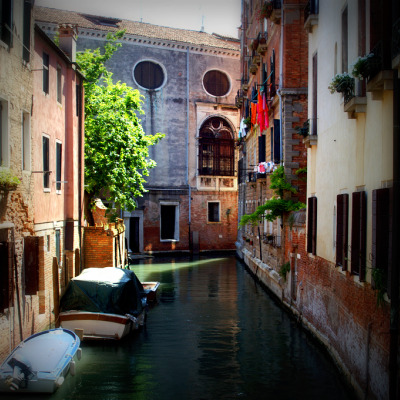 I am always dismayed when I hear people say how much they disliked their trip to Venice. It is such a pity, I think, to visit this one-of-a-kind gem of a city and have a bad time – especially when a bad time is so easy to avoid. (Can you tell that I really love Venice?)
If only they had done some reading ahead of time, or at least talked to some people who had enjoyed their Venice trips, they are more likely to have experienced the real magic that is La Serenissima. In fact, I’ve decided to no longer tolerate people who tell me Venice is too crowded. There is always a quiet corner of Venice. Always.
So, let this be your lesson – a little knowledge goes a long way, especially in the case of Venice!
Within this article, there are lots of tips that will come in handy when you’re planning your Venice trip – but there are articles elsewhere on WhyGo Italy that will also be incredibly useful. So here are some links to help you find exactly what you’re looking for.
Quick links to Venice travel resources:
- How to Find Cheap Airfare to Venice
- Budget Airlines that Fly to Venice
- Where to Stay in Venice
- Things You Should Know About Venice
- Top 10 Things to Do in Venice
- Itinerary for 2 Days in Venice
- Day Trips from Venice
- Where to Eat in Venice
- Getting Around in Venice
- How to Get from Venice to Marco Polo Airport (and vice versa)
- Venice Cruise Terminal: Where It Is & How to Get There
- Venice Survival Tips
Where to Stay in Venice
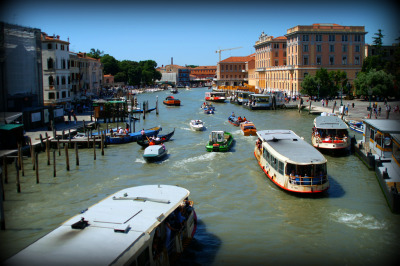 As it’s one of the most popular cities to visit in Europe, Venice is unsurprisingly full of accommodation options. But there are a few things to be aware of when it comes to accommodation in Venice:
- Space is limited in the city (being an island prevents sprawl!)
- Accommodation in Venice is expensive
- Many visitors only come for a day trip
The first two things on that list go hand in hand – a popular city with limited space is bound to be expensive, right? But the fact that Venice is so often no more than a day trip destination doesn’t help to mitigate the high prices on accommodation like you’d think it might. I don’t think Venice can be truly appreciated unless you stay overnight, however, so here are some articles I’ve written to help you figure out where to stay in Venice without breaking the bank.
- I’ve written about places to stay in various parts of the city (near major attractions and the train station, for instance), so to find those pieces go to my main articles on hotels in Venice and hostels in Venice.
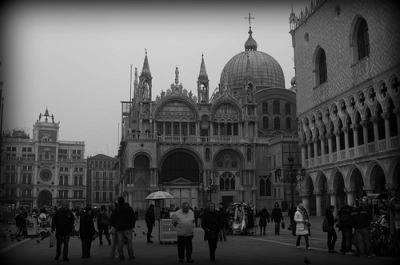
- St. Mark’s is the main “sight” in the city, and many people want their bed to be as close as possible to the cathedral for easy access. So here’s my list of hotels near St. Mark’s Square for you to choose from.
- A unique city should have unique places to stay, and Venice does – here are 5 unique hotels in Venice.
- Although it’s among the most romantic cities on earth, not every hotel in the city would fit the bill for a honeymoon, so here are some suggestions for romantic hotels in Venice.
Quick search for Venice hotels:
>> Note that in August 2011 Venice implemented a tax on accommodation – learn more about the Venice hotel tax, including how to avoid paying the top tax rates.
What to Do in Venice
 You’ve probably read – on this site, among others – that getting lost in Venice is the thing to do in the city. And it is. But there are actual sights to see in Venice, too. I’m strongly biased in favor of one in particular, and if you ask me privately I’d say you could probably skip pretty much everything else and spend the rest of your time wandering Venice aimlessly and still have a grand time, but there are many other things to see and do in Venice. Here are some articles to help you figure out how to spend your time in this utterly unique city:
- Things to Do in Venice
- Top 10 Things to Do in Venice
- Free Things to Do in Venice
- Day Trips from Venice
- What to Do with 2 Days in Venice
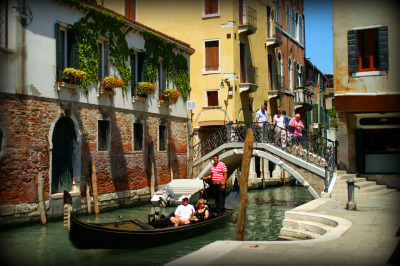
Some people think a trip to Venice is not complete without a ride in one of the Venice gondolas – I am not one of them, but I might be in the minority on this one. To me, a gondola ride is too expensive and not nearly as romantic as you think it will be – with all the tourists leaning over bridges to stare or snap pictures, you are hardly alone – but if you simply must have the gondola experience, then by all means go for it. And if you’re not looking for romantic, you can split the cost among up to six people.
Evening gondola rides might be a bit more expensive, but they might also feel more private with shadows hiding the faces of the gawkers. If you want to feel what being in a gondola is like but cannot stomach the high prices, there are a few points on the Grand Canal where gondolas ferry people back and forth from side to side (in places where bridges are not), and that trip will usually run less than one Euro. It might not be romantic, but it is a cheap way to get a little bit of the gondola experience.
>> Be armed with the right information before you bargain with your gondolier – know the official Venice gondola rates for the current year!
To Really Appreciate Venice, Stay Overnight
 Sadly, the Venice that too many tourists experience is the day-tripper’s Venice. In this scenario, you arrive on a cruise ship or train in the morning, move like a herd of sheep from one “sight” to another in a semi-mad rush to get it all done, and then you retreat to your ship or train in the evening and set out for another destination. What this means is that you miss absolutely everything that is enchanting about Venice – namely the early morning or late evening and all the nooks and crannies of the city that are away from the tourist attractions. Of course, if eight hours is all you have for Venice on your sprint around Italy, it could be that eight hours is better than nothing – but only if you plan your time incredibly wisely. Otherwise, you will have wasted a day on Venice because you “had to” see it and still ended up having a bad experience.
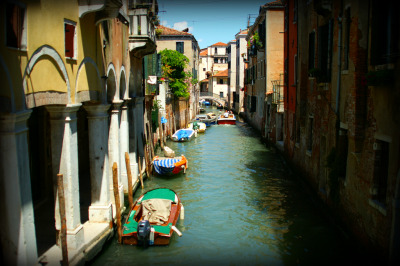
When people ask me how long they should spend in Venice, I always recommend at least two days, if not three. That might seem excessive for a small city with “nothing to do,” but it is precisely this lack of things to do that helps make Venice so lovely. Additionally, staying at least one night (better yet, two!) in Venice gives you a chance to experience the best this sleepy lagoon city has to offer – the early mornings and late evenings when the day-trippers have gone are simply delightful. More time also affords you the luxury of doing my number one “activity” in Venice – getting lost. Wandering the tiny streets and alleys will get you away from the main tourist centers and let you see the peaceful side of Venice.
Make Venice’s Airport Your Entry Point
 I also often recommend that people begin their Italy vacation in Venice, for a couple of reasons. First, Venice’s Marco Polo Airport is delightfully small in comparison to Milan’s and Rome’s international airports, making the usual customs and passport control lines much shorter and easier to get through. Second, when experiencing a new culture for the first time it is sometimes easier to ease oneself into it rather than give the system a shock. And, let’s face it, Milan and Rome are big cities that could easily present a shock to even the most intrepid traveler. Venice, on the other hand, is wonderfully car-free and presents an opportunity to get used to being in Italy for a couple of days before moving on to the rest of the crazy country.
Let me back up a moment and say that yes, Venice is dreadfully overcrowded in the peak summer tourist season – I would be silly to suggest it is not. My contention remains, however, that if you give yourself the time to get to know Venice a little better than the day-trippers you stand a much better chance of having a good time there and returning home using words like “magical” to describe the city.
If you give Venice half a chance, the city will grow on you and capture your heart and your imagination and become everything your romantic heart dreamed it could be.
all photographs by Jessica Spiegel & may not be used without permission