Lombardy
Updated · BootsnAll
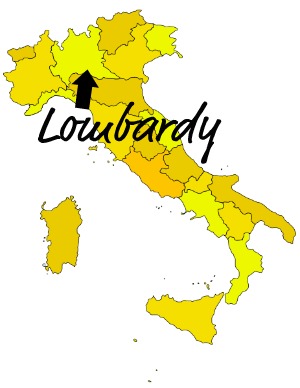
Lombardy is Italy’s richest and most populous region, home to about 10 million people, and most visitors see only a sliver of it: a night in Milan on the way to or from the airport, maybe a day on Lake Como. That’s a mistake. Lombardy packs in the country’s busiest business city, three of its great lakes, a string of handsome small cities that almost nobody from overseas visits, and a slice of the high Alps.
The region runs along Italy’s northern border with Switzerland. In area it’s one of the larger regions; in population nothing comes close, largely because of Milan, the country’s banking, fashion and design capital. This page gives you an overview, with links to the site’s more detailed articles.
 Quick links to Lombardy travel resources:
- Where to Stay in Lombardy
- What to Do in Lombardy
- Where to Go in Lombardy
- Cheap Airfare to Milan
- Getting from Malpensa Airport into Milan
Lombardy: Fast Facts
- Lombardy is the English name for this region. Lombardia (pronounced lom|bar|DEE|ah) is the Italian name.
- The capital of Lombardy is Milan.
- Lombardy borders Switzerland to the north and the Italian regions of Piedmont, Trentino-Alto Adige, Veneto and Emilia-Romagna.
- There are ten UNESCO World Heritage Sites wholly or partly in Lombardy, including Milan’s Church of Santa Maria delle Grazie with Leonardo’s “The Last Supper” in its refectory, the rock drawings at Valcamonica, the company town of Crespi d’Adda, the Sacri Monti, Mantua and Sabbioneta, Bergamo’s Venetian walls, and the Rhaetian Railway line from Tirano into Switzerland.
- Lombardy runs from the high Alps in the north, through the lakes, down to the flat rice and farm country of the Po Valley, with a corner of Apennine hills in the Oltrepò Pavese south of Pavia.
- People from Lombardy are called lombardi (masc. pl.). Other variations are: lombardo (masc. sing.), lombarda (fem. sing.), and lombarde (fem. pl.).
- Lombardy hosted much of the 2026 Winter Olympics: the opening ceremony was at San Siro in Milan, and the Alpine resorts of Bormio and Livigno held mountain events.
Where to Stay in Lombardy
Milan has by far the most beds in the region, but it’s a business city first, so hotels price for expense accounts. Rooms are dearest midweek and during the big trade fairs, above all Design Week (the Salone del Mobile, usually in April) and the fashion weeks, when prices can double and good rooms vanish. Weekends are often cheaper, once the business travelers go home. Milan also has several hostels if you’re on a tight budget.
Out at the Italian lakes you’ll find the classic leisure mix: grand old lakefront hotels, family-run places a street back from the water, B&Bs and a few hostels. In the countryside there are agriturismi, farm stays, especially in Franciacorta, the Oltrepò Pavese and the valleys north of the lakes.
My tip: if Milan hotel prices are painful, sleep in Bergamo, Como or Pavia and take the train in. All three are well under an hour away, cheaper, and nicer places to spend an evening.
Links to hotel and hostel articles for the region:
- Cheap Hotels in Milan
- Hostels in Milan
- Hotels with a view on Lake Como
- Learn more about Italian agriturismo
What to Do & See in Lombardy
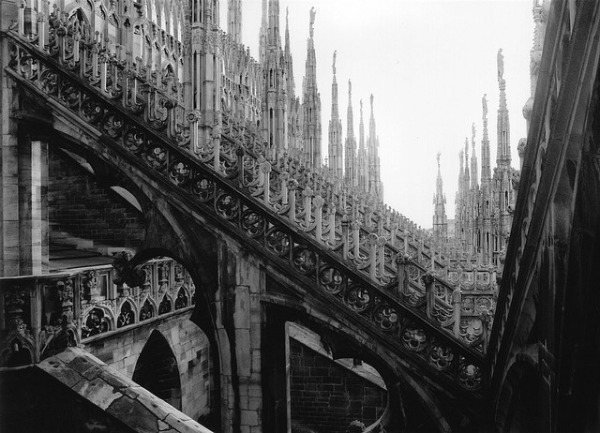
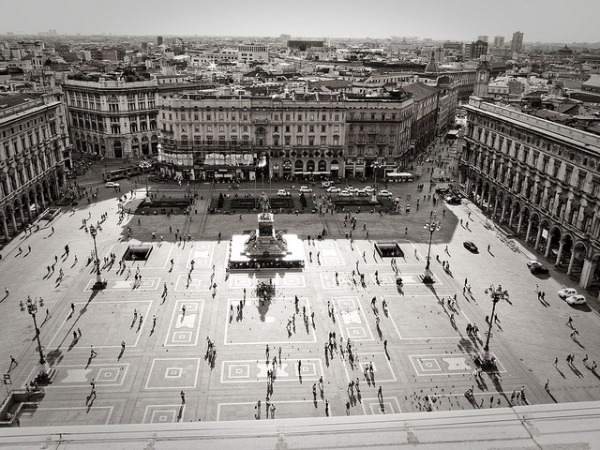
Milan rarely tops anyone’s must-see list for Italy, yet it holds one of the most famous paintings on earth, one of the world’s great opera houses and a cathedral you can walk around the roof of. Book two things well ahead: The Last Supper, whose tickets are released in three-month blocks and sell out, and the Duomo, which now charges for entry even to the cathedral itself.
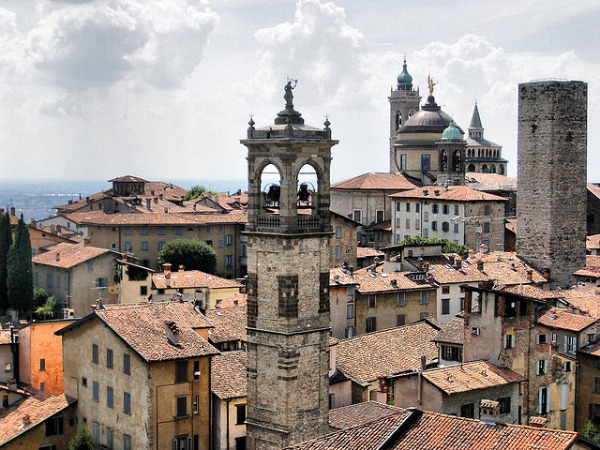
Beyond Milan, the lakes are the obvious draw. Bergamo’s upper town is the region’s best day trip. Mantua is the most underrated city in the north. And if you like cars, Monza’s racetrack hosts the Italian Grand Prix each September.
The main sights on most visitors’ lists:
- Duomo, Milan
- The Last Supper, Milan
- La Scala Opera House, Milan
- The walled upper town, Bergamo
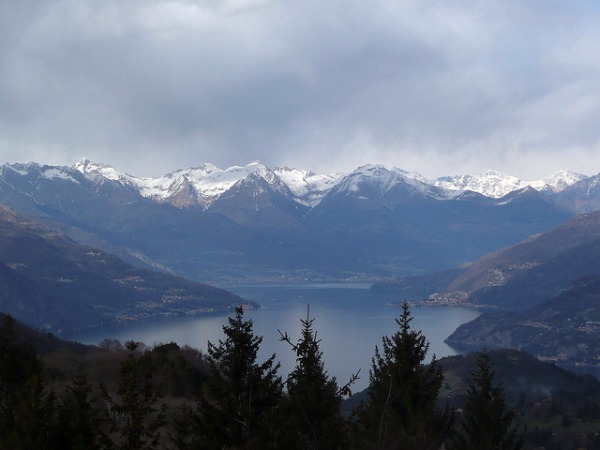
- Lake Como
- The Bernina line: from Tirano, at the top of the Valtellina, the Rhaetian Railway climbs over the Alps into Switzerland, and the ride is part of a UNESCO World Heritage Site. Tirano is at the end of the regional line from Milan that runs along Lake Como.
And some articles that may help you plan your trip:
Top 10 Things to Do in Milan
Things You Should Know About Milan
Day Trips from Milan
Where to Go in Lombardy
Milan’s Malpensa Airport is one of Italy’s two main long-haul gateways, so lots of trips start or end here with a single night in Milan. Linate, the city airport, is now on metro line M4, and Bergamo’s Orio al Serio airport handles most of the low-cost flights. If you have more time, there’s plenty to see even if you skip Milan entirely.
Most of these places make good day trips from Milan by train:
- Milan: Lombardy’s capital, home of Leonardo da Vinci’s “Last Supper,” La Scala opera house and one of Italy’s most spectacular cathedrals. Read more in the Milan travel guide.
- Bergamo: A walled hilltop upper town (Città Alta), reached by funicular from the modern lower town. Its Venetian walls are a World Heritage Site. Go for the Piazza Vecchia and a plate of casoncelli.
- Brescia: An industrial city with a surprising Roman and Lombard core: the Capitolium temple and the Santa Giulia monastery museum are part of the UNESCO Longobard sites.
- Monza: A wealthy town just north of Milan, with the Formula 1 circuit inside one of Europe’s largest walled parks, a royal villa, and a cathedral holding the Iron Crown of Lombardy.
- Pavia: A small university city with a handsome old center and, just north of town, the Certosa di Pavia, one of the most lavish monasteries in Italy.
- Mantua: Mantova in Italian. The Gonzaga family’s city, ringed by lakes, with Mantegna’s painted Camera degli Sposi in the Ducal Palace and Giulio Romano’s Palazzo Te. It shares a World Heritage listing with the planned Renaissance town of Sabbioneta nearby.
- Cremona: The historic home of the two most famous violin-making families on earth, Stradivari and Guarneri. Luthiers still work all over town, and the Museo del Violino puts Stradivari instruments on display.
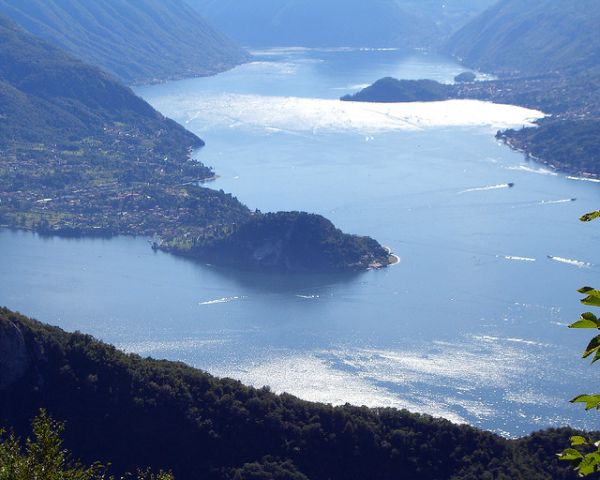
- Italian Lakes: Some of Italy’s most famous landscapes: the Lombard shore of Lago Maggiore, the west shore of Lago di Garda, quiet Lago d’Iseo, and Lago di Como. Read more in the Italian lakes travel guide.
- Valtellina and the Alps: The long valley north of Lake Como, known for terraced vineyards, pizzoccheri buckwheat pasta and bresaola, leads up to the ski resorts of Bormio and Livigno.
photos, top to bottom, by ricoeurian, Otourly, David Spender, Ramon Cutanda, ezioman
