
Rome Transportation 101: How to Get Around in Rome
· Updated · BootsnAll
 Rome is bigger than it looks on a tourist map. The Vatican, the Colosseum and Trastevere are each a solid walk from the others, and a day of walking between them on cobblestones in July will flatten you. You can walk most of the historic center, and you should. But if you learn the metro, a handful of buses and one or two trams, you’ll see twice as much and keep your feet.
The short version: one ticket covers the metro, buses and trams, you can pay by tapping your bank card, and a single ride costs about €1.50 in 2026. Everything below fills in the details.
>> To get into the city first, here’s how to get from Fiumicino Airport to Rome. For the Sistine Chapel and St. Peter’s, see getting to Vatican City.
Tickets: one system for everything
Rome’s metro, buses and trams are all run by ATAC, and they all take the same tickets. Prices went up on 1 July 2025. In 2026 they are about:
| Ticket | Valid for | Price (2026) |
|---|---|---|
| BIT (single) | 100 minutes on buses and trams, including one metro ride | about €1.50 |
| Roma 24H | 24 hours from first use | about €8.50 |
| Roma 48H | 48 hours | about €15 |
| Roma 72H | 72 hours | about €22 |
| CIS | 7 days | about €29 |
The easiest way to pay is to tap. Touch a contactless bank card or phone on the metro gates or the reader on board a bus or tram, and each ride is charged as a BIT. From the sixth tap in 24 hours on the same card, the charges stop at the price of a 24-hour ticket, so you never pay more than a day pass would have cost. Use one card per person, and use the same card every time.
Paper tickets are still sold at metro station machines, tobacco shops (look for the blue “T” sign) and newsstands. Stamp a paper ticket in the machine the first time you use it: at the metro gate, or in the validator box when you board a bus or tram. The stamp starts your 100 minutes. Inspectors do check, especially on the tourist bus routes, and the fine for riding without a valid ticket is many times the fare. It’s not worth it.
Which should you buy? Tap your card and let the cap do the math. A day pass only pays off if you’ll ride six or more times, and most visitors walk more than they expect. If you’re planning a big museum day, look at the Roma Pass, which bundles free public transport with museum entry.
Rome Metro
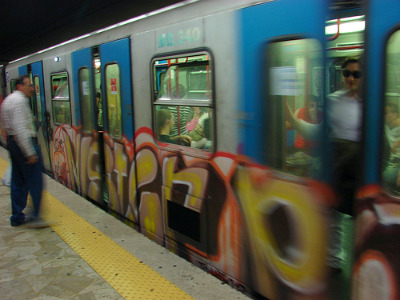
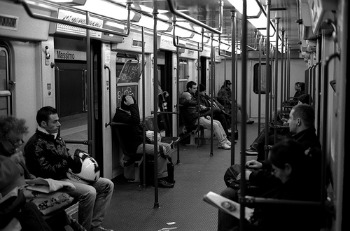 Dig a few feet down almost anywhere in Rome and you hit ancient ruins, which is why the city’s subway is small for a capital of nearly three million people. It has three lines:
- Line A (orange) runs northwest to southeast. Tourists use it for the Vatican (Ottaviano, a 10-minute walk from St. Peter’s and the Vatican Museums), the Spanish Steps (Spagna), Piazza del Popolo (Flaminio), Barberini for the Trevi Fountain, and Termini.
- Line B (blue) runs north to south through Termini, Colosseo and Circo Massimo, then on to Piramide for Ostiense station and Testaccio.
- Line C (green) took decades to build because every new shaft turned into an archaeological dig. It opened in 2014, reached San Giovanni in 2018, and on 16 December 2025 reached Colosseo/Fori Imperiali, where it meets Line B. It ends there for now; the stretch on to Piazza Venezia is still being built.
The lines meet at three stations: Termini (A and B), San Giovanni (A and C) and Colosseo/Fori Imperiali (B and C). Stations are marked by a red square sign with a white M.
The metro is quick, but it skirts the historic center rather than running through it. The Pantheon, Piazza Navona, Campo de’ Fiori and Trastevere are all a long walk or a bus ride from the nearest station. Trains run from early morning until around 11:30 p.m., later on Friday and Saturday nights. Check the ATAC site for tonight’s last train.
Crowded metro cars are where Rome’s pickpockets work, especially on Line A between Termini and Ottaviano. Keep your phone and wallet in a front pocket or a zipped bag, and be wary of a group that crowds you at the doors.
Buses in Rome
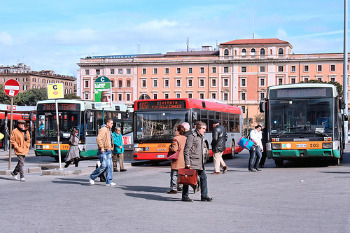 The bus network is what makes Rome work. It goes everywhere the metro doesn’t, including right through the historic center, and once you know a few routes you’ll use it constantly.
Plan your trips with a transit app rather than a paper map. Google Maps and Moovit both carry ATAC routes and live arrival times, and they will tell you which stop to wait at, which is most of the battle. Bus routes change often because of roadworks, events and strikes, and the apps catch that; a printed map doesn’t.
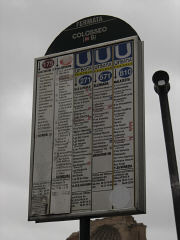 At the stop itself, the sign lists every bus that calls there. Under each route number is the list of its stops in order, with the stop you’re standing at boxed in red. Stops further down the list are where that bus is going. If your destination is above the red box, you want the stop on the other side of the street.
Once you board, tap your card on the reader or stamp your paper ticket, and press the red button before your stop. After the metro closes, night buses (numbered with an N) take over the main routes.
Buses are slow at rush hour, when Rome’s traffic stops dead. A 20-minute ride can take 45. If you’re going somewhere on a metro line, take the metro.
Trams in Rome
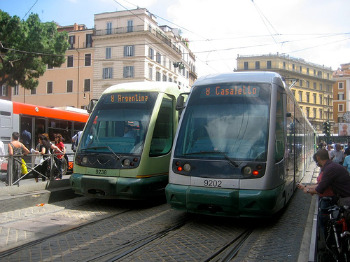 Rome has six tram lines, run by ATAC on the same tickets as everything else. Most of them run through outer neighborhoods, but two are worth knowing:
- Tram 8 runs from Piazza Venezia across the river through the middle of Trastevere and on past Trastevere station. It’s the easiest way from the center to Trastevere’s restaurants.
- Tram 19 starts at Piazza Risorgimento by the Vatican and runs east across the city.
Tram lines are regularly replaced by buses while the track is being worked on. If the tram stop looks abandoned, check a transit app for the replacement bus.
Taxis in Rome
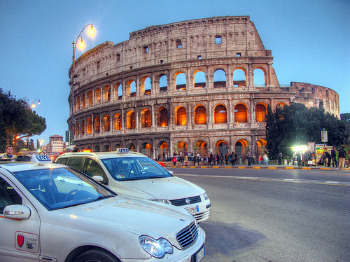 Rome’s licensed taxis are white, with a “TAXI” sign on the roof and a license number on the door. You don’t hail them in the street the way you would in New York. Walk to a taxi stand (Termini, the big piazzas and the main sights all have one) or book one by phone or app.
From the airports, there’s a fixed fare to anywhere inside the Aurelian Walls, the ancient wall that rings the historic center: about €55 from Fiumicino and about €40 from Ciampino in 2026, for up to four people with luggage. The fare should be displayed in the cab. Agree on it before you set off, and ignore anyone inside the terminal offering you a ride. Official taxis wait in the rank outside. There are cheaper ways to get from the airport if you’re traveling light.
Inside the city the meter runs, with supplements for night rides, Sundays and holidays. Taxis make the most sense late at night, when you’re loaded down with bags, or when you’re three people splitting the fare. They aren’t faster than the metro in traffic. Watch the meter, make sure it starts at the posted minimum, and pay by card if you want a record.
Walking
For the historic center, walking is the best transport in Rome. From the Pantheon to Piazza Navona is five minutes, from there to Campo de’ Fiori another five, and the Trevi Fountain and the Spanish Steps are fifteen minutes beyond. Save the metro and buses for the long hops: Termini to the Vatican, the Colosseum to Trastevere, or anything out to the Appian Way.
>> Heading on from Rome? See getting from Rome to Venice and getting from Rome to the Cinque Terre. For where to sleep, here are some hostels in Rome.
photos, top to bottom, by: Cool Pixels, boklm, Ludo29880, the author, dear Edward, rmlowe