
Museum of Purgatory
· Updated · BootsnAll
 Everyone comes home from Rome with a story about the Sistine Chapel. Hardly anyone comes home with one about the Museum of Purgatory (Museo delle Anime del Purgatorio), a single glass-fronted room in a church in Prati that claims to hold messages from the dead.
It's small, free, a little unsettling, and ten minutes from Castel Sant'Angelo. If you like Rome's strange side, go.
What's in it
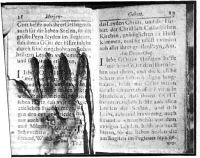
The exhibits are objects said to carry marks left by souls in Purgatory, trying to get the attention of the living. Catholic teaching holds that the prayers and Masses of the living can shorten a soul's time in Purgatory, and each item here is presented as a plea for exactly that. Most date from the 18th and 19th centuries, and they come from Italy, France, Belgium and Germany. Among them:
- A nightshirt with a burned handprint on the sleeve, said to have been left in 1789 by the dead mother of a Belgian man, Joseph Leleux, scolding him for his dissolute life and for forgetting to pray for her.
- Fingerprints and handprints scorched into the pages of prayer books.
- Burn marks on the habit and shirt of Isabella Fornari, abbess of the Poor Clares in Todi, from 1731.
- A pillowcase marked by the soul of a nun who died of tuberculosis in 1894.
- A copy of a partly burned 10-lire banknote, one of about 30 said to have been left at a monastery in Montefalco in 1920 by the ghost of a priest who wanted Masses said for him.
Whether you see evidence of the afterlife, a piece of folk religion, or a very good ghost story is up to you. Either way, it's a genuinely odd corner of the city.
How it started
The collection was put together by Father Victor Jouet, a French missionary who founded an association in Rome to pray for the souls in Purgatory. In 1897 a fire broke out in a small chapel on the site. Among the scorch marks behind the altar, Jouet believed he could see the face of a suffering soul, and he set off around Europe collecting similar evidence. After his death in 1912 the collection was cut back, in 1921, to the items the church considered most credible, which is roughly what you see today.
The church itself is worth the trip. Sacro Cuore del Suffragio, finished in 1917, is a rare neo-Gothic church in Rome, all spires and pointed arches, and locals call it the "little Milan Cathedral." It stands on the Tiber embankment near the Palace of Justice, and it looks nothing like anything around it.
Visiting
This is a working parish church, not a museum with a ticket desk. Walk down the right-hand aisle to the door near the end, by the sacristy, where the display case is. If it's closed, ask in the sacristy to see the museum ("il museo").
- Location: Chiesa del Sacro Cuore del Suffragio, Lungotevere Prati 12. The nearest metro is Lepanto on Line A, about a kilometer away; it's a short walk from Castel Sant'Angelo and Piazza Cavour.
- Hours: the museum can be seen when the church is open, which usually means early morning and late afternoon, closed in the middle of the day. Hours change, so check with the Rome tourism office's listing or call ahead.
- Admission: free.
Keep your voice down and avoid visiting during Mass. For the people who pray here, this is not a curiosity.
Pair it with a walk to Vatican City, which is on the same side of the river, or with the Museum of the Sanitary Arts in the old Santo Spirito hospital nearby. The Capuchin Crypt, decorated with friars' bones, completes the set. There are more ideas in our guide to weird things in Rome.
photo from this website