
Rome Crime Museum
· Updated · BootsnAll
 If you're tired of the glorified martyrdoms in all the famous artwork around Italy (why don't those saints look more pained when they're being burned, stabbed or crucified?), you'll wish you could visit this stop on our tour of Weird and Wonderful Rome: the Museo Criminologico, Rome's Crime Museum. Sadly, you can't. It has been closed since 1 June 2016, officially "temporarily", and no reopening date has been announced. Some listing sites still show opening hours and a ticket price. Ignore them.
What the museum was
The museum belongs to Italy's Ministry of Justice, and it has had a rough life. It opened in 1931 on the ground floor of the Carceri Nuove, the old papal prison on Via Giulia, because the justice minister of the day wanted the tools of crime and punishment in one place where scholars could study them. It was dismantled in 1968 when the prison building was given a new use, and some of the collection was lost in storage. In 1975 it moved into its current home, the Palazzo del Gonfalone, a former juvenile prison built in 1827 for Pope Leo XII as a house of correction. Visits then dwindled to appointment only, it shut for about fifteen years, reopened in 1994, and closed again in 2016.
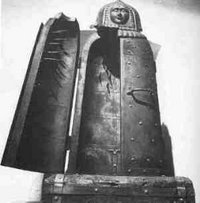
When it was open, the collection ran in rough chronological order. The first section covered justice from ancient times to the 1700s, and it was the one that drew the crowds: pillories, a "scold's bridle", whips and irons, and an iron maiden. Among the other pieces:
- The uniform of Mastro Titta, the papal executioner who carried out 516 death sentences in Rome between 1796 and 1864.
- The pistol Gaetano Bresci used to assassinate King Umberto I in 1900.
- Material from Cesare Lombroso, the 19th-century criminologist who believed you could spot a "born criminal" by the shape of his skull, including a plaster cast of the skull he built his theory on.
- Evidence from modern cases: burglary tools, forgeries, gambling rigs and espionage gear, plus a small room on notorious Italian murders.
Location: Via del Gonfalone 29, just off Via Giulia, near Campo de' Fiori.
Status in 2026: closed since June 2016, no reopening date.
What to do instead
You can still walk Via Giulia, the straight Renaissance street that runs past both of the museum's old homes. The Carceri Nuove building is at number 52, and the Gonfalone prison is a block away. It's one of the prettiest streets in the center and far quieter than the piazzas nearby.
For the macabre fix the museum used to provide, the Capuchin Crypt on Via Veneto is the obvious swap. The chapels are decorated with the bones of about 3,700 friars, and it's now visited through a paid museum, the Museo e Cripta dei Cappuccini, open daily. Check the price on its official site. It is far more unsettling than any iron maiden.
Check out my recommendations for more weird things in Rome you can visit!