
Eurolines Bus Stops in Italy
· Updated · BootsnAll
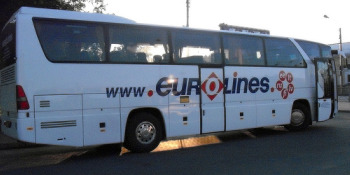 If you came here looking for the Eurolines bus stops in Italy, the short answer is that the Eurolines name has all but disappeared, and the buses you want now are FlixBus and Itabus. Eurolines was a coalition of national bus companies that sold cross-border trips under one brand. In 2019 FlixBus bought the Eurolines businesses in France, Spain, Belgium, the Netherlands and the Czech Republic, and the long-distance coach market in Italy is now dominated by FlixBus, with Itabus as its main rival.
Long-distance buses are still one of the cheapest ways to get around Europe. They're slower than the high-speed trains and nowhere near as fast as flying, but the fares are regularly lower than both, and you can book them a day or two out without watching the price triple.
What FlixBus is
FlixBus is a German company that started with three routes in Bavaria in 2013 and came to Italy in 2015. It now sells trips in more than 40 countries. The green buses mostly aren't owned by Flix itself: local coach companies drive them under the FlixBus brand, while Flix handles the network, the prices, the booking and the customer service. That's why the bus you board might have an Italian operator's name on the paperwork. For you it makes no difference.
In Italy the network is big. According to FlixBus's own route pages in September 2026, there were about 28 departures a day from Milan to Rome, 24 from Milan to Venice and 21 from Milan to Florence, plus international routes from Italian cities to places like Paris and Munich.
Itabus is the Italian alternative. It started in 2021 and was bought in 2023 by Italo, the private high-speed train company, so some tickets combine an Itabus coach with an Italo train. It runs the main domestic routes plus international ones to Paris, Barcelona and Zurich. Check both before you book; on popular routes they undercut each other.
How to use FlixBus
- Book online or in the app. Search your route on flixbus.com or in the FlixBus app. Fares change with demand, like airfares, so a week ahead is usually cheaper than the day before. Foreign cards, PayPal and Google Pay are accepted.
- Check the exact stop. This is the step people skip. Big Italian cities have several FlixBus stops, and some are well outside the center. Your ticket shows the exact address; use it, not the city name.
- Keep your ticket on your phone. The driver scans the QR code when you board, so there's no need to print anything. Carry your passport or ID, which drivers can ask to see, especially on international routes.
- Know the luggage rule. Your fare includes one small bag or backpack that goes under your seat or overhead, and one bigger bag that goes in the hold. Extra and bulky bags (including bikes, on routes that allow them) cost more and should be added when you book, because hold space is limited.
- Track the bus. Traffic on the Autostrada del Sole makes schedules slip. The app shows where your bus is, which beats standing at a roadside stop wondering.
Onboard you usually get Wi-Fi and power outlets, though on a six-hour trip the Wi-Fi is not something to plan work around.
Where the buses stop in the big cities
These are the main FlixBus stops in the cities most visitors use, as listed by FlixBus in September 2026. Stops move, so always go by your ticket.
| City | Main stops | Getting into town |
|---|---|---|
| Rome | Tiburtina bus station; Anagnina; a few stops near Termini and the Vatican | Tiburtina is next to Tiburtina train station and Metro Line B, a few stops from Termini |
| Milan | Lampugnano bus station; San Donato; Sesto San Giovanni; Assago | Each is at a metro station (Lampugnano on M1, San Donato on M3) |
| Florence | Villa Costanza (on the A1 motorway); Piazzale Montelungo; Guidoni; Santa Maria Novella | Villa Costanza is the end of tram line T1 to the station; Guidoni is on the T2 airport tram |
| Venice | Tronchetto; Piazzale Roma; Mestre train station | Piazzale Roma is the edge of the historic center; Tronchetto is a short People Mover ride away; Mestre is on the mainland |
| Pisa | Train station/center; Pietrasantina car park; a PisaMover stop | Pietrasantina is a short walk from the Leaning Tower |
When the bus beats the train (and when it doesn't)
Italy's fast trains are hard to beat between the big cities. FlixBus's quickest Milan to Rome bus takes about 6 hours 35 minutes, and the train takes under 3. If you've booked the train a few weeks ahead, the price gap is often small, and I'd take the train.
The bus wins in three situations: when you're booking late and the train fares have climbed, when the bus stops somewhere more useful than the station (in Pisa, the Pietrasantina stop is a short walk from the Leaning Tower), and on cross-border trips where the train needs several changes or an expensive ticket. A rail strike doesn't stop it either (a general transport strike might), which in Italy is not a small thing. Regional buses inside one region, like Siena to Florence, are a different system run by regional companies; my guide to bus travel in Italy covers those.
photo by szerenka