How to Get from Italy to Croatia (and Vice Versa)
· Updated · BootsnAll
 Many years ago, on a trip through Germany, my husband and I saw a TV ad for Croatia on CNN International. We'd never seen the country marketed back home, and the pictures stopped us in our tracks. The next year, after a visit to northern Italy, we spent five days in an apartment near Split. It was absolutely beautiful.
Italy and Croatia face each other across the Adriatic, and since 2023 the crossing has been about as simple as international travel gets. Croatia is in the EU, the Schengen Area and the euro zone, so there's no passport control between the two countries and no currency to change. What's left to decide is how to cross, and that depends almost entirely on where in Italy you start and where in Croatia you're going:
- Venice or Trieste to Istria (Rovinj, Poreč, Pula): a summer fast boat, or a bus from Trieste. Driving is easy too.
- Ancona to Split or Zadar: the overnight car ferry.
- Bari to Dubrovnik: the overnight car ferry.
- Rome, Milan, Naples, or anywhere far from the Adriatic: fly.
Getting from Italy to Croatia by ferry
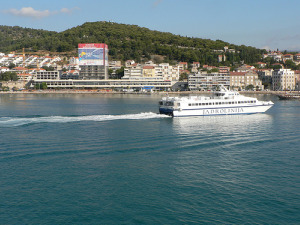 The ferries leave from four Italian ports, and most routes are seasonal, so check that yours is running before you build a trip around it. Summer brings far more sailings than spring or fall, and several routes stop completely in winter. Here's the network as of 2026:
| Route | Operator | Season | Time |
|---|---|---|---|
| Venice to Poreč, Rovinj, Pula, Umag | Kompas (fast boat, foot passengers) | roughly spring to early fall | 3 to 4.5 h |
| Trieste to Poreč, Rovinj, Mali Lošinj | Liberty Lines (hydrofoil) | summer only | varies by port |
| Ancona to Split | Jadrolinija, SNAV | Jadrolinija year-round (fewer in winter), SNAV April to September | 9 to 11.5 h, overnight |
| Ancona to Zadar | Jadrolinija | summer only | overnight |
| Bari to Dubrovnik | Jadrolinija | May to November | overnight |
What that means in practice:
- From Venice, the fast boats to Istria are a lovely way to go: out through the lagoon and across to Rovinj or Poreč in a few hours. They carry foot passengers only, and a one-way ticket cost about €75 to €89 in 2026.
- From Trieste, the hydrofoils to the Istrian coast are much cheaper, from about €16 to €35 one way in 2026, because the coast is right there.
- From Ancona or Bari, the big car ferries sail overnight. You can book anything from a deck place to a cabin, and a car costs extra. Take a cabin if you want to arrive human; a deck ticket on a busy August night means sleeping wherever you can find a patch of floor. These are the only way to take a car to Croatia by sea.
The easiest way to compare everything is Ferryhopper, which lists every company's Italy to Croatia sailings in one place. Or go straight to Jadrolinija, SNAV, Kompas or Liberty Lines. Book early for July and August, especially with a car or if you want a cabin.
Flying from Italy to Croatia
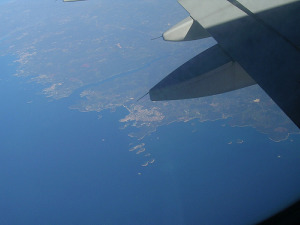 If you're nowhere near the Adriatic ports, fly. The flights are short, well under two hours, and in summer budget airlines, mainly easyJet and Ryanair, fly from several Italian airports to Croatia's coast: Split, Dubrovnik, Zadar and Pula. Croatia Airlines flies to Zagreb. Many of the coastal routes run in summer only and change from year to year, so search from your nearest airport for your dates.
Budget fares can be startlingly low when booked early and several times higher at the last minute. The cheapest ones include only a small under-seat bag, so add luggage when you book. And when you compare a flight with a ferry, count the time getting to and from both airports. For Venice to Rovinj, the fast boat beats any combination of plane and bus.
Getting from Italy to Croatia by bus
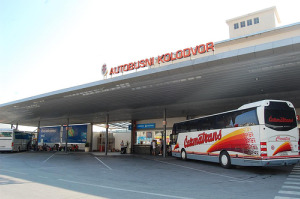 Buses are how most Croatians get around their own country, so a coach from Italy makes a lot of sense. FlixBus, which absorbed most of the old Eurolines network, runs the bulk of the services, from Venice and Trieste to Istria, Rijeka, Zagreb and on down the Dalmatian coast. From Trieste in particular, a bus to the Istrian towns is short and cheap and runs outside ferry season.
My advice: if you're in Venice or Trieste, the bus is a good, cheap option. If you're not, you'll spend a long day getting to Venice or Trieste first, so fly, or rearrange your trip to end your Italy stay in the northeast.
Getting from Italy to Croatia by train
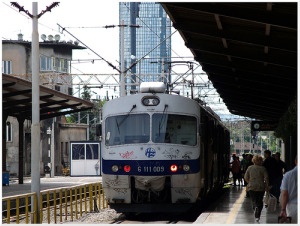 I'm a train junkie, and even I wouldn't take the train to Croatia unless I was going to Zagreb. The rail route runs through Slovenia with at least a couple of changes, and it's slow. Most of the coast has no railway at all: Rijeka and Pula have stations, and Split is at the end of a long line from Zagreb. Dubrovnik has no train. If you're a rail pass holder heading for Zagreb, check the connections on Seat 61; everyone else should take the bus, boat or plane.
Driving from Italy to Croatia
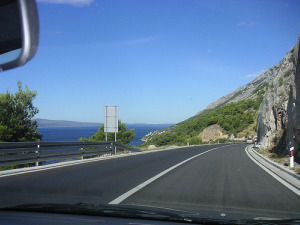 Croatia's railways may be patchy, but its motorways are excellent. The A1 runs from Zagreb to Split and on down the coast to Ploče, where it currently ends, about 100 km short of Dubrovnik. Since 2022 the Pelješac Bridge has let you drive the rest of the way to Dubrovnik without crossing the short strip of Bosnia and Herzegovina coast at Neum, so there are no border checks on that stretch any more.
Rough driving times from Venice, according to ViaMichelin, which will also estimate fuel and tolls:
- Venice to Rijeka: about 3.5 hours
- Venice to Zagreb: a little under 5 hours
- Venice to Split: about 7.5 hours
- Venice to Dubrovnik: about 10 hours or more
The direct routes cross Slovenia, which requires an electronic motorway vignette; buy it online before you reach the border. If you're in a rental car, tell the company you're taking it to Croatia, since most charge a cross-border fee and some don't allow it at all. Croatian motorways are tolled by distance, like Italy's. And once you leave the motorway for the coast road, expect slow, winding going with views good enough that you won't mind.
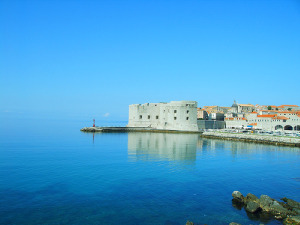 One last thing from that first trip. On a boat ride across a lake in one of the national parks, we got chatting with a Croatian tour guide. She told us that more and more Italians were coming to Croatia for their holidays, because they preferred the water on her side of the Adriatic. Anyone who's tried to find a spot on a beach in Italy in August knows Italian beaches are still plenty crowded. But I couldn't disagree with her about the water. Just come back to Italy afterward, OK?
photos, top to bottom, by: jimmyharris, lostajy, bortescristian, Goran Zec, kawanet, vacation2, jonsson