Leaning Tower of Pisa
· Updated · BootsnAll
You’ve seen a hundred photos of people “propping up” the Leaning Tower of Pisa. You’ll take one too, and there’s no shame in it. What most visitors don’t plan for is that the tower is only one of five monuments on the same lawn, that climbing it needs a timed ticket, and that the town gets a lot quieter an hour after the tour buses leave. Here’s what you need to know to do it well.
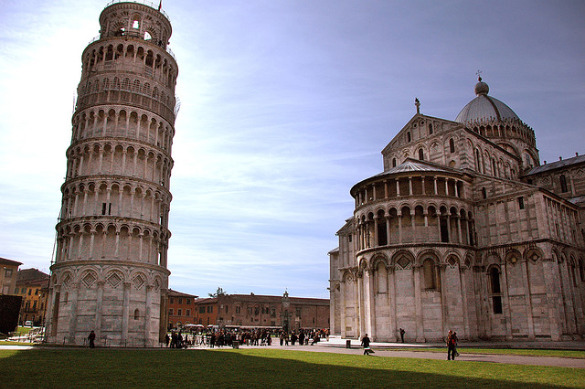
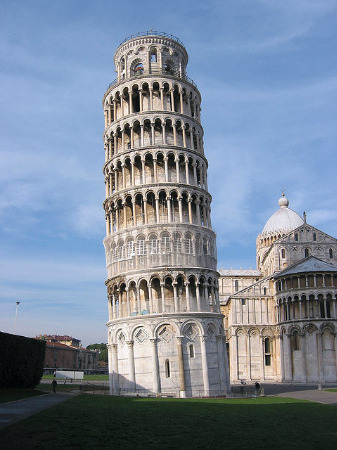
Pisa‘s famous tower is simply the bell tower of the cathedral next to it, and it still has seven bells, the biggest cast in 1655 and weighing about three and a half tonnes. Plenty of Italian bell towers lean a little (Venice and Bologna both have famous ones). None leans like this one.
Construction began in 1173 and dragged on, with long pauses, for about two hundred years. The ground underneath is soft, and the tower started sinking on one side when the builders had only reached the second floor. They tried to compensate by building the upper floors slightly straighter, so if you look from the right angle you’ll see the tower is actually a little banana-shaped. By the late 20th century engineers feared it would fall. It closed to visitors in 1990 and reopened in December 2001 after the tilt was reduced, and it has been open for timed climbs ever since. Today it stands about 58 meters tall and leans about 5 degrees.
>> Staying the night? Browse these Pisa hotels and cheap hostels in Pisa.
Tickets to Climb the Leaning Tower
 All tickets are sold by the Opera della Primaziale Pisana, the body that runs the square, at opapisa.it and at the ticket offices on site. The official prices in 2026:
- Tower plus Cathedral: €20, with a fixed entry time
- Tower plus everything else (Cathedral, Baptistery, Camposanto, and the Sinopie and Opera del Duomo museums): €27
- Everything except the tower: €11
- Cathedral plus any one other monument: €8
What to know before you buy a tower ticket:
- Book ahead from spring to autumn. Slots are limited and the popular times sell out, especially on summer weekends. There are no reduced tower tickets.
- Be on time. The ticket is for one day and one time. If you’re late, you don’t go up, and you don’t get a refund.
- Kids: children who won’t have turned 8 by the end of the year can’t climb, and under-18s must be with an adult. Staff may ask for ID.
- No bags. Handbags, backpacks and luggage have to go in the cloakroom before the climb.
- The climb is about 250 steps on a spiral staircase worn smooth by centuries of feet, and the whole visit takes about 30 minutes. The lean is disorienting on the way up, and the floor is uneven and slippery. The Opera doesn’t recommend it for people with heart or muscle problems.
Is it worth €20? I think so, once. The view from the top over the red roofs toward the mountains is good, but the real thrill is feeling the tilt pull you sideways on the stairs. If you’re short on money or time, skip the climb and buy the €11 ticket for everything else. You’ll get more for it.
Opening Hours
The square’s monuments open every day, with hours that change by season: longest in summer, shortest in winter. In 2026, from 17 June to 31 August, the monuments stayed open until 10:30 p.m. and the tower until 10 p.m., and an evening slot is the best way to avoid both the heat and the crowds. Last entry is 30 minutes before closing. The Cathedral opens to visitors from 10 a.m. and can close for services. Check the current calendar before you go.
Getting to the Leaning Tower
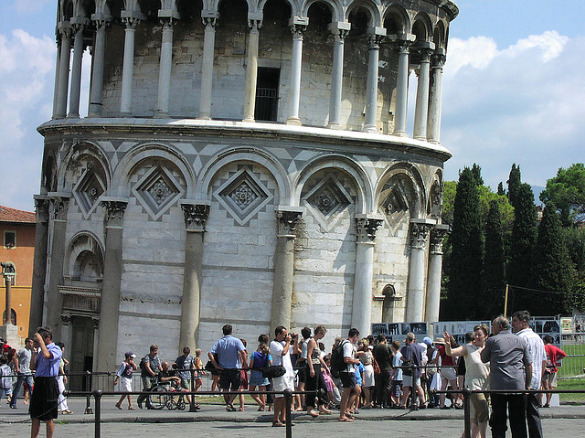
The tower is on Piazza dei Miracoli (officially Piazza del Duomo) on the northwest edge of the old town. From Pisa Centrale, the main station, you have three choices:
- Walk (about 25 to 30 minutes). Leave the station toward Piazza Vittorio Emanuele II, turn onto Via Crispi and follow it to the Ponte Solferino. Cross the river and keep going until you reach Via Roma, then follow Via Roma to the square. It takes you through the old town and across the Arno, so it’s the one I’d do.
- Bus. The Opera’s own getting-there page lists line 1+ from the “Stazione 1” stop outside the station, about every 10 minutes, to the “Torre 1” stop.
- Taxi. The rank is outside the main entrance, and it’s a short ride.
If your train stops at Pisa San Rossore, get off there. It’s a five-minute walk: take the underpass out of the station to Piazza Fancelli, then follow Via Andrea Pisano to the square.
Coming from the airport, take the PisaMover shuttle to Pisa Centrale (under 3 minutes, about €6.50 in 2026), then walk or catch the bus. If you’re coming for the day from Florence, regional trains run to both Pisa Centrale and San Rossore; see getting from Florence to Pisa.
Don’t Skip the Rest of the Square
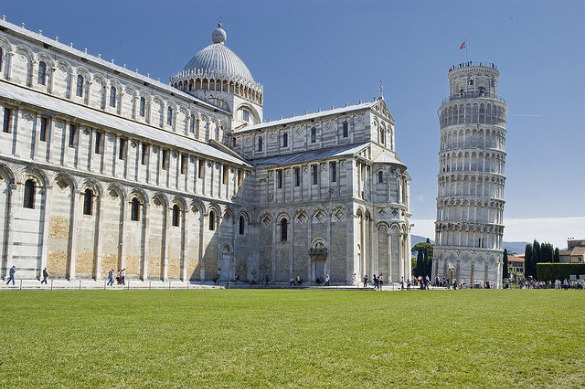
Most visitors take their photo and leave. Stay an extra hour. The whole square has been a UNESCO World Heritage Site since 1987, and the tower isn’t even its best building.
- The Cathedral (begun in 1064) is included with every ticket, and you can also get a free timed pass for it alone at the ticket office on the day. Look for Giovanni Pisano’s carved pulpit. Dress modestly: covered shoulders and knees.
- The Baptistery is the largest in Italy, and its acoustics are the reason to go in. If a custodian sings a few notes while you’re inside, you’ll hear the echo hang in the dome for seconds. Climb to the upper gallery for a view down over the font.
- The Camposanto, the monumental cemetery along the north side of the square, is a long cloister of tombs and frescoes, and the quietest spot on the square even on a summer afternoon.
Tickets for everything except the tower are valid for a year from the date you choose, so you don’t have to cram it into one visit.
>> More on the town beyond the tower: what to do in Pisa.
photos, top to bottom, by: McPig, Paul Mannix, tiseb, JackVersloot