3 Week Italy Itinerary: Options & Planning Tips
· Updated · BootsnAll
If two weeks in Italy is great, three weeks is better. It’s enough time to see the famous cities and still have days with nothing on the schedule.
Most Italy itineraries come in one-week and two-week versions, with the suggestion that for three weeks you just stitch two of them together. That usually gives you a lopsided trip, with too many one-night stops in one half and a lot of backtracking. Here are two complete three-week Italy itineraries, and how to adapt them or build your own.
You might also like:
Italy in Three Weeks: Two Itinerary Options
Here’s a short version of each. Follow the link under each one for the day-by-day plan, who it suits, how to get between stops, and what to book.
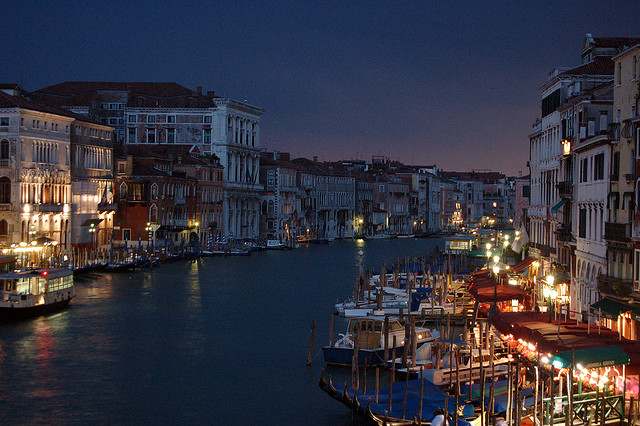
3 Weeks in Italy: Italy’s Greatest Hits Itinerary
- 2 nights Venice
- 2 nights Ligurian Coast (Cinque Terre or Portofino)
- 4 nights Florence (with a stop in Pisa)
- 2 nights Siena
- 4 nights Rome
- 4 nights Amalfi Coast
- 2 nights Naples (with a day trip to Pompeii and Herculaneum)
Fly into Venice, out of Naples. This is the one for a first trip: every big name on the list, at a pace that doesn’t wear you out.
>> Read all the details of this 3-week Italy itinerary of Italy’s “greatest hits”
3 Weeks in Italy: A Foodie Itinerary
- 2 days Milan or Turin
- 2 days Alba
- 2 days Genoa
- 4 days Bologna (with day trips to Parma & Modena)
- 5 days agriturismo or cooking school
- 3 days Rome
- 3 days Naples (with a day trip to Pompeii)
Fly into Milan or Turin, out of Naples. This one suits a second trip, or anyone who’d rather eat their way through Piedmont and Emilia-Romagna than queue for the Uffizi. Time it for autumn if you can, when Alba’s white truffle fair is on.
>> Read all the details of this 3-week Italy foodie tour itinerary
Planning Tips for Three Weeks in Italy
Fly open-jaw
Both itineraries assume an “open-jaw” ticket: into one city and out of another. It saves you a travel day at the end, and on transatlantic routes it often costs little more than a round trip. If you’re adding other countries before or after Italy, a multi-stop ticket from AirTreks can string them together. If you have to fly in and out of the same city, take a night or two off one of the longer stops to pay for the trip back.
Give every stop at least two nights
A one-night stop costs you half a day of packing, checking out, getting to the station and checking in again, all to get one evening. With three weeks there’s no reason to do it. My rule: two nights minimum, and a longer stay (four nights or more) at the places you’ll use as a base for day trips.
Don’t try to cover the whole boot
Three weeks isn’t enough to see all of Italy, and trying means spending too many days on trains. Pick one of two shapes. A north-to-south line (Venice down to Naples, as in the greatest hits) works because each hop is short. Or go deep in two or three regions, say Tuscany, Umbria and Rome, or Sicily plus Puglia. Sicily alone could fill a week and a half.
Match the route to the season
- Summer: the coasts are at their best and at their most crowded. Book Amalfi Coast and Cinque Terre rooms months ahead, and expect Italians on every beach in August.
- Spring and autumn: the best months for this kind of trip. It’s warm enough for the coast and cool enough for cities. Some Amalfi Coast hotels and ferry services close from around November to Easter.
- Winter: a good time for cities, museums and food, and quiet everywhere, but skip the coastal stops or expect shuttered towns.
Book trains and sights early, but not everything
High-speed train fares (Trenitalia’s Frecciarossa and the private Italo) rise as the train fills, so book the long legs once your dates are firm. Regional trains have fixed prices, so buy those as you go. A rail pass rarely beats advance tickets on an itinerary like these. The big sights (the Colosseum, the Vatican Museums, the Uffizi, the Accademia, the Last Supper and Pompeii) now use timed tickets, and several sell out in summer, so book them before you leave. Restaurants and small museums can wait until you’re there.
Budget for the new fees
Every city on these routes charges a nightly tourist tax at your hotel, a few euros per person. Venice charges day-trippers an access fee on some peak days between April and July; overnight guests are exempt but register for a free QR code. The Pantheon and a close-up visit to the Trevi Fountain now cost a few euros each too.
For shorter trips, see the 1-week Italy itinerary options and the perfect two weeks in Italy.
photo by teldridge+keldridge