Hottest Italian Soccer Players, Part III
· Updated · BootsnAll
 By the third installment of this series, in November 2009, Jessica had gone from knowing almost nothing about football to yelling at the TV during Milan matches and wearing her team scarf on game day for luck. When she wrote the first list, looking at the players was half the appeal. By this one she knew the rules, and she went looking past the famous names for less-famous players she thought deserved a look.
That makes Part III a snapshot of Italian football's middle class in 2009: squad players, loanees, a Dutch-league striker nobody in Italy had heard of yet, and a goalkeeper who wasn't Italian. Seventeen years later their careers turned out very differently. One became an England-based Italy international, one was caught up in a betting scandal, and one is still playing. The club in parentheses is where each man played in November 2009.
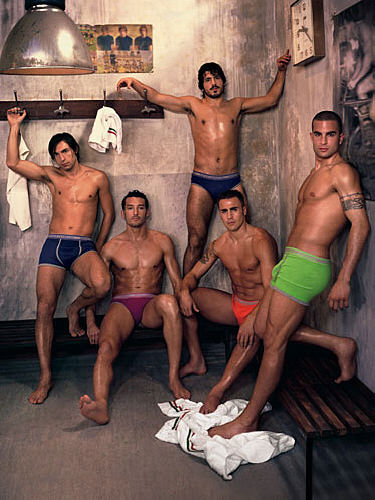
Andrea Pirlo, far left in the picture above, stayed Jessica's favorite through the whole series.
>> The rest of the series: 10 Hottest Italian Soccer Players (According to Jessica), Part II and Part IV. Jessica also wrote about the 13 best-known Italian soccer WAGs and more Italian soccer wives and girlfriends.
Stefano Mauri (Lazio)
A versatile left-footed midfielder from Monza who spent most of his career at Lazio and captained the club. Jessica called him a hidden gem: easy to overlook on the pitch until you noticed how much of Lazio's play ran through him. His story took a turn in May 2012, when police arrested him in the Calcioscommesse betting investigation. In 2013 he was banned for six months for failing to report match-fixing (an appeal raised it to nine months, and a later one cut it back to six). He returned to lead Lazio in the Rome derby in February 2014, and he has since retired.
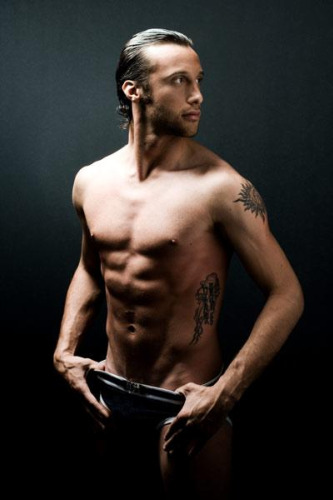
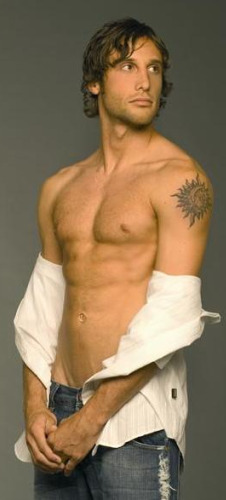
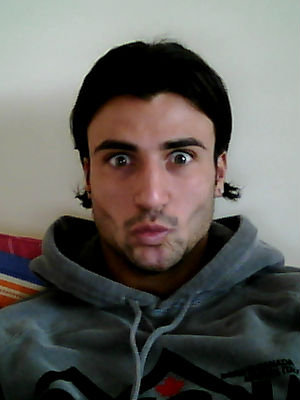
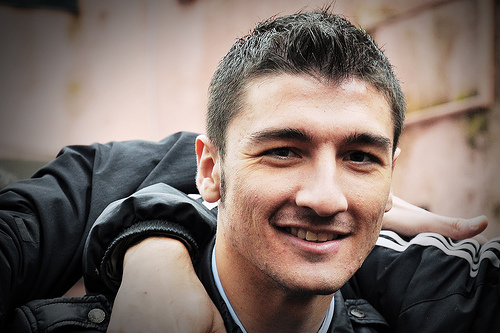
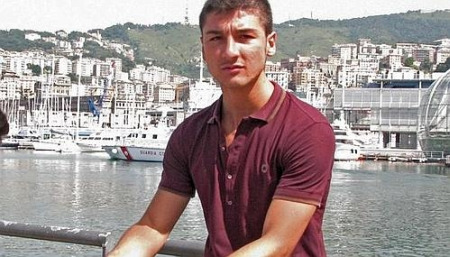
Fabio Ceravolo (Atalanta)
A Calabrian striker who was on loan from Reggina to Atalanta in Bergamo in 2009, when he was 22 and posting cheerful self-portraits online. Jessica liked that he didn't take himself too seriously. He never became a Serie A regular, but he built a long career in Serie B and C with Ternana, Benevento, Cremonese, Padova and Fiorenzuola. He is the only man on this list still playing. In 2026 he turns out for Pro Palazzolo in Serie D, near Brescia.
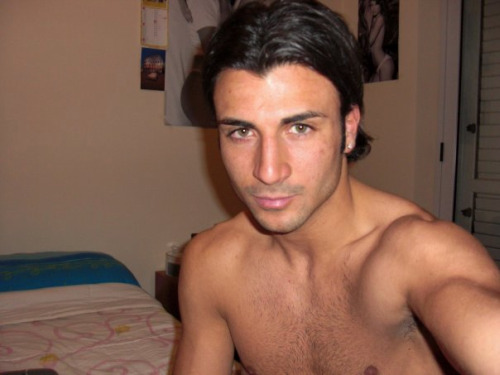
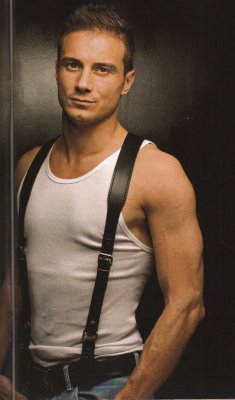
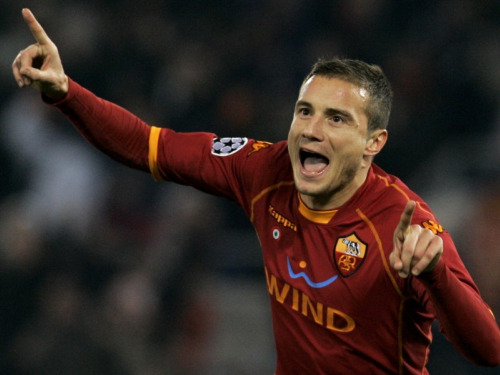
Matteo Brighi (Roma)
Brighi was born on Valentine's Day, came through his hometown club Rimini, and was the rare footballer who made Juventus wait a year so he could finish his high-school diploma in accounting. He was Serie A's Young Footballer of the Year in 2002 after a breakout loan at Bologna, played for Italy's under-21 side alongside Pirlo, Blasi and Marchionni, and was a Roma player from 2007, apart from loan spells, until he moved on in 2014. Jessica liked that he preferred books and dinner with friends to nightclubs. He later played for Torino, Sassuolo, Bologna again and Perugia, and he has retired.
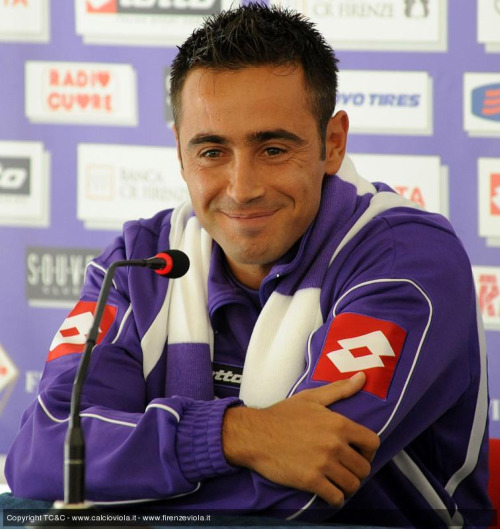
Marco Marchionni (Fiorentina)
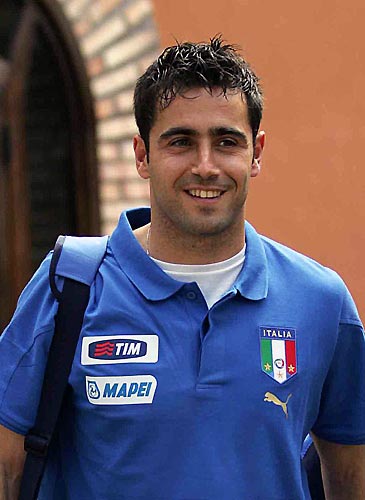
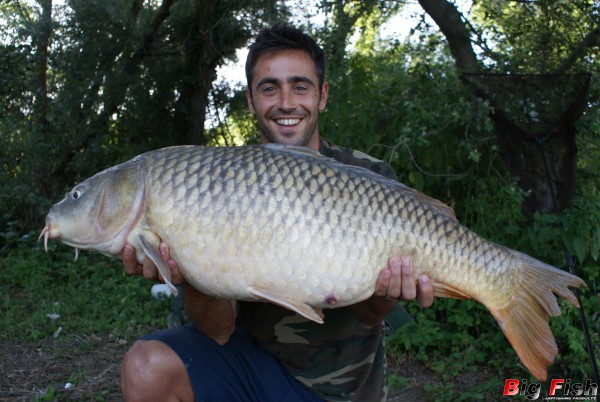
A quick right winger who started at Empoli and made his name at Parma. He agreed to join Juventus in 2006 even though the club had just been sent down to Serie B over the Calciopoli scandal, and he helped win promotion straight back. Fiorentina signed him in July 2009 in the swap that sent Felipe Melo to Turin. He won a handful of Italy caps and now works as a coach. Judging by the photos, his off-season involved fishing.
Alessandro Matri (Cagliari)
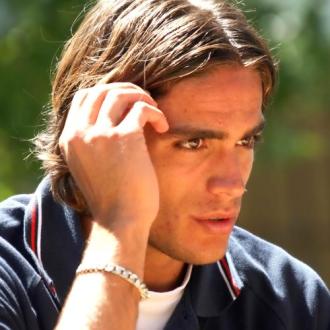
Matri grew up 30 km from Milan in Sant'Angelo Lodigiano and came through AC Milan's youth system, but his breakthrough came at Cagliari, where he was the team's top scorer. Jessica noted that he was far less interested in modeling than some of his peers. The goals paid off: Juventus signed him in January 2011, and he scored ten league goals in the side that won the 2011-12 title, the first of the club's long run of championships. Milan bought him back in 2013 for 11 million euros, and he retired in May 2020.
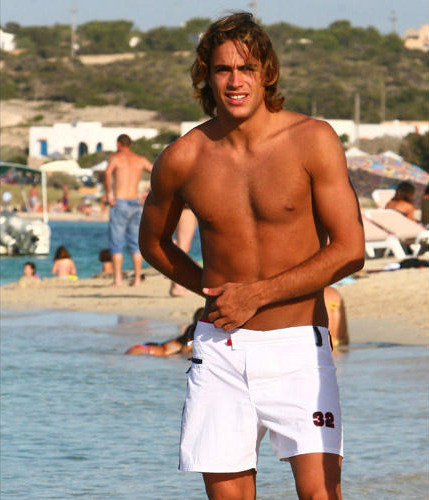
Matteo Sereni (Torino)
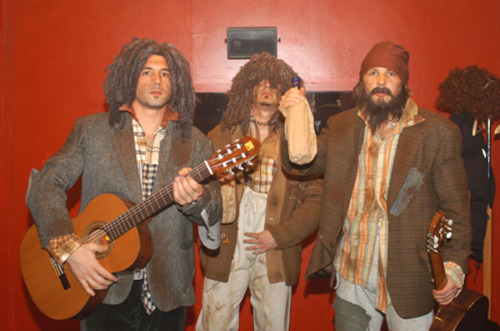
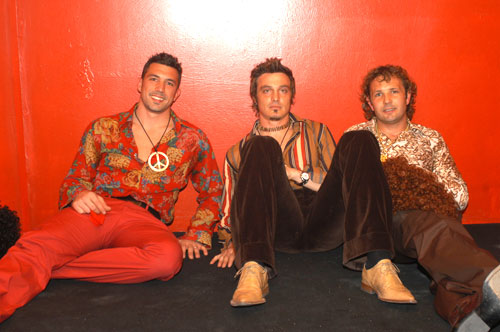
The first goalkeeper in the series. Sereni is from Parma and started at Sampdoria. In 2001 Ipswich Town paid 4.5 million pounds for him, a club record that stood until 2024, though Ipswich went down in his only season there. He then played for Lazio, starting both legs of the 2004 Coppa Italia final, before moving to Torino. While researching him, Jessica found photos from his appearance on one of Italy's variety shows, the prime-time mix of chat, sketches and dancers that fills Italian TV schedules. He wore a hobo costume for a sketch and spent part of it with his hands over his eyes. He has retired.
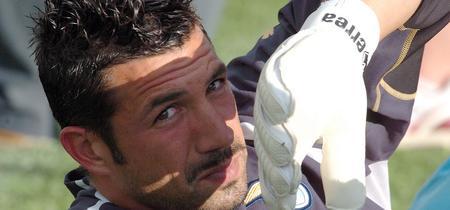
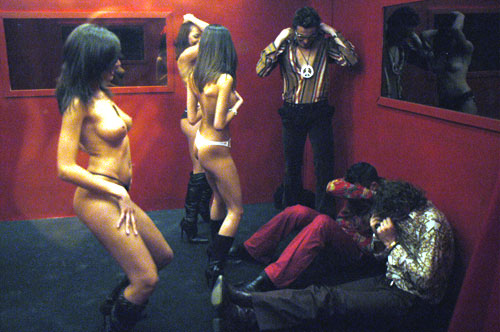
Graziano Pellè (AZ Alkmaar)
The best pick on this list, as it turned out. In 2009 Pellè was a Lecce product playing in the Netherlands, and Jessica only knew him from Dutch TV. He won the Eredivisie with AZ, went back to Italy without much luck at Parma and Sampdoria, then returned to the Netherlands and scored freely for Feyenoord. Southampton brought him to the Premier League in 2014, and he scored on his Italy debut that year, at 29. At Euro 2016 he scored twice before Italy went out to Germany in the quarter-finals. That summer he moved to Shandong Luneng in China on a salary that briefly made him one of the best-paid footballers in the world. He has retired.
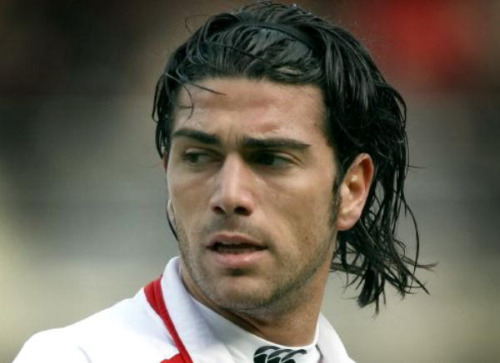
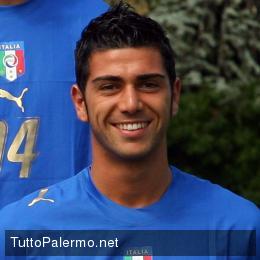
Daniele Conti (Cagliari)
Football runs in the family: his father is Bruno Conti, the Roma winger who won the 1982 World Cup, and his older brother Andrea also played professionally. Daniele started at Roma, moved to Cagliari in 1999, and stayed through relegation to Serie B in 2000 and the four years it took to climb back. He became captain in 2010 and played most of his career in Sardinia, which is why Jessica called him the loyal one. He now works as a coach.
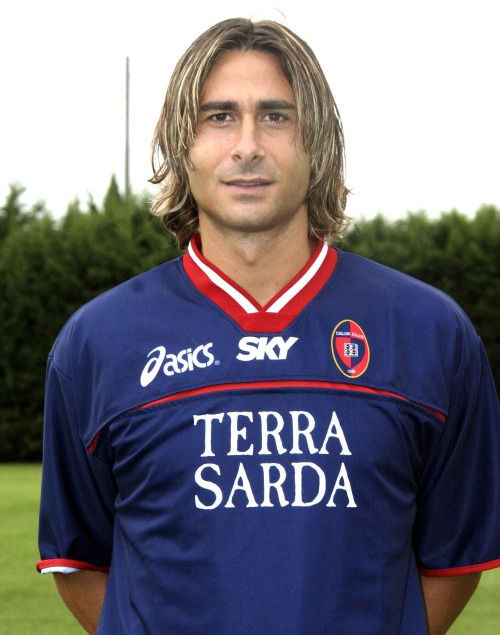
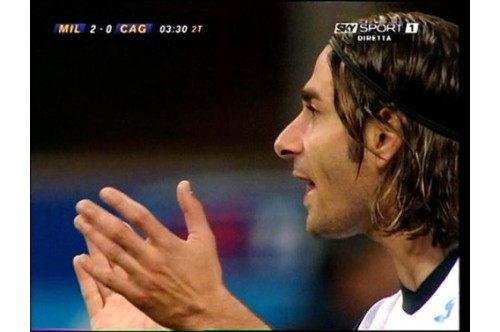
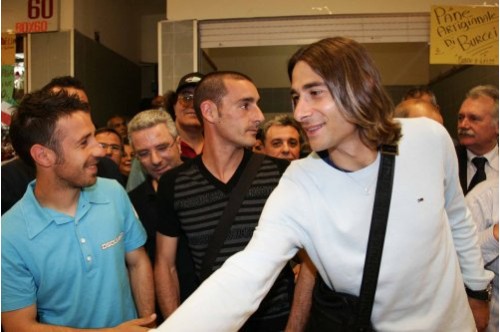
Salvatore Bocchetti (Genoa)
A centre-back from Naples (a point in his favor, since Jessica loved Naples), nicknamed Totò, with the stress on the last syllable. In 2009 he was 22, playing for Genoa, Italy's oldest club, and newly capped by Italy; he made Marcello Lippi's 2010 World Cup squad. Rubin Kazan paid a reported 15 million euros for him in 2010, and he spent years in Russia with Rubin and Spartak Moscow before finishing at Hellas Verona. He has done well as a coach: briefly Verona's head coach in 2022, Monza's in 2024-25, and in charge of Atalanta's under-23 side in Serie C since July 2025.
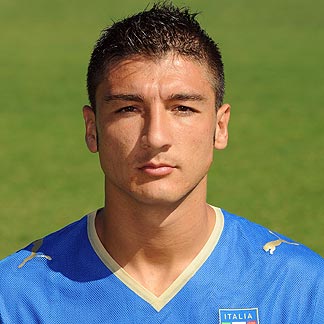
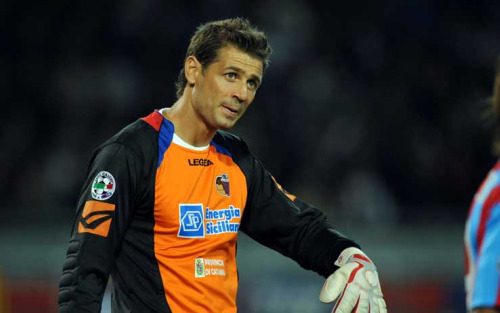
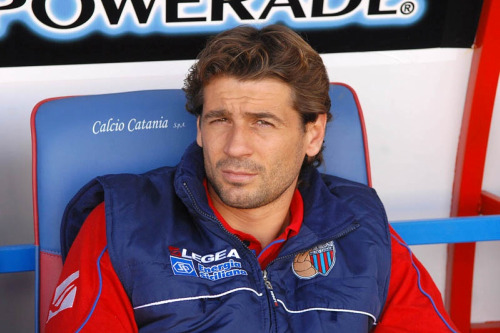
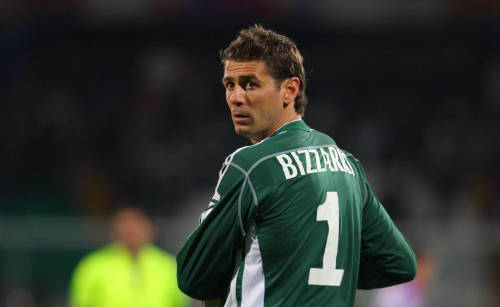
Albano Bizzarri (Lazio), honorable mention
Jessica admitted this one broke the rules. Bizzarri is Argentine, born in Córdoba province to a family of Italian descent, and he never played for Italy. He was Lazio's goalkeeper in 2009 and she included him anyway, as an honorable mention. His career had started big: Real Madrid signed him from Racing Club in 1999, but an 18-year-old Iker Casillas got in the way. He spent most of the rest of his career in Spain and Italy and has retired.
Watching Italian football in 2026
Most of these players peaked in a Serie A that looked very different. The league is now branded Serie A Enilive and run by Lega Serie A. Inter won the 2025-26 title, their 21st. Tickets carry the holder's name and are sold on the clubs' own websites, so book there and bring matching ID. If Milan is on your route, start with our guide to seeing a match at San Siro. For the darker side of the game Mauri got caught up in, John Foot's history of Italian football is the book to read; see our review of Winning at All Costs.