Getting from Rome to Barcelona (and vice versa)
· Updated · BootsnAll
 Rome and Barcelona sit at almost the same latitude, about 860 km apart as the crow flies, with the Tyrrhenian Sea and the Gulf of Lion in between. That water decides everything. Any land route has to swing north through Milan or Genoa, across the south of France and down into Catalonia, so the train, the bus and the car all take the long way round.
So here's the short answer. Fly if you want to get there. Take the overnight ferry from Civitavecchia if you have a spare day, a car, or a romantic streak. Take the train only if you want to see Provence or the Alps on the way and don't mind a night in Milan.
| Option | Door to door | Best for |
|---|---|---|
| Flight | about 5 hours, 1 h 45 in the air | almost everyone |
| Ferry (Grimaldi) | about 22 to 26 hours | drivers, slow travelers |
| Train via Milan and Lyon | 2 days, with a night in Milan | rail fans, rail pass holders |
| Bus (FlixBus) | about 18 to 20 hours | tight budgets only |
| Car | about 13 hours of driving | people who want to stop en route |
Flying from Rome to Barcelona
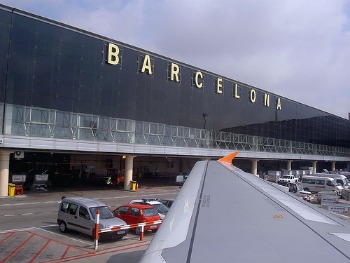 This is the one most people should book. Nonstop flights leave from both of Rome's airports, Fiumicino (FCO) and Ciampino (CIA), and take under two hours. Budget airlines, Ryanair and Vueling above all, fly the route many times a day, and booked a few weeks ahead a one-way fare often costs less than the bus. Fares climb sharply for summer weekends and the week of any big holiday, so compare a few dates.
Two things to check before you click buy:
- Which Barcelona? Barcelona's main airport is El Prat (BCN), about 30 minutes from the center by train or Aerobus. Some low-cost flights sold as "Barcelona" land at Girona (GRO), about 90 km north, or Reus (REU), about 100 km south. Price in the coach into town, and the extra hour or more, before you decide the cheap fare is a bargain.
- Bags. The cheapest fares on budget airlines include only a small under-seat bag. Add a cabin bag or a checked bag at booking, when it costs far less than at the airport.
If Rome and Barcelona are two stops on a longer trip from home, don't book the hop separately until you've priced the whole thing. Flying into Rome and home from Barcelona on one open-jaw ticket often costs about the same as a plain round trip to Rome, and a multi-stop specialist like AirTreks can build that kind of route for you.
Taking the ferry from Civitavecchia to Barcelona
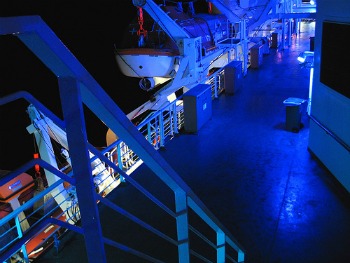 Rome isn't on the coast, but its port is. Civitavecchia, about an hour northwest of the city, is where the cruise ships dock and where the ferries to Spain leave. Regional trains run there from Roma Termini two or three times an hour, take 75 to 85 minutes, and cost about €4.60 in 2026. A free port shuttle links the station area with the terminals. Here's more on getting from Rome to the Civitavecchia port.
Grimaldi Lines runs the route with big ro-pax ships that carry cars, trucks and foot passengers. The crossing takes roughly 20 to 24 hours, overnight, and doesn't sail every day, so check the timetable before you build a plan around it. Fares move with the season and with what you book, so look them up on the Grimaldi site. The main choices:
- Armchair ("poltrona"). A reclining seat in a lounge. The cheapest ticket, fine if you can sleep sitting up, miserable if you can't.
- Cabin, inside or with a window. Worth it for couples and families, and the fare covers a night you'd otherwise spend in a hotel.
- Car. You pay for the vehicle on top of each passenger. This is the one route where a ferry clearly beats flying, because it saves you a 1,370 km drive or a one-way rental drop fee.
Food on board is plentiful and not cheap, so bring picnic supplies from a Roman alimentari. Board early in summer if you want a good armchair. And go in with the right expectations: this is a working ferry with a bar and a deck, not a cruise ship. On a calm day, with a book and nothing but sea in every direction, it's the most relaxed way between the two cities.
Taking the train from Rome to Barcelona
There's no direct train, and no night train between Italy and Spain either. The old Milan to Barcelona sleeper stopped running in December 2012. The practical rail route now takes two days:
- Day one: a high-speed train from Rome to Milan, under 3 hours on Italo or Frecciarossa (here's more on Rome to Milan). Sleep near Milano Centrale.
- Day two: the early Frecciarossa from Milan over the Alps to Lyon (in the 2026 timetable it left Milano Centrale at 06:25 and reached Lyon Part-Dieu at 11:12), then Renfe's high-speed train from Lyon to Barcelona Sants (leaving 14:35, arriving 19:23). Timings from Seat 61, which keeps them current.
One warning: works in the Mont Cenis tunnel stop the Milan to Lyon trains from 11 September to 9 October 2026, and the line has closed for long stretches before, so check it's running for your dates. The fallback is the coast: regional trains from Genoa to Ventimiglia on the French border, then French trains through Nice and Marseille, and a high-speed train from Marseille to Barcelona. It's slower, but the Riviera views make up for a lot.
Book each train on its operator's site (Italo, Trenitalia, Renfe) or on a combined site like Trainline. An Interrail pass covers the whole trip, but you'll pay for seat reservations on every high-speed leg. Do this for the journey, not to save money.
Taking the bus from Rome to Barcelona
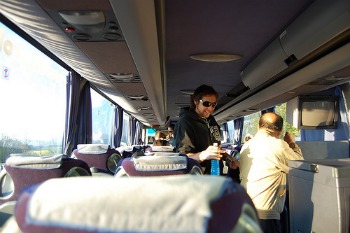 FlixBus, which took over the old Eurolines network in Spain and France, sells Rome to Barcelona coach tickets. The fastest run takes about 18 and a half hours, most involve a change, and many Rome departures leave from the Tiburtina bus station. It's the cheapest way to cover the ground, but a well-timed budget flight often costs little more, and you get a day of your life back. Check both before you commit to a night upright on a bus.
Driving from Rome to Barcelona
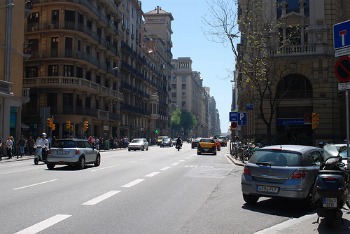 The road route runs up the Tuscan coast to Genoa, along the Riviera into France, past Nice, Aix and Montpellier, and down to Barcelona: about 1,370 km and roughly 13 hours of driving without stops, on toll motorways most of the way. ViaMichelin will estimate the fuel and tolls for your car.
Two other costs catch people out. Rental companies charge a steep fee for picking up a car in Italy and dropping it in Spain, so get a quote for the one-way rental before you plan around it. And if you're driving a car you want to keep, the Grimaldi ferry carries it overnight while you sleep, which beats two long days on the autostrada. Drive it only if the stops along the way are the point. Read up on driving in Italy before you set off.
Now that you're in Barcelona
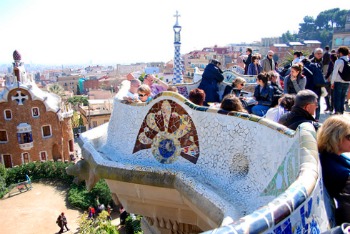
- Start with this Barcelona travel guide.
- For a place to stay, here are some cheap hotels in Barcelona and, for tighter budgets, cheap hostels in Barcelona.
- To fill your time, try an itinerary for 3 days in Barcelona, a longer list of what to do in Barcelona and some free things to do in Barcelona.
- And here's how to get around Barcelona.
photos, top to bottom, by: puuikibeach, manuelfloresv, Shoes on Wires, Cha gia Jose, auxesis, Jorge-11