How to Get from Rome to Pisa (& vice versa)
· Updated · BootsnAll
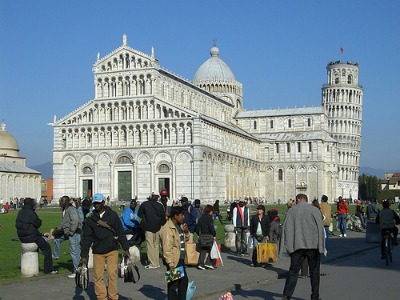 Most Italy checklists are heavy on Rome, but one of the most famous buildings in the country is three hours north, leaning at an angle in Pisa.
Pisa is easier to see from Florence, an hour away, and that's where most people base themselves. But Pisa does work as a long day trip from Rome, and it also makes a good, cheaper base for Lucca and the Tuscan coast. If you're flying in or out of Pisa's airport at either end of a trip, you'll be doing this journey anyway. Everything below works in reverse for Pisa to Rome; only the departure times change.
The short answer
Take the train. You have two good ways to do it: a direct train up the coast, or a high-speed train to Florence and a regional train on to Pisa. Both take about three hours. The coastal train means no change; the Florence route has far more departures and lets you stop in Florence on the way.
| Option | Time | Cost in 2026 |
|---|---|---|
| Direct train (coast) | about 3 hours | dynamic, cheapest booked ahead |
| Train via Florence | about 2.5 to 3 hours | from about 15 euros for the fast leg, plus the regional fare |
| Direct coach | from 3 h 50 min | from about 13 euros |
| Car | about 3 h 45 min, 365 km | fuel, tolls and parking |
Taking the Train from Rome to Pisa
Option 1: direct, along the coast. Intercity trains, and the few remaining Frecciabianca trains, run from Rome up the Tyrrhenian coast through Civitavecchia and Grosseto to Pisa Centrale without a change, in roughly 3 hours. It's a pleasant ride past the Maremma, and you can stay in your seat the whole way. Tickets are for a named train with a reserved seat and are priced dynamically, so book on trenitalia.com ahead of time for the best fare.
Option 2: via Florence. High-speed trains from Trenitalia (Frecciarossa) and Italo run Rome to Florence in as little as 1 hour 25 minutes, with dozens of trains a day and advance fares from about 14.90 euros in 2026. From Firenze Santa Maria Novella, regional trains to Pisa Centrale take about an hour, run throughout the day and have a fixed fare with no reservation. If you buy a paper regional ticket, validate it in the platform machine before you board.
Which should you pick? For a day trip, the Florence route usually wins because there are so many more trains to choose from, especially for the trip home. If you're moving with luggage, the direct coastal train saves you the change. You can buy either as one Trenitalia ticket. If you take Italo to Florence you'll buy the regional leg separately, so leave a cushion for the connection.
Rail passes: the Trenitalia Pass and the Interrail Italy Pass both cover Trenitalia trains, but Frecciarossa and Intercity trains need a seat reservation (free with the Trenitalia Pass, paid with Interrail). The Trenitalia Pass isn't valid on Italo.
Doing Pisa as a day trip from Rome? Take an early train, and book your return before you go, or at least check the last good train back before you leave Pisa Centrale. The Leaning Tower is about a 25-minute walk from the station. Tickets to climb it are for a set time slot and sell out in busy months, so book them on the official site, opapisa.it, before you travel. There's more in our guide to the Leaning Tower of Pisa.
Flying home from Pisa? The PisaMover shuttle links Pisa Centrale with the airport in under 3 minutes.
Taking the Bus from Rome to Pisa
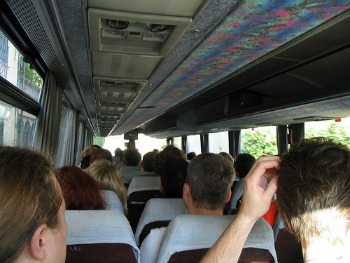 Italy now has national coach networks. FlixBus runs direct from Rome to Pisa: seven buses a day in 2026, the fastest taking about 3 hours 50 minutes, with fares from about 13 euros booked early. In Rome it uses several stops, including Tiburtina bus station and Termini. In Pisa it stops at the train station and at the PisaMover stop.
Another way is a coach from Rome to Florence (FlixBus and Itabus both run it), then the regional train from Florence to Pisa.
The bus is the budget pick, and the overnight departures can save a hotel night. For a day trip, though, the train is quicker and more reliable. There's more on bus travel in Italy here.
Driving from Rome to Pisa
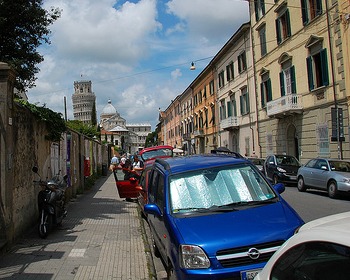 The usual route is the A1 toll motorway north to Florence, then west to Pisa: about 365 km and about 3 hours 45 minutes without traffic. The alternative runs up the coast on the Aurelia road through the Maremma, which is slower in places and makes a good excuse to stop at the beaches and hill towns of southern Tuscany. ViaMichelin will map both and estimate the tolls.
The train is faster than the drive, so rent a car only if you'll use it after Pisa. If you're basing yourself in Pisa for day trips into Tuscany, a car makes sense. Pick it up at an office on the edge of Rome or at the airport, so you don't have to drive through the center, and ask your Pisa hotel about parking. Pisa's historic center, like Rome's, is a camera-enforced ZTL, and driving in without a permit costs 83 to 332 euros in 2026. Read up on driving in Italy before you go.
Flying from Rome to Pisa
There are no direct flights between Rome and Pisa, and with the train at about three hours, there's no reason to look for one. If Pisa is your first stop in Italy, see airfare to Pisa for flying straight in.
And now that you're in Pisa...
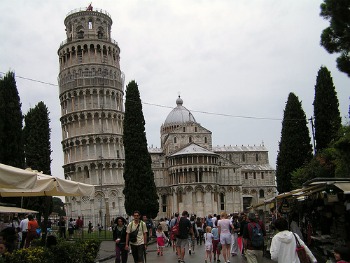 A few more resources for Pisa and beyond:
- Pisa Travel Guide
- Things to Do in Pisa
- Hotels in Pisa and hostels in Pisa
- What to do in Lucca, the walled town half an hour away
photos, top to bottom, by: marco.ziero, LWY, Naystin, manelzaera