
Getting from Milan to Rome (and Vice Versa)
· Updated · BootsnAll
 Rome and Milan might seem like they’re very different, but they have a lot in common. They’re Italy’s biggest cities, the homes of the country’s primary international airports, and where you’ll find the headquarters for the vast majority of companies doing business in Italy. The number of Italians who regularly zip back and forth from Milan to Rome and Rome to Milan, then, is high. And thanks to the high-speed rail line connecting the two cities, the trip is much faster than it used to be. But it’s not just commuters who need to get from Milan to Rome (or vice versa), tourists often need to make that trek, too.
You have several options for getting from Milan to Rome, and the ideal transportation solution for you will be determined by a combination of things: your travel budget, the amount of time you have to spend on vacation, and the kind of travel you prefer. Personally, I always lean toward taking the train (especially the high-speed variety), but I know not everyone travels like I do. In the interest of covering my bases, then, here are your options for how to get from Milan to Rome.
(Oh, and if you’re looking for how to get from Rome to Milan, the basics will be identical, station names, ticket prices, drive times, etc.)
Taking the Train from Milan to Rome
Whereas the trip from Milan to Rome by train in Italy used to take upwards of 5-6 hours, the Frecciarossa (red arrow) trains and their private competitor, Italo, have cut that trip time roughly in half. The fastest trains now get you to Rome from Milan in under 3 hours, making it almost reasonable for a day trip. I said almost.
Still, even if it’s not quite in hop/skip/jump territory, the high-speed train does make getting from Milan to Rome (or Rome to Milan) so much faster that it’s not bad news if the lowest prices you can find on airfare are cheap flights to Milan instead of your intended target of Rome. You can book the best deal and take the train down to Rome (provided the cost of a train ticket doesn’t outweigh the savings on your airfare!).
Between Trenitalia and Italo there are high-speed trains from Milan’s Centrale station all day long (Italo alone runs more than 30 a day), arriving at Rome’s main station, Termini. Many stop in Bologna and Florence en route, but you don’t have to get out or change trains or do anything until you reach Rome. Italo’s fastest trains take 2 hours 52 minutes; Trenitalia’s quickest Frecciarossas take about 3 hours 10, and the ones with more stops about 3 hours 40, so look at the arrival time and not just the departure. Fares are priced like airfares: book ahead and you can find seats from about €30 in 2026 (see Italo and Trenitalia), while tickets bought on the day cost a lot more. As a real-world check, for a Tuesday in early October, searched in mid-September 2026, Frecciarossa fares on the morning trains ranged from about €38 to €86. The cheapest seats go first, and Friday and Sunday afternoon trains fill up with commuters heading home, so book those early.
Get off at Roma Termini if you’re staying near the station, Monti or the Colosseum. Some trains also stop at Roma Tiburtina first, which only helps if your hotel is on that side of the city.
Slower trains from Milan to Rome still exist, but they take many hours longer and, with cheap advance fares on the fast trains, they rarely save you much money.
High-speed tickets are always for a specific train with a reserved seat. If you already have an Italy rail pass, that acts as your ticket on Trenitalia and you’ll just need to buy a seat reservation for a particular train (rail passes aren’t valid on Italo).
>> Learn more about taking the train from Milan to Rome
Flying from Milan to Rome
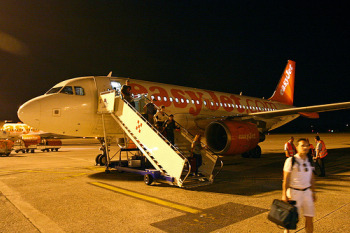 As mentioned, Milan and Rome are home to Italy’s two biggest international airports, Malpensa Airport in Milan and Fiumicino Airport in Rome. Which means that if you happen to find a great deal on airfare to Milan but you’d really rather be in Rome (or vice versa), one solution is to not leave the airport at all and just hop on a short flight from one airport to the other as soon as you arrive. Flying from city to city in Italy isn’t always the best idea in my opinion, but in this case it can be.
The flight from Milan to Rome takes a little over an hour. ITA Airways, which replaced Alitalia when it stopped flying in 2021, runs the busiest route, between Milan’s Linate Airport (the one closest to central Milan) and Fiumicino in Rome. Budget airlines come and go on Milan-Rome routes, including from Orio al Serio airport, which is technically in Bergamo, not Milan, so compare what’s flying when you book. Once you add the trips to and from the airports, though, the train usually wins.
A better trick, if you haven’t booked your transatlantic flights yet, is to skip the connection entirely: fly into Milan and home from Rome (or the other way round), and take the train in between. That kind of “open-jaw” ticket often costs little or nothing more than a round trip, and a company like AirTreks can price it for you alongside any other stops on a longer trip.
>> More information on airfare to Milan, and airfare to Rome
Driving from Milan to Rome
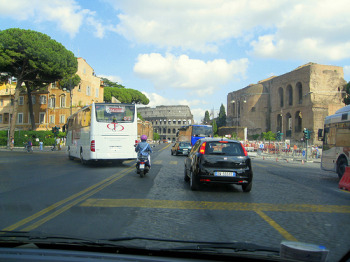 I’m a big believer in taking public transportation whenever possible in Italy, partly because I’d rather not match wits with Italian drivers and also because I’ve seen the road rage caused by trying to find a parking spot in big Italian cities. But if I can’t talk you out of renting a car to drive from Milan to Rome (or from Rome to Milan), then here’s what you need to know about the drive.
I always use the Via Michelin site when I’m looking for driving information in Europe, and just plugging in general directions from Milan to Rome the “Michelin recommended” route is one that’ll take almost 6 hours of drive time (assuming, of course, that you don’t run into traffic) and cover more than 580km. The Michelin site will also estimate your fuel and toll costs (the tolls alone add up on this route), and suggests a route which takes you southeast to Bologna before cutting south to Florence and then down to Rome (which is more or less the same route the high-speed train takes).
Your best bet is to use the Via Michelin site to type in specific addresses from which you’re departing and where you’ll be arriving so you get the most accurate directions possible, and I’d also highly recommend that you have a good driving map of Italy as well as someone to navigate (or a GPS unit in the car).
>> More information on renting a car in Italy, and tips for driving in Italy
Taking the Bus from Milan to Rome
 It’s natural to assume that taking the bus from one city to another in Italy would be the cheapest transport option, and therefore it would be most appealing to travelers on a seriously tight budget. And where there are bus routes connecting cities on your itinerary, they often are really cheap. Regional buses in Italy stay inside their own regions, but national coach companies now connect the big cities. FlixBus and Itabus both run Milan to Rome (FlixBus alone listed about 28 trips a day in September 2026, with fares from around $11 on its site), with several stops in each city, so plug the addresses into a map to see which ones are closest to where you are in Milan and where you’re going in Rome. Many coaches in Rome use the Tiburtina bus station, which is connected to Roma Termini by Metro Line B. The quickest bus takes about 6 hours 35 minutes, more than twice as long as the fast train, and traffic on the A1 can stretch that further, but advance coach fares can be very cheap, so it’s worth a look for budget travelers. FlixBus also runs international routes if you’re traveling from one country to another.
And now that you’re in Rome…
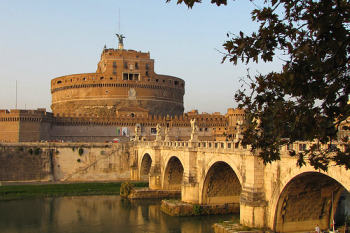 Welcome to the Italian capital! To get you pointed in the right direction in The Eternal City, here are some links to get you started with trip planning:
- Here’s my overall Rome travel guide, with links to all sorts of Rome-related articles in it.
- I’ve written about places to stay in Rome, including hotels near the Colosseum, hotels near Vatican City, and hostels in Rome (including Rome’s best party hostels).
- There’s no shortage of things to do in this city, here are my top 10 things to do in Rome, a list of free things to do in Rome, an itinerary for 5 days in Rome, and some options for day trips from Rome.
- I highly recommend getting acquainted with (and using!) the public transportation system to get around in Rome, because it’ll save you time and exhaustion. Here’s my guide to getting around in Rome.
- Rome can be overwhelming, so here are my Rome survival tips and things you should know about Rome.
photos, top to bottom, by: Dan Kamminga, bibendum84, Nika, markhillary, euthman