3-Week Italy Itinerary: Italy's Greatest Hits
· Updated · BootsnAll
If you have three weeks for Italy, you could bolt a third week onto a two-week itinerary. It works better to plan all 21 days together, so the pace stays even and the long travel days fall in sensible places.
I call this the “greatest hits” itinerary because it covers almost every famous destination in the country: the “holy trinity” of Venice, Florence and Rome, plus the Ligurian coast (with the Cinque Terre), Siena, the Amalfi Coast, Naples and Pompeii. Three weeks means you see all of it without rushing around like a maniac. No stop is shorter than two nights.
Itinerary Quick Overview:
- 2 nights Venice
- 2 nights Ligurian Coast (Cinque Terre or Portofino)
- 4 nights Florence (with a stop in Pisa on the way)
- 2 nights Siena
- 4 nights Rome
- 4 nights Amalfi Coast
- 2 nights Naples (with a day trip to Pompeii and Herculaneum)
Who Might Like This Trip
This is for a first trip to Italy, when all the big names are on your list but you don’t want a new city every night. Two-night minimums give you breathing room between travel days, and the day trips are optional: take them to see more, or skip them and sit in a piazza instead.
Flights
Fly into Venice (VCE) and out of Naples (NAP). This is an “open-jaw” ticket, into one city and out of another, and it saves you a full day of backtracking at the end. Open-jaw fares are often close to a simple round trip, so price both. If you’re combining Italy with other countries on the same trip, AirTreks builds multi-stop tickets like this. If you have to fly in and out of the same city, trim a night from Florence or the Amalfi Coast to pay for the trip back.
Transportation
You can do the whole trip by train, bus and boat, and I’d recommend it. High-speed trains (Trenitalia’s Frecciarossa and the private Italo) are priced like airfares: book a few weeks ahead and Rome to Naples can cost about 15 euros in 2026, while buying at the station on the day costs far more. Regional trains have fixed fares and don’t need booking. If you buy a paper regional ticket at the station, validate it in the machine before you board.
If you want a car for a day or two away from the cities, Tuscany is the place to rent one. Driving the Amalfi Coast is famous, but the road is narrow and you share it with buses, and parking is scarce and expensive in every town on this route. Most historic centers are also camera-enforced limited traffic zones (ZTL), with fines of 83 to 332 euros per entry in 2026. Read these driving tips for Italy before you pick up the keys.
Here’s how each leg works:
| Leg | How | Roughly how long |
|---|---|---|
| Venice to the Cinque Terre | Train, changing at Milan, Florence or La Spezia | Most of a day; check trenitalia.com |
| Cinque Terre to Florence | Regional train via La Spezia and Pisa | About 2.5 to 3.5 hours |
| Florence to Siena | Autolinee Toscane 131R rapid bus | About 1 to 1.5 hours |
| Siena to Rome | Train (change at Chiusi or Florence) or a FlixBus or Itabus coach | Half a day; compare times |
| Rome to Naples | High-speed train (Frecciarossa or Italo) | From 55 minutes |
| Naples to the Amalfi Coast | Circumvesuviana train to Sorrento, then SITA bus; or a ferry in season | Half a day |
Book These Before You Leave
Italy’s big sights now run on timed tickets, and several sell out weeks ahead in summer. Book these as soon as your dates are firm:
- Colosseum, Forum and Palatine: timed tickets with your name on them (bring matching ID), about 18 euros in 2026, released 30 days ahead on the official site.
- Vatican Museums: about 20 euros plus a 5 euro booking fee in 2026. The only official seller is tickets.museivaticani.va; look-alike sites charge more.
- Uffizi: about 29 euros booked ahead in 2026, through the Uffizi’s own site. Closed Mondays.
- Accademia (Michelangelo’s David): about 20 euros, timed entry. Also closed Mondays.
- Florence Duomo dome climb: the cathedral is free, but the dome needs a timed slot on the Brunelleschi Pass (about 30 euros).
- Pompeii: named tickets since late 2024; the ancient city alone is about 20 euros in 2026 on the official ticket site.
3-Week Italy Itinerary: Italy’s Greatest Hits in Three Weeks
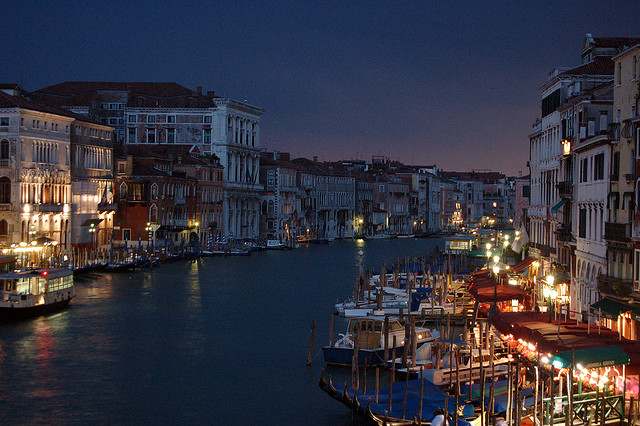
Venice
2 hotel nights
You’ll land at Venice Marco Polo Airport, probably in the morning. Take the Alilaguna water bus straight into the lagoon (about 18 euros in 2026) or a bus to Piazzale Roma, drop your bags and go out on foot. See St. Mark’s Basilica (no longer free: about 10 euros for the basilica alone), the Doge’s Palace and anything else on your list, but mostly just wander. Venice is best in the early morning and the evening, when the day-trippers have gone.
On day two, keep exploring, or take a half-day trip: Murano, Burano and Torcello are easy by vaporetto, and Verona is a short train ride away. A 24-hour vaporetto pass (about 25 euros in 2026) pays for itself if you’re island hopping.
Because you’re staying overnight, you don’t pay the access fee Venice charges day-trippers on some peak days between April and July, but you do need to register for a free QR code at cda.ve.it (your hotel can tell you how). Hotels also charge a city tax of a few euros per person per night.
After your second night, take a morning train toward the Ligurian coast. Plan on most of the day and at least one change. For the Cinque Terre you’ll end at La Spezia and switch to the local line; for Portofino, ride to Santa Margherita Ligure and take a bus or boat from there. Bring snacks, or buy a sandwich at the station before you board.
You might also like:
- How to Get from the Venice Airport into Venice
- Itinerary for 2 Days in Venice
- How to Get Around in Venice
- How to Get from Venice to the Cinque Terre
Liguria: Cinque Terre or Portofino
2 hotel nights
You’ll arrive mid-afternoon, check in and explore your town. Spend the next day in and around the water or hiking, or both. The scenery is the sight here, so you’re not missing any museums by staying outdoors.
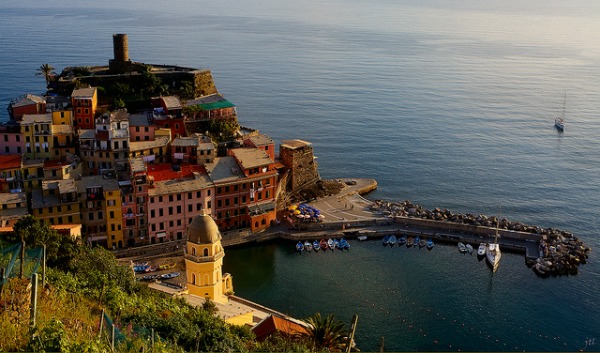
Pick your base by what you want. The Cinque Terre is five villages linked by trail, train and boat, and gets extremely crowded in summer. Portofino is small, glossy and expensive, and nearby Santa Margherita Ligure or Camogli make easier, cheaper bases. For hiking in the Cinque Terre, you’ll need a Cinque Terre Card for the paid coastal paths. The famous Via dell’Amore between Riomaggiore and Manarola reopened in 2024 as a one-way walk with booked time slots, and the path from Manarola to Corniglia is still closed in 2026, so check the park site for which trails are open the day you go.
On your last morning, fit in a swim or a short hike, then take the train to Florence. If you’re interested, stop for an hour or two in Pisa for the Leaning Tower photo: the train from La Spezia stops at Pisa Centrale, a 20-minute walk from the tower. Climbing it costs about 20 euros in 2026 and needs a timed slot.
You might also like:
- Where to Stay in the Cinque Terre
- Hiking Guide to the Cinque Terre
- Itinerary for 2 Days in the Cinque Terre
- How to Get from the Cinque Terre to Florence
Florence
4 hotel nights
You’ll get to Florence by mid-afternoon, so your first day is for settling in, walking and starting your gelato research. Walk or take the bus up to Piazzale Michelangelo for sunset at least once.
Book the big museums in advance (see the list above) so you’re not standing in lines: the Uffizi and the Accademia are both closed Mondays, so don’t save them for that day. The Duomo itself is free, and the Bargello is worth an hour for its sculpture. If you plan to see a lot, price the Firenze Card (about 85 euros for 72 hours in 2026) against the individual tickets.
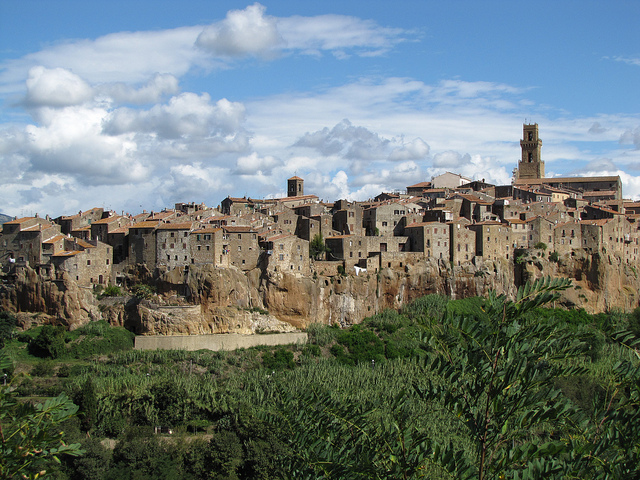
With four days in Florence I’d normally send you to Siena for a day, but since it’s your next stop, pick a different day trip: Lucca by train (walk or cycle the top of its city walls), San Gimignano by bus, or Bologna by high-speed train in about 40 minutes. Or rent a car for a day and drive the Chianti back roads.
After your fourth night, take the bus to Siena. Autolinee Toscane’s rapid 131R line is quicker than the train and drops you closer to the old town.
You might also like:
- Cheap Hotels in Florence
- Itinerary for 4 days in Florence
- Top 10 Things to Do in Florence
- Things You Should Know About Florence
- How to Get from Florence to Siena
Siena
2 hotel nights
It’s a short hop from Florence, so you get most of your first day in Siena. At midday the city can feel packed, because it’s a magnet for day-trippers. Wait for the evening and most of the crowds leave. You have a day and a half for the Duomo (and its inlaid marble floor), the Baptistery and the Campo, so take it slowly. The city is hilly, and slow may be the only pace you can manage. Don’t miss an evening passeggiata around the Campo, preferably with a gelato in hand.
After two nights, head for Rome in the morning. The train needs one change, usually at Chiusi or Florence (check trenitalia.com). FlixBus and Itabus coaches also run the route, so compare times on their sites.
If you’re here in summer, note that the Siena Palio horse race runs on 2 July and 16 August every year. The city is packed and hotels are booked solid for days around it, so either plan the trip around the race or avoid those dates.
You might also like:
Rome
4 hotel nights
Settle into your hotel and explore your neighborhood. You won’t get into the big sights on your first half day, but walk to the Colosseum after dark anyway to see it lit up. It’s quite a first night in Rome.
You then have three full days. Set one aside for Vatican City: the Vatican Museums and St. Peter’s Basilica together take most of a day. A guided tour helps you make sense of what you’re seeing, but it won’t skip the security line at St. Peter’s, and a timed ticket bought on the official site gets you into the museums just as quickly. I like to see the ancient sites first (the Colosseum, Forum and Pantheon, which now charges a few euros for entry) and do the Vatican the next day. Fill the rest with markets, the Trastevere and Monti neighborhoods, churches (most are free, and several hold Caravaggios) or a walking tour. If Pompeii isn’t enough ruins for you, add a half-day trip to Ostia Antica, Rome’s ancient port, by train from Piramide.
Rome has a three-line metro and plenty of buses. A single ticket costs about 1.50 euros in 2026 and lasts 100 minutes, or just tap a contactless card at the gates. The Trevi Fountain is still free to see from the piazza, but going down to the basin now costs 2 euros.
After four nights, take a morning train to Naples and continue straight to the Amalfi Coast. From Napoli Garibaldi (under the main station) the Circumvesuviana train runs to Sorrento, where SITA buses continue along the coast. In season, ferries from Naples also sail to Sorrento and some Amalfi Coast towns. Or pick up a rental car in Naples and drive, if you’re brave.
You might also like:
- Cheap Hotels in Rome
- Top 10 Things to Do in Rome
- Itinerary for 5 Days in Rome
- Rome Discount Card
- How to Get from Rome to Naples and How to Get from Naples to Sorrento
Amalfi Coast
4 hotel nights
Getting from Rome to the Amalfi Coast is the most tedious travel day of the trip. Once you’re there, you have nothing to do but relax. Without a car you can still reach every town on the coast, plus Sorrento (not technically on the Amalfi Coast, but a common base) and Capri, by bus or boat. Positano is the showpiece, Amalfi the most practical base for buses and ferries, and Ravello the quiet one up on the hill. For a history fix, the Greek temples at Paestum make a good day trip.
If four nights in one place feels too long, split them: two on the coast and two on an island such as Capri or Ischia. An island has a similar but distinct feel once the day-trippers have gone.
The coast road gets jammed in summer and the buses fill up fast, so in peak season use the ferries between towns when you can.
After four nights, take the bus back to Sorrento and the Circumvesuviana train back to Naples.
You might also like:
- Getting Around the Amalfi Coast
- Things You Should Know About the Amalfi Coast
- How to Get from Sorrento to Naples
Naples
2 hotel nights
You’ll get a raised eyebrow or two when you tell people you’re including Naples. The city has a PR problem. But after nearly three weeks in Italy you’re ready for it, and if you come prepared you’ll leave wondering what the eyebrows were about.
Stay in the historic center if you can, for the atmosphere. On your first afternoon, go to the National Archaeological Museum, which holds the best mosaics and frescoes from Pompeii and Herculaneum and makes a perfect warm-up for the next day. Then wander the old town, stop often for pizza, walk into any church with an open door, and ride a funicular up the Vomero hill for the view over the bay to Vesuvius.
On your last full day, take the Circumvesuviana to Pompeii and Herculaneum, both buried by Vesuvius in 79 A.D. Doing both yourself in one day is easy: Herculaneum is smaller and better preserved (about 16 euros in 2026), and Pompeii is vast, so pick the parts you want to see. Book the named Pompeii ticket ahead. You’ll be back in Naples in time for more wandering, and more pizza, before your last night in Italy.
Naples airport is close to the center. The Alibus shuttle runs from the central station to the airport for about 5 euros in 2026, or ask your hotel to book a taxi at the flat fare, then start planning your next Italy trip on the flight home.
You might also like:
- Cheap Hotels in Naples Historic Center
- Top 10 Things to Do in Naples
- Things You Should Know About Naples
- Naples Discount Card
- Best Pizza in Naples
- How to Visit Pompeii and Herculaneum in One Day Without a Tour
photo by Jason OX4