Getting from Milan to Pisa (& vice versa)
· Updated · BootsnAll
 Milan is one of the most common entry points for travelers in Italy, but it’s a city most visitors don’t want to spend any time in. Pisa is one of the most popular stops on an Italy tour, but usually for no longer than an hour or two. Both cities warrant further exploration than they typically get, if you ask me, and I hope this primer on how to get from Milan to Pisa helps inspire you to spend a couple days in each one.
Oh, and the information works if you’re going from Pisa to Milan, too. You’ll need to confirm departure times for some things, but the journey duration and ticket price should be about the same in both directions.
Taking the Train from Milan to Pisa
It probably won’t surprise you to learn that I think the train is the best option for getting from Milan to Pisa. It’s not such a quick journey that it makes a good day trip option, and there’s no direct fast train, so you’ll almost always change once.
There are two ways to go, and one is much better than the other.
Via Florence (my pick). Take a Frecciarossa or Italo from Milano Centrale to Florence Santa Maria Novella (under two hours), then a regional train from Florence to Pisa Centrale (about an hour). Door to door it takes about 3 hours 15 minutes. Trenitalia sells the whole thing as one ticket, which matters: if the first train runs late and you miss the connection, you can carry on with the next train. For a Tuesday in early October, searched in mid-September 2026, those combined tickets cost about €41 to €80, most of it the high-speed leg. If you book the two legs separately you can mix an Italo train with the regional (which has a fixed fare of €9.80), but then a missed connection is your problem.
Along the coast via Genoa. Intercity and regional trains run from Milan down to Genoa and along the Riviera through La Spezia to Pisa, usually with one or two changes. The cheapest slow combinations on that same October day took five and a half hours or more and saved only €10 to €15 against the fast route. It only makes sense if you want to stop in Genoa or the Cinque Terre on the way, in which case it’s a lovely ride.
Both work in reverse, too. Times and connections change with the timetable, so search the whole journey on trenitalia.com before you go.
High-speed tickets are for a specific train with a reserved seat. If you have a rail pass (now sold as an Interrail pass), it acts as your ticket but you’ll still need to buy a seat reservation for the fast train, and passes don’t work on Italo.
Taking the Bus from Milan to Pisa
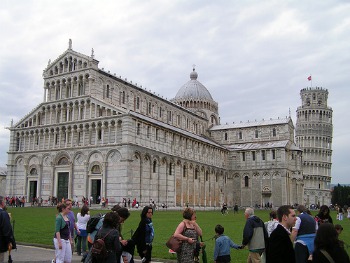 Regional buses in Italy stay inside their own regions, but the national coach networks, FlixBus and Itabus, link the big cities. FlixBus listed about eight trips a day from Milan to Pisa in September 2026, taking from about 5 hours, with fares from around $24 on its site. In Pisa, one of its stops is the Pietrasantina coach park, a short walk from the Leaning Tower, which is handy if you’re only there to see the Campo dei Miracoli. In Milan most coaches leave from Lampugnano bus station on metro line M1. That’s nearly two hours slower than the train via Florence, so the bus mainly makes sense when you’re booking late and train fares have climbed.
>> Read more about getting from Florence to Pisa
Driving from Milan to Pisa
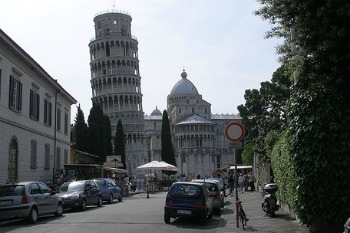 For some, there’s nothing quite like zipping through the Italian countryside in your own car. And while I don’t recommend having a car for itineraries that concentrate on major cities that are easily accessible by public transportation, those of you who are planning lots of meandering day trips in the regions around where you’re staying would benefit from having a car at your disposal. So here’s what you need to know to get from Milan to Pisa by car.
First of all, plot out your basic route on Via Michelin. It’s a handy site that helps you see, generally, what you’re in for. In this case, the Milan-Pisa trip is 286km, which should take just under 3 hours (assuming you don’t hit traffic or stop along the way) and cost a little over €23 in tolls (if you use the highway). I wouldn’t rely on Via Michelin to be your sole guide, however. It’s always a good idea to have a good driving map of Italy with you if you’re renting a car. Having a car with a GPS unit (or turning your smartphone into a GPS unit) is awesome, but if something gets zapped it’s nice to have the analog version as a backup.
>> Read more about renting a car in Italy and learn the driving rules in Italy
Flying from Milan to Pisa
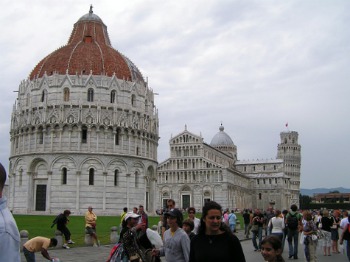 Milan has two airports serving the city, and Pisa’s airport is the primary Tuscan airport. Still, don’t count on a direct flight between them, or between Milan and Florence’s smaller airport. (Alitalia and Meridiana, the airlines that used to fly domestic routes like these, are both gone.) Once you add connections and the trips to and from the airports, flying from Milan to Pisa (or from Pisa to Milan) is neither faster nor cheaper than the train.
And now that you’re in Pisa…
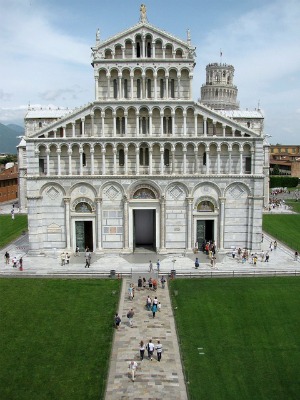 Pisa is a brief two-hour stop for most people, but it also makes a great home base from which to explore Tuscany. Here are some tools to help you plan your stay in this under-appreciated city.
photos by Henri van Kalkeren, manelzaera, Argenberg, manelzaera, toastthemost