Venice
Updated · BootsnAll
 I am always dismayed when I hear people say how much they disliked their trip to Venice. It's such a pity to visit this one-of-a-kind city and have a bad time, especially when a bad time is so easy to avoid. (Can you tell that I really love Venice?)
The people who hate Venice almost always did the same thing: they came for a day in summer, walked the same route from the station to St. Mark's as everyone else, and left before dinner. I've decided to no longer tolerate people who tell me Venice is too crowded. There is always a quiet corner of Venice. Always. A little knowledge goes a long way here, and this page collects what you need to know, plus links to everything else on the site.
Quick links to Venice travel resources:
- How to find cheap airfare to Venice
- Where to stay in Venice
- Access fee, hotel tax and the rules
- Things you should know about Venice
- Top 10 things to do in Venice
- Itinerary for 2 days in Venice
- Day trips from Venice
- Where to eat in Venice
- Getting around in Venice
- Getting from Marco Polo Airport to Venice (and back)
- Venice cruise terminals: where they are and how to get there
- Venice survival tips
To really appreciate Venice, stay overnight
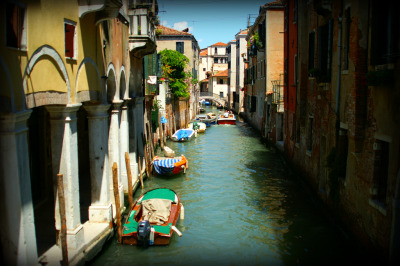 Sadly, the Venice that too many visitors experience is the day-tripper's Venice. You arrive by train, coach or tour boat in the morning, move like a herd of sheep from one "sight" to another in a semi-mad rush to get it all done, and retreat in the evening to somewhere else. You miss everything that is enchanting about Venice: the early morning, the late evening, and all the nooks and crannies away from the big attractions. If eight hours is all you have on your sprint around Italy, eight hours is better than nothing, but only if you plan them wisely. Otherwise you'll have spent a day on Venice because you "had to" see it and still come away having had a bad time.
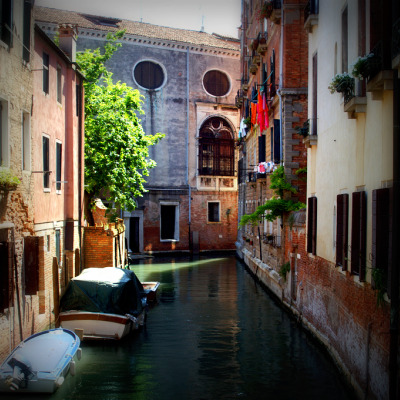
When people ask how long to spend in Venice, I always say at least two days, if not three. That can seem excessive for a small city with "nothing to do," but that lack of things to do is precisely what makes Venice so lovely. Staying a night or two lets you see the city at its best, in the early mornings and late evenings when the day-trippers have gone. More time also affords you the luxury of my number one "activity" in Venice: getting lost. Wandering the tiny streets and alleys takes you away from the tourist centers and shows you the peaceful side of Venice.
Yes, Venice is dreadfully overcrowded in peak season, and I'd be silly to pretend otherwise. My contention remains that if you give yourself time to get to know Venice better than the day-trippers do, you stand a much better chance of going home using words like "magical" to describe it.
Where to stay in Venice
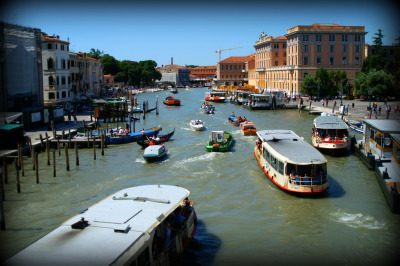 Venice is one of the most visited cities in Europe, and it has plenty of places to stay. Three things to be aware of:
- Space is limited (an island city can't sprawl), so rooms are small.
- Accommodation in the historic center is expensive, especially in summer and during Carnevale.
- Many visitors only come for the day, which doesn't bring prices down the way you'd think.
Where you stay matters more here than in most cities, because you'll be dragging your bag over bridges with steps. Near the train station (Cannaregio and Santa Croce) is easiest on arrival and usually cheaper. Near St. Mark's is central but pricey and busiest by day. Dorsoduro and Castello are quieter and feel more like a neighborhood. Staying on the mainland in Mestre saves money, but you lose the evenings in Venice, which are the whole point of staying over.
- For hotels near the most famous sight, see my list of hotels near St. Mark's Square.
- For cheaper options, see budget hotels near the Venice train station and hostels in Venice. Venice now has several year-round hostels, including Generator Venice on Giudecca.
- A unique city should have unique places to stay: here are 5 unique hotels in Venice.
- Not every hotel fits the bill for a honeymoon, so here are some romantic hotels in Venice.
Getting to Venice
By train, you arrive at Venezia Santa Lucia, right on the Grand Canal. Make sure your ticket says Santa Lucia and not Venezia Mestre, the mainland station ten minutes before it. High-speed trains take about 2 hours 15 minutes from Milan, about 2 hours from Florence and about 3 hours 30 minutes from Rome (see Milan to Venice, Venice to Florence and Rome to Venice).
By air, you land at Marco Polo Airport on the mainland. The most scenic way in is the Alilaguna water bus, about €18 one way in 2026, and the fastest cheap option is a bus to Piazzale Roma, about €10 to €12. The details are in getting from the airport to Venice.
By car, you can only drive as far as Piazzale Roma or the big car parks on Tronchetto island, linked to Piazzale Roma by the People Mover. After that it's boats and your feet.
Make Venice your entry point
 I often recommend that people begin their Italy vacation in Venice. Marco Polo is small next to Rome's and Milan's big international airports, so passport lines are shorter and easier. And when you're new to Italy, it's easier to ease yourself in than to give yourself a shock. Milan and Rome are big cities that could rattle even an intrepid traveler. Venice is car-free and gives you a couple of days to get used to Italy before moving on to the rest of this wonderfully crazy country. Fly into Venice and home from Rome (an "open jaw" ticket), and you never have to backtrack. If Venice is one stop on a longer trip, AirTreks builds multi-stop tickets like that.
Getting around Venice
You'll walk most of the time, and it's the best way to see the city. For longer hops, the ACTV vaporetti (water buses) go everywhere. In 2026 a single ticket costs about €9.50 and is valid for 75 minutes, so if you'll take more than two or three boats, buy a pass: about €25 for 24 hours, €35 for 48 hours, €45 for 72 hours or €65 for 7 days. Line 1 down the Grand Canal is the cheapest sightseeing tour in town. More in Venice transportation 101.
The Grand Canal has only four bridges, so at a few points gondoliers still row people across in a traghetto, a stripped-down gondola that costs about €2 per crossing for visitors. It's a cheap way to get a taste of the gondola experience.
What to do in Venice
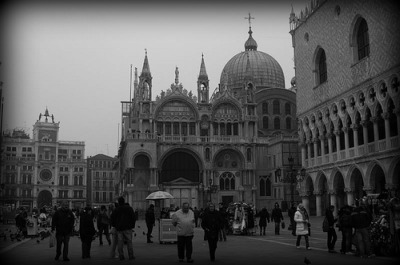
 You've probably read, on this site and elsewhere, that getting lost in Venice is the thing to do. It is. But there are real sights too. I'm strongly biased in favor of one in particular, St. Mark's Basilica, and if you asked me privately I'd say you could skip almost everything else, wander aimlessly and still have a grand time. The basilica is no longer free: in 2026 the basic ticket is about €10, sold online at the basilica's ticket site, and booking a time slot saves you the famous line.
- Top 10 things to do in Venice
- Free things to do in Venice
- The Doge's Palace
- Weird and wonderful Venice
- Torcello and Burano, out in the lagoon
- Day trips from Venice
- What to do with 2 days in Venice
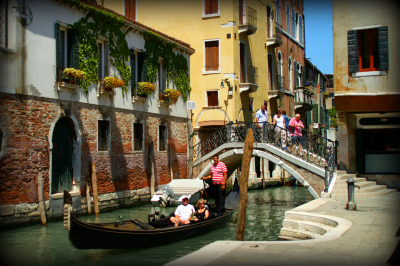
Some people think a trip to Venice isn't complete without a ride in one of the Venice gondolas. I'm not one of them, though I may be in the minority. To me a gondola ride is too expensive and not nearly as romantic as you think it'll be, with tourists leaning over every bridge to stare and snap pictures. But if you simply must, go for it. The city sets official rates, about €90 for 30 minutes by day and €110 in the evening in 2026, and that price is per gondola, not per person. Split among up to five people, it's much more reasonable. Evening rides cost more but feel more private, with the shadows hiding the gawkers' faces.
When to go
Venice is busiest from Easter through October, and July and August are hot, humid and packed. The quietest stretch is November through March, outside Carnevale: cold and sometimes foggy, but you'll have whole neighborhoods to yourself.
- Carnevale always ends on Shrove Tuesday. The 2027 edition runs from late January to 9 February 2027. It's spectacular and very crowded, and hotel prices jump.
- The Biennale alternates between art in even years (the 2026 Art Biennale runs 9 May to 22 November 2026) and architecture in odd years (next in 2027).
- Acqua alta, the high tides that flood low parts of the city, mostly come between October and January. Since 2020 the MOSE flood barriers at the lagoon inlets have been raised for the highest tides, so severe floods are much rarer, but St. Mark's Square is low and can still get wet. Pack shoes you don't mind soaking, or buy cheap plastic overboots in town.
Access fee, hotel tax and the rules
Day-trippers now pay for the privilege. On set peak days between April and July, visitors who aren't staying overnight pay an access fee to enter the historic center between 8:30 and 16:00. In 2026 it applied on 60 days between 3 April and 26 July and cost €5 if you booked at least four days ahead and €10 after that. Under-14s are exempt, and it doesn't apply to Murano, Burano or the Lido. Overnight guests don't pay, but they do have to register for a free QR code. Check the calendar at cda.ve.it before a day trip; the dates change every year.
If you do stay overnight, you pay Venice's tax on accommodation instead. In 2026 it runs up to about €5 per person per night in the historic center, depending on the type of lodging and the season, for a maximum of five nights. Children under 10 don't pay. More on the Venice hotel tax, including how to avoid the top rates.
Venice also enforces its decorum rules. Sitting on bridges, steps or monuments to eat or drink can earn a fine of roughly €100 to €200, and swimming in the canals about €350. Tour groups are capped at 25 people. None of this is a problem if you eat your sandwich on a bench in a campo like the Venetians do.
If you give Venice half a chance, the city will grow on you, capture your heart and your imagination, and become everything your romantic heart dreamed it could be.
all photographs by Jessica Spiegel & may not be used without permission