Things You Should Know About Milan
· Updated · BootsnAll
 I’ll regularly tell people that Milan isn’t worth a stop on a busy trip through Italy, especially if you’re not set on designer shopping or opera. But I do think it’s a very cool city. It’s Italy’s fastest-paced city (people call it the Italian Manhattan), and it gives you a look at a real, working Italian city that doesn’t look like a set from a Hollywood movie.
Because let’s be realistic: not everything looks like Tuscany.
Even if Milan isn’t on your list, think about adding a day at one end of your trip if you’re flying in or out of Malpensa, Italy’s second-busiest airport. Fares into Milan are sometimes lower than flights to Rome, and flying into Milan and home from Rome (an open-jaw ticket) saves you backtracking the length of the country. If your trip takes in more of Europe or the world, a multi-stop ticket from AirTreks can string Milan in with the rest. Here’s what you should know about Milan before you go.
Milan is a Very Compact City
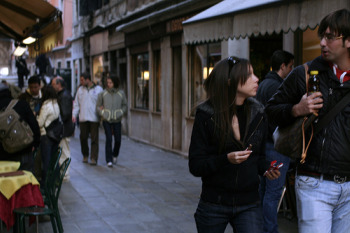 Rome sprawls, both in population and in the spread of its sights. Milan doesn’t. The metro area is huge, but the Milan that visitors care about, the center, is small.
Almost all the sights sit in a zone barely 2 miles across. In Rome, the area most visitors cover is more like 4 miles wide. The cities themselves compare the same way: the comune of Rome covers about 496 square miles, Milan’s about 70.
In both cities you’ll use public transport, but while getting to grips with Rome’s buses is a must there, in Milan your own two feet and the Milan Metro will do.
So you don’t need to splurge on a Milan hotel near the Duomo, but on a short visit, do stay inside the center, or near a metro stop that gets you there in a few minutes.
Getting Around Milan: Tap Your Card
The metro has five lines: M1 (red), M2 (green), M3 (yellow), M4 (blue) and M5 (lilac). For most visitors, two of them will do. M4 runs from Linate airport straight into the center, and M5 stops right in front of the San Siro stadium.
Paper tickets are gone. Since January 2026 ATM, the city transport company, no longer sells or accepts them. You tap a contactless bank card or your phone at the metro gates and on buses and trams, or you load rides onto a rechargeable RicaricaMi card from station machines and newsstands. A ride costs about 2.20 euros in 2026 and is good for 90 minutes; a day ticket is about 7.60 euros. Details are on the ATM site. My advice: tap the same card every time, and use one card per person.
From Malpensa, the Malpensa Express train takes about 40 minutes to Milano Cadorna or about 50 minutes to Milano Centrale, for about 15 euros one way in 2026. See getting from Malpensa into Milan for the options.
Don’t drive in. The center is inside Area C, a congestion-charge zone (about 7.50 euros a day on weekdays in 2026), which in turn sits inside a wider low-emission zone called Area B.
Milan’s Biggest Sights Can be Seen in a Day
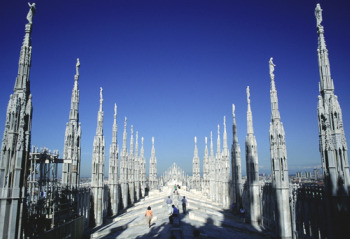 This follows from the first point, but it takes some planning to pull off, especially one sight. More on that below.
With one full day, perhaps the day before you fly out of Malpensa, start early. If you’re staying at one of the Malpensa Airport hotels, start really early, because the airport is 40 to 50 minutes from the center by train. (This is why I suggest sleeping in the center on a short visit.)
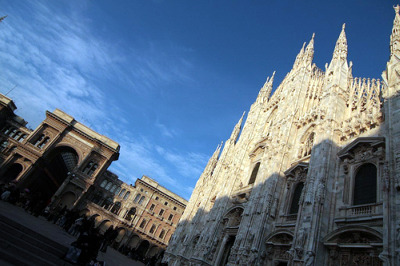
A visit to the Duomo, the largest church in Italy outside the Vatican, is the place to begin (after a coffee and pastry at a corner bar, of course). The interior isn’t the most spectacular art-wise, but it’s enormous. You need a ticket even to go inside now (from about 10 euros in 2026, more if you add the roof), so buy it online before you go. Then take the elevator (or the stairs, if you skipped your morning run) to the roof and walk among the spires. Skip the roof in the rain, but on a clear day you can see the Alps.
The La Scala opera house and its museum and the Pinacoteca di Brera art gallery are both a short walk from the Duomo, and neither takes long. Window shopping in the Quadrilatero della Moda, the designer streets around Via Montenapoleone, is a quick stop unless you’re actually buying.
Most of my list of the top 10 things to do in Milan either takes a few minutes or fits in on your way between sights. The exception is the hard part of a one-day visit, which brings me to…
Leonardo’s “Last Supper” is in Milan, and It Sells Out
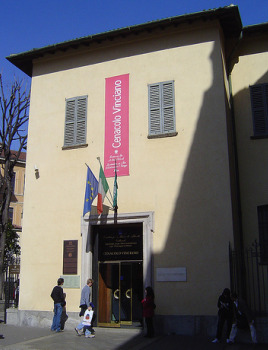 Milan’s reputation for business and banking makes it easy to forget its art. Its most famous sight is Leonardo da Vinci’s “The Last Supper,” painted on the end wall of the refectory (the monks’ dining hall) at the church of Santa Maria delle Grazie. Nearly everyone wants to see it, which is exactly the problem.
The visit only lasts 15 minutes, with up to 40 people at a time. Booking is compulsory for everyone, children included, and a ticket costs about 15 euros in 2026. Tickets are released in three-month blocks (September to December 2026 went on sale in late June), and the good slots go fast. Find out when your dates open on the official site and be ready that day. Here’s more on booking “The Last Supper”. It’s closed on Mondays.
Even in the low season, tickets can be scarce. On my first trip, a 10-day visit in November, tickets were already sold out through January. I planned further ahead the next time (6 weeks in February and March) and still only found two tickets, two days before I flew out.
If you can’t leave Milan without seeing it, book the day tickets open. If you miss out, guided tours that include a Last Supper slot cost more but are often the only way in at short notice. And respect the painting when you’re there: it’s famously fragile.
Milan is Expensive
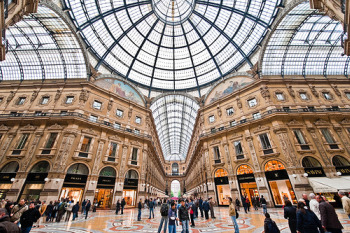 Every guidebook calls Milan Italy’s banking and fashion capital, so you won’t be shocked that it’s expensive to live in and to visit. The Milanese spend lavishly on clothes, and I feel out of place just walking down Via Montenapoleone, let alone going into the shops. Any hotel overlooking the cathedral charges for the view.
Timing matters more here than anywhere else in Italy. Milan is a trade-fair city, and during Design Week (the Salone del Mobile, usually in April) and the fashion weeks, hotel prices can double. Check the fair calendar before you book. City tourist tax is also steeper than most: in 2026 it runs from about 4 euros a night at a one-star hotel to 10 euros at a four- or five-star, per person, paid at the hotel.
On a longer stay, watch your budget: a cheap hotel in Milan in a less fancy neighborhood, the places locals eat cheaply (a panzerotto from Luini, by the Duomo, is still the classic cheap lunch), and walking. For a one-day visit, it’s worth spending a bit more on a central hotel instead. There are also plenty of free things to do in Milan.
There are Canals in Milan
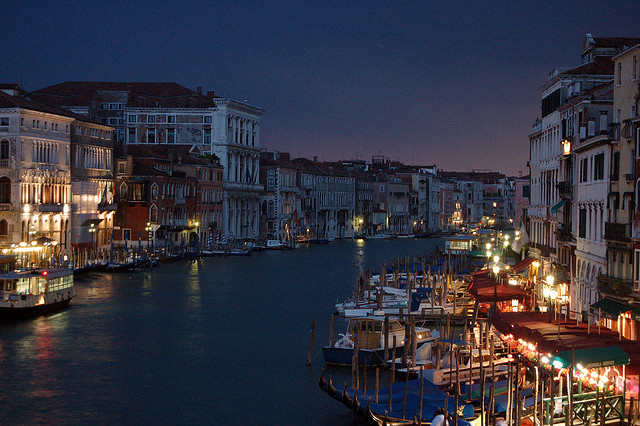
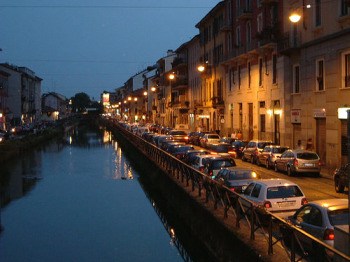 We all associate canals with Venice, but Milan has them too. They’re not as many, and nobody commutes on them, but they’re fun to see.
Milan once had a whole network of canals, the Navigli, which carried goods (including the marble for the Duomo) right into the city. Most were filled in during the 1930s. Two survive in the Navigli district southwest of the center. The Naviglio Grande, dug between the 12th and 13th centuries, is one of the oldest navigable canals in Europe. The Naviglio Pavese runs about 33km south to Pavia. Leonardo da Vinci, who spent years in Milan, worked on the canal locks.
The canals meet at the Darsena, the old city dock, which was cleaned up and reopened as a waterfront square in 2015. In the warm months, small tour boats run from there along the canals.
The Navigli neighborhood is where Milan goes out at night, with aperitivo bars lining both banks of the Naviglio Grande, and a big antiques market along it on the last Sunday of the month. One warning: still water plus humid summers equals mosquitoes, so if you sleep near the canals in July, bring repellent.
Life in Milan Moves Faster than Elsewhere in Italy
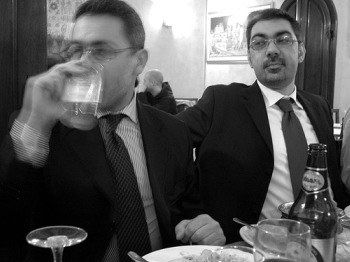 Milan being the country’s business capital, it’s no surprise that life here moves faster. The Milanese still linger over lunches far longer than yours back home, and they don’t rush their evening drinks or dinner. But there’s much less of the aimless evening passeggiata you see elsewhere, and nobody will thank you for strolling three abreast on a sidewalk at 8:30am.
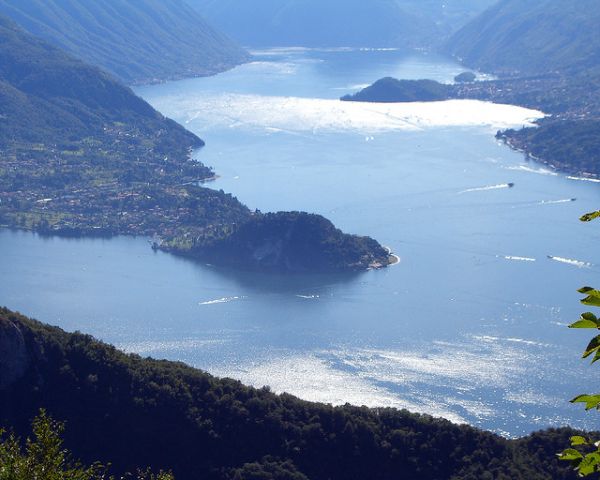
Part of it is the city’s international business culture. Part of it is that when the Milanese want to slow down, they leave: day trips from Milan to the lakes, or to quieter cities like Bergamo or Vigevano.
The exception is August. Around Ferragosto (15 August) much of the city goes on holiday, and plenty of family-run restaurants and shops close for two or three weeks. The sights stay open and hotels get cheaper, but the neighborhood life you came for thins out.
Whatever the reason for the pace, this isn’t the city for the most laid-back Italian vacation imaginable.
The Milanese Know Cocktails
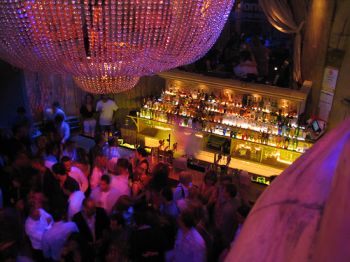 On one trip, after a long stretch in the city, my husband and I got a wild hair and tried a restaurant claiming to serve “authentic Mexican food” around the corner from our apartment. It wasn’t bad, but it certainly wasn’t Mexican. The one standout was my margarita, and when I mentioned that to an expat friend in Milan, she said, “Of course the margarita was good. It’s still Milan.”
The Milanese know fashion, as a glance around any street will tell you. They also know cocktails. This is the city that gave the world the Negroni Sbagliato and the Campari habit. Cocktails in Italy go by their English names with an Italian accent (a mojito is a moh|EE|toh and a gin and tonic is a jeen TOH|neek), and they’re as popular here as a glass of red.
The ritual to learn is aperitivo. Between about 6pm and 9pm, you pay for a drink, a bit more than usual, and it comes with food. Some bars still lay out a full buffet; many now bring a plate or board to the table instead. Some streets are one aperitivo bar after another (Corso Sempione, the Navigli, Corso Como), so peek at what’s on offer before you sit down. You don’t want the one bar on the block that serves only potato chips. Done right, it’s dinner.
And don’t be surprised to find the bars packed late on weeknights. People in Milan burn the candle at both ends.
Milan’s Air is Bad, and Smoking Outdoors is Restricted
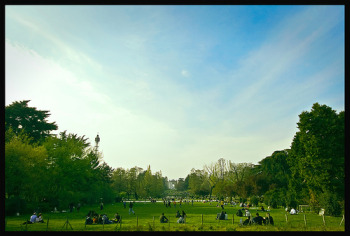 Milan sits in the Po Valley, where mountains on three sides trap pollution, and in winter its air is some of the worst in Western Europe. I know at least one person who left Milan because she kept getting bronchitis. I had no idea the mountains were visible from the Duomo’s roof until my second time up there; on my first “beautiful day,” a brown haze hid everything. Clear days are likelier after rain or wind, and in spring and autumn.
The city is fighting back. Since January 2025, smoking is banned in all public outdoor places in Milan, including streets, parks and cafe terraces, unless you’re at least 10 meters from other people. Fines run from 40 to 240 euros. E-cigarettes aren’t covered.
On a short visit you’ll notice the traffic more than the air, which is why the city’s green spaces feel like such a relief. The easiest parks to reach from the center are the Giardini Pubblici Indro Montanelli (between the Duomo and Centrale station) and the Parco Sempione (behind the Castello Sforzesco). Neither is big enough to shut out the traffic noise entirely, but on a sunny weekend they’re where you see the Milanese at play.
photos, top to bottom, by: Blogfromitaly, Stationary Hobo, globevisions, scalleja, realSMILEY, masaki21bg7, vanz, BruceTurner, lastquest