Italy Itinerary: The Perfect Two Weeks
· Updated · BootsnAll
 If this is your first trip to Italy and you have two weeks, this is the route we'd hand you: Venice, the Cinque Terre, Florence and Rome, in that order, with day trips to Siena and Pompeii. It hits the places most first-timers most want to see, it runs north to south so you never double back, and every leg is a train ride. For each stop there are alternatives, in case you've already been somewhere or it just doesn't appeal.
>> Would rather build your own? Our guide to how to create the perfect Italy itinerary walks through the method, and the first-time visitor guide covers the practical basics.
The two weeks at a glance
| Nights | Base | Don't miss | Getting there |
|---|---|---|---|
| 1 to 2 | Venice | St. Mark's Basilica, getting lost after dark | Fly into Venice Marco Polo |
| 3 to 4 | Cinque Terre | The coastal path, a swim, a sunset in Vernazza | Train, changing at least once, most of a day |
| 5 to 8 | Florence | Uffizi, David, the Duomo; day trip to Siena | Train via La Spezia (and often Pisa) |
| 9 to 13 | Rome | Colosseum, Vatican, Pantheon; day trip to Pompeii | Fast train, about 1.5 hours |
For more detail on each stop, see our day-by-day plans:
- Itinerary for 2 Days in Venice
- Itinerary for 2 Days in the Cinque Terre
- Itinerary for 4 Days in Florence
- Itinerary for 5 Days in Rome
Fly into Venice, out of Rome
This route assumes an open-jaw ticket: into Venice, home from Rome. It saves you a full day of backtracking, which on a two-week trip is worth a lot. Open-jaw fares are sometimes a little more than a round trip and sometimes no more at all, so always price both. If Italy is one stop on a longer trip, AirTreks builds multi-stop and round-the-world tickets that handle this kind of routing for you.
We like Venice as a starting point because Marco Polo is a smaller, easier airport than Rome or Milan, and because there's nothing like a first view of Italy from a boat on the lagoon. Venice is also a gentle first stop: no cars, no traffic, a slower pace while you get over the jet lag. If Venice fares are much higher than flights to Milan or airfare to Rome, you can fly into Milan and take the train to Venice (about 2 hours 15 minutes), or run the whole route in reverse.
Every leg of this trip is by train. You can check times and book on trenitalia.com and italotreno.com (Italo is the private high-speed operator). Fast-train fares are priced like airfares, so book the high-speed legs as soon as your dates are fixed. Regional trains, like the ones along the Cinque Terre coast, have fixed fares and you can buy them on the day.
2 Days in Venice
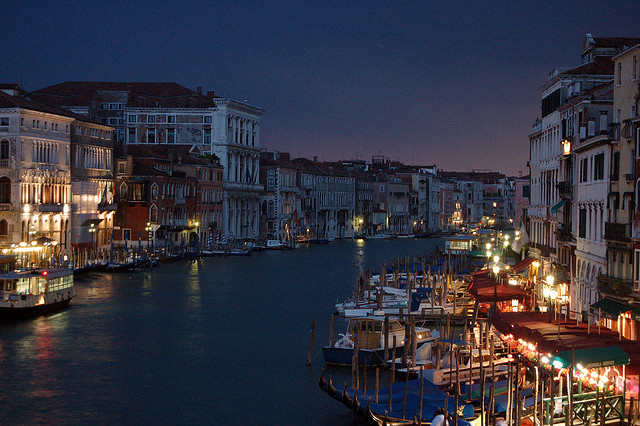
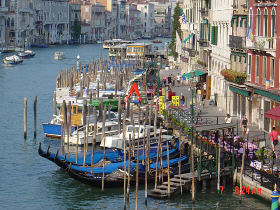 Venice is endlessly romantic and endlessly crowded, and the crowds are worst in the middle of the day because of the day-trippers. That's the whole argument for sleeping there. Once the tour groups leave, the city goes quiet, and an evening walk along empty canals is the thing you'll remember.
Two nights and the better part of two days is enough. There aren't that many must-see sights; the best thing to do is walk without a plan. If you only book one thing, make it St. Mark's Basilica, which now sells timed tickets online, and then spend the rest of your time getting lost in Venice.
Two things to know. On set peak days between April and July, day-trippers pay an access fee to enter the historic center; as an overnight guest you don't pay, but you're supposed to register for a free QR code at cda.ve.it. And a vaporetto single ticket costs about €9.50 in 2026, so if you'll ride more than a couple of times, a 24 or 48 hour pass is better value.
>> Here's how to get from the Venice airport into Venice, by water or by bus, and our thoughts on what to do with two days in Venice.
Venice's Santa Lucia station is well connected to the rest of the country. Leave on an early train for the Cinque Terre. There's no direct train, so expect to change at least once (usually in Milan, Florence or Pisa) and then at La Spezia for the local train into the villages. It takes most of the day; check current connections on the booking sites. Here's more on getting from Venice to the Cinque Terre.
>> If Venice isn't your style, try instead:
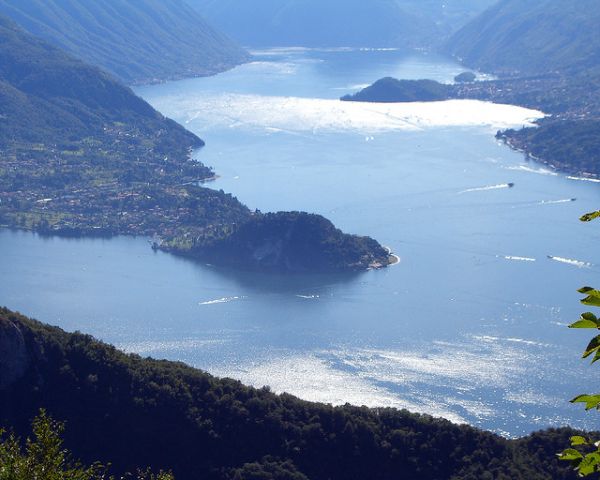
- A lake town: the towns along Lago Maggiore and Lake Como are almost unreasonably pretty and easy for visitors. They won't be empty, but they're a gentle start.
- Verona: about an hour from Venice by train, with a Roman arena that still hosts opera every summer. Sitting on Roman stone for an open-air Aida is one of the great Italian nights out.
- Milan: definitely not a slow start, and not worth the time for most first-timers. But if you're into opera, shopping and aperitivo, or The Last Supper (book months ahead), it's the place, and flights there are often cheaper.
2 Days in the Cinque Terre
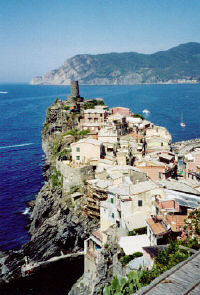 Like Venice, the five villages of the Cinque Terre are beautiful and, in summer, packed. We've even argued that the Cinque Terre should be closed to most of the people who pour through each year. It's on this itinerary anyway, because you still want to see it, and because it's a very different Italy from the cities on either side.
You'll have two nights and one full day. Pick one village as your base, spend the first afternoon exploring it and choosing a dinner spot, and walk the coastal path the next morning before the heat and the crowds. Spend the afternoon swimming. It's a tough life.
The hiking has changed a lot, so plan ahead:
- You need a Cinque Terre Card from the national park to walk the paid stretches of the coastal path (Monterosso to Vernazza to Corniglia). A version that includes the local trains is also sold.
- The Via dell'Amore between Riomaggiore and Manarola reopened in 2024, but it's now one way only, from Riomaggiore, and you must book a 30-minute time slot.
- The coastal path between Manarola and Corniglia is still closed in 2026. The train links them in a few minutes.
- Other sections close after rain or landslides, so check the park's site on the morning you hike.
>> More on where to stay in the Cinque Terre and what to do with 2 days in the Cinque Terre.
The next morning, take the train to Florence, changing at La Spezia and usually again at Pisa. That change is your chance to see the leaning tower without spending a night: the Field of Miracles is a short bus ride or a 20 to 25 minute walk from Pisa Centrale, and a couple of hours is plenty for the tower, the cathedral and the baptistery. Tower climbs are timed, so book a slot on the official site first. Left luggage at Pisa's station is patchy, so ask at the station or use one of the luggage-storage shops nearby. Here's more on getting from the Cinque Terre to Florence.
>> If you'd rather skip the Cinque Terre crowds:
- A lake town: if you didn't swap one in for Venice, a couple of nights on Lake Como or Lake Maggiore fits here. The lakes are busy in summer too.
- Bologna: the capital of Italy's richest food region, home to the oldest university in Europe, and far less touristy than Florence. A must for anyone traveling to eat. It's also on the fast line to Florence, just over half an hour away.
- Portofino: a little further up the Ligurian coast, the Italian Riviera at its glossiest. Gorgeous, and famously expensive.
4 Days in Florence
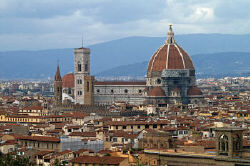 Florence is the birthplace of the Renaissance, and a week wouldn't be enough to see all its art. With four nights you can see the big hitters and still slow down. Book the Uffizi and the Accademia (home of Michelangelo's David) for set times before you leave home; both are closed on Mondays. The cathedral itself is free, but the dome climb needs a timed slot on the Duomo pass, and those sell out in summer.
Florence is compact and mostly pedestrian in the center, so you'll walk almost everywhere and probably never use a bus. Eat as much gelato as you can while you're here; it's one of the best gelato cities in Italy.
>> Here are our suggestions for what to do with 4 days in Florence and where to stay in Florence.
After your fourth night, take a morning train to Rome. It's direct, and the fastest trains take about an hour and a half. Here's everything on getting from Florence to Rome.
>> If you'd rather sidestep Florence:
- Siena: if you'd rather sleep in Siena than visit on a day trip, do it. It's even better once the day-trippers leave, and a few nights inside the old walls is a treat.
- San Gimignano: the hill town of medieval towers, and a good base if you have a car. It has no train station, so without one you'll rely on buses.
- Perugia: skip Tuscany entirely and base yourself in the capital of Umbria. It's a real working city, much less touristy than Florence, and a good base for Umbria's hill towns.
Day trip to Siena from Florence
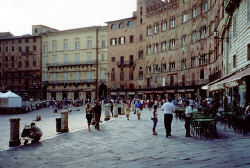 With four nights in one place, a day trip from Florence keeps things fresh, and Siena is the obvious choice. People fall for it on sight: the shell-shaped Piazza del Campo, the striped cathedral, the steep lanes. The fast bus (Autolinee Toscane's 131R) drops you closer to the center than the train does. Here's how to get from Florence to Siena.
>> Other good day trips from Florence:
- Pisa: if you didn't stop on the way from the coast, it's about an hour away by regional train, and there's more to the city than the tower.
- Cortona: the Under the Tuscan Sun hill town, about 1.5 hours by train to the station at Camucia below the town, then a short bus up the hill.
- San Gimignano: lovely, and better overnight, but fine as a day trip by bus.
5 Days in Rome
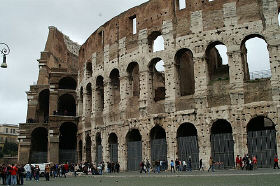 Rome is big, loud and exhausting for a first-timer, which is exactly why it gets the most time on this itinerary. Five nights lets you see the essentials without sprinting, with room for a long lunch or an afternoon off when you need it.
The order doesn't much matter, but give Vatican City most of a day, and group ancient Rome into another: the Colosseum, Roman Forum and Palatine Hill share one ticket, and the Pantheon is a pleasant walk away. Book both big ones before you travel: Colosseum tickets are timed and carry your name (bring matching ID), and the Vatican Museums should only be booked on the official site, tickets.museivaticani.va, because look-alike resellers are everywhere. Both St. Peter's and the Sistine Chapel require covered shoulders and knees.
>> Here are our suggestions for what to do with 5 days in Rome, and a guide to Rome's transportation system. Metro Line C now reaches the Colosseum, and you can tap a contactless card at the gates instead of buying a ticket.
>> There isn't really an alternative to Rome. But if five days there sounds like too many, split the time with:
- Naples: the birthplace of pizza, chaotic and wonderful, and the best base for Pompeii and Herculaneum.
- Positano: the most famous town on the Amalfi Coast, gorgeous and very steep, and expensive in summer.
- Sorrento: just off the Amalfi Coast proper, usually cheaper than Positano, with trains to Pompeii and boats to Capri and the coast.
Day trip to Pompeii from Rome
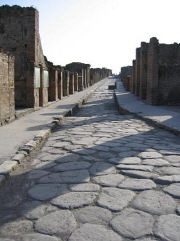 Pompeii is easier from Naples or Sorrento, but a day trip to Pompeii from Rome works fine on your own. Take an early fast train to Napoli Centrale (under an hour on the quickest trains), walk down to the Garibaldi station underneath, and ride the Circumvesuviana local line to Pompei Scavi, about 35 to 40 minutes. The tourist-only Campania Express on the same line is suspended from 1 October 2026, so plan on the regular trains.
Pompeii tickets now carry your name and a time slot, and daily numbers are capped, so book on the official site before the day. In winter the site closes at 17:00, so don't dawdle. If you'd rather not deal with the logistics, plenty of tours from Rome do the whole thing by coach, but it makes for a long day on a bus.
>> Other good day trips from Rome:
- Naples: about an hour on the fast train. Most of the best finds from Pompeii aren't at Pompeii; they're in Naples' National Archaeological Museum. Add a pizza and you have a perfect day.
- Sorrento: take the train to Naples, then a fast boat from the port. It's a lovely way to arrive, and far cheaper than a night on the coast in summer.
- Assisi: head north instead, to the Umbrian hill town of St. Francis, about two hours by train. The Basilica of St. Francis is a UNESCO World Heritage Site, and the town is worth it whether or not you're a pilgrim.
You fly home from Rome on the last day. Unless your flight leaves at dawn, you'll have a few hours for any last sights before heading to the airport; the Leonardo Express from Termini to Fiumicino takes 32 minutes. Here's how to get between Rome and Fiumicino Airport. Whatever you didn't see will still be there next time, so start planning the return on the flight home.
Before you email us that this itinerary is wrong
- What's perfect for us isn't perfect for you. True. No one itinerary suits everyone. But the well-worn route is well-worn for a reason, and a tweak or two will make this one yours.
- Two weeks isn't enough time to see Italy. Agreed, completely. Most Americans are lucky to get two weeks off in a year, though. If you have longer, use this as the spine and add to it. If you don't, Italy will be waiting.
- You haven't seen Italy until you've seen (fill in the blank). Yes, you have. You've seen part of it, which is all anyone sees on one trip. The only way not to have seen Italy is to never leave the airport.
- (Fill in the blank) is a tourist trap. Maybe. But if you really want a photo of yourself propping up the leaning tower of Pisa, go get it. And we'll keep loving Venice, crowds and all, because there's always a quiet corner if you walk far enough.
photo at top by Hvnly